

 Emily Carter
Table of Contents
Us-iran Nuclear Talks 2026
High-Stakes US-Iran Nuclear Talks Reopen: How Trump’s New Strategy Shakes Global Oil Markets
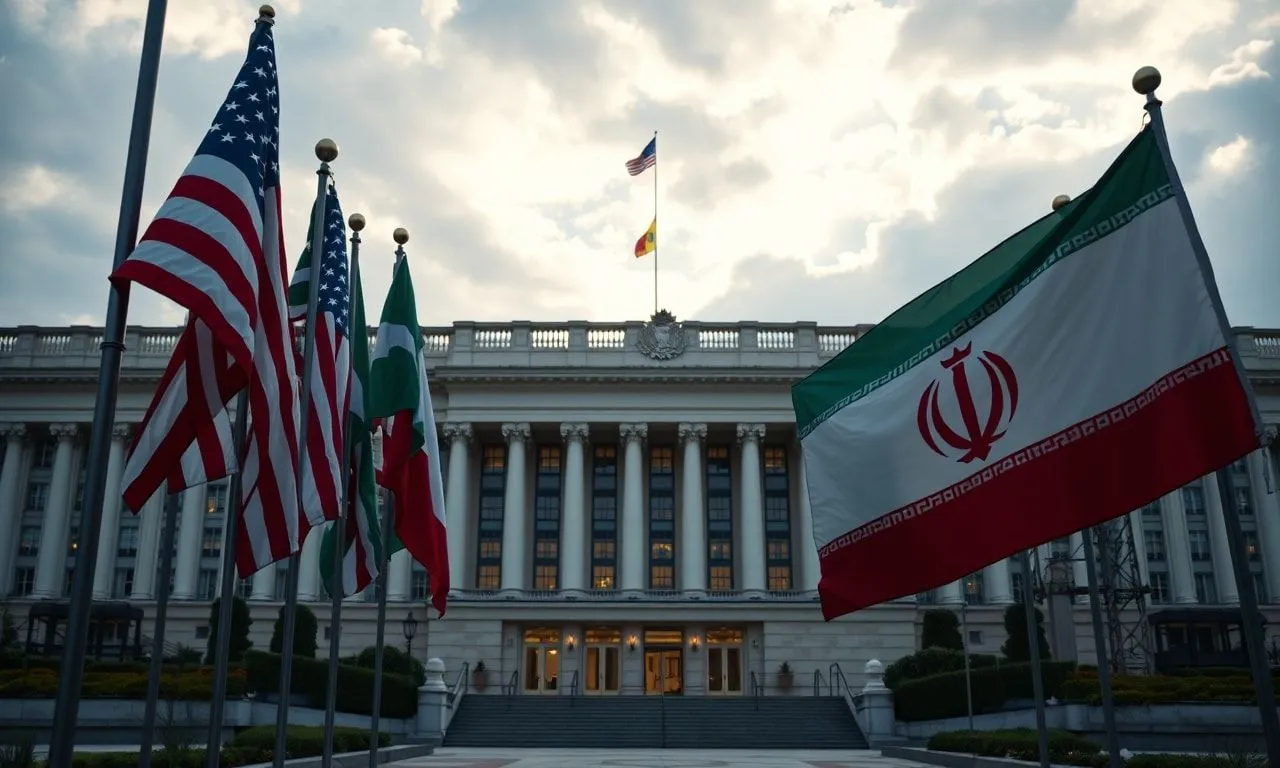
US-Iran nuclear talks 2026 have officially commenced in Geneva, marking a pivotal and high-stakes moment for global security and energy stability.
The Geneva Gambit: Inside the High-Stakes US-Iran Nuclear Face-Off Shaking Global Markets
By Emily Carter (@ECarterUpdates) – Political Analyst, NewsBurrow News Network
A City of Mirrors: The Tense Proximity of the Hotel President Wilson
The pristine, winter-chilled air of Geneva carries a weight far heavier than the seasonal frost this week. Inside the gilded halls of the Hotel President Wilson, a diplomatic dance of “proximity” has begun, where the lead actors refuse to share the same stage. US and Iranian officials are currently occupying separate wings, with European and Gulf intermediaries scurrying between them like couriers in a high-stakes game of telephone. This isn’t just a meeting; it is a pressure cooker designed to prevent a regional explosion.
The atmosphere is thick with a brand of skepticism that only decades of failed promises can produce. While the Swiss scenery suggests neutrality, the presence of heavy security details and the buzz of encrypted communications remind us that the “high-stakes” label isn’t hyperbole. NewsBurrow sources on the ground describe the mood as “clinical,” with both sides arriving not for a handshake, but for a cold calculation of survival and leverage. It is a moment where a single mistranslation could shift the course of the decade.
For the Trump administration, this 2026 kickoff represents the ultimate test of “Maximum Pressure 2.0.” The goal isn’t just a signature on a page; it’s a total reconfiguration of the Middle Eastern power balance. Iran, conversely, enters the room with a battered economy but a sophisticated enrichment program that acts as its only real shield. The world isn’t just watching a negotiation; it’s watching a collision of two immovable political wills.
The technical teams are already deep into the “breakout clock”—the mathematical terrifying reality of how close Tehran is to weapons-grade material. As we sit in early 2026, that clock is ticking louder than the Swiss watches sold just blocks away from the venue. This initial round will determine if there is a path to de-escalation or if we are merely documenting the final days of a failed non-proliferation era.
The Trump Doctrine 2.0: Weaponizing Diplomacy to Rebuild Leverage
President Trump’s second-term approach to Tehran has shocked traditionalists by being simultaneously more aggressive and more open to a “grand bargain” than ever before. Unlike the 2018 withdrawal, which many saw as a pure exit strategy, the 2026 doctrine is built on the premise that diplomacy is only effective when the alternative is total economic or kinetic annihilation. It is a “deal-maker” persona backed by the most sophisticated sanctions net in history.
This strategy relies on the “indirect” nature of the talks to maintain a posture of strength. By refusing to sit across from Iranian negotiators until specific “good faith” enrichment caps are met, the US administration is signaling that its presence is a reward, not a right. This psychological warfare is designed to rattle a regime that is already dealing with internal fissures and a restless youth population. It is a gamble that assumes the Iranian leadership is more afraid of collapse than they are of compromise.
Critics argue this brinkmanship could backfire, pushing Iran toward a “North Korea model” of permanent nuclear defiance. However, the Trump team remains unfazed, betting that the lure of re-entering the global financial system will eventually outweigh the ideological purity of the hardliners. The strategy is punchy, unpredictable, and entirely focused on tangible results rather than diplomatic niceties.
| Policy Element | 2015 JCPOA Approach | 2026 Trump Strategy |
|---|---|---|
| Negotiation Style | Multilateral / Direct | Bilateral Focus / Indirect |
| Sanctions Relief | Front-loaded | Verifiable Compliance Only |
| Scope | Nuclear Only | |
| Goal | Containment | Systemic Re-alignment |
Shockwaves at the Pump: Why Global Energy Markets Are Trembling
As news of the Geneva kickoff hit the wires, the global oil markets reacted with the sensitivity of a seismograph. Crude prices have become the unofficial scoreboard for the negotiations. A rumor of a “freeze-for-freeze” agreement sends prices tumbling as traders anticipate a surge of Iranian light sweet crude. Conversely, a hawkish tweet or a breakdown in sub-committee talks sends Brent North Sea crude spiking toward the $100 mark.
The “energy weapon” is being wielded by both sides. Washington‘s recent targeting of the “ghost fleet”—the shadow tankers used by Tehran to bypass sanctions—has already constricted supply, creating a tight market that favors high prices. Iran knows that a total disruption of the Strait of Hormuz would be a global economic catastrophe, and they are using that “chaos premium” to maintain their seat at the table. It is a dangerous game of chicken played with the world’s fuel supply.
For the average consumer, these talks are not an abstract political debate; they are the determining factor in the cost of commuting and heating homes. The volatility is unprecedented. We are seeing intraday swings that haven’t been witnessed since the early days of the Ukraine conflict. The market is desperate for certainty, yet Geneva is currently offering nothing but high-octane ambiguity.
Below is a representation of the projected market volatility based on negotiation outcomes:
Price Index ($)
^
|          /--\  (Talks Collapse: Risk of War)
110|         /|   /----/90|  /              -- (Stalemate: Continued Sanctions)
| /
70|/----------------------\ (Breakthrough: Sanctions Relief)
|_________________________________>
Feb 24   Feb 25   Feb 26 (2026)
The Enrichment Ticking Clock: Technical Realities vs. Political Hopes
Beyond the rhetoric lies the cold, hard science of uranium. Intelligence reports suggest that Iran’s stockpile of 60% enriched uranium is now sufficient for multiple “devices” if processed further. The “breakout time”—the duration required to reach 90% purity—is now estimated in days or weeks, not months. This technical reality makes the Geneva talks a race against physics as much as a race against time.
The US demand is clear: a total rollback of advanced centrifuge deployment and the shipment of highly enriched stockpiles out of the country. Iran views these technical achievements as their “crown jewels,” bought with years of economic suffering. They are unlikely to surrender them without a massive, front-loaded package of sanctions relief that includes access to the SWIFT banking system. It is a deadlock of “who blinks first.”
Nuclear experts warn that the window for a non-military solution is closing. If Iran crosses the threshold to 90%, the “red line” established by regional powers like Israel will be breached. This would likely trigger a kinetic response, turning a diplomatic standoff into a full-scale regional war. The technical teams in Geneva are essentially bomb disposal technicians trying to cut the right wire while the room is filled with smoke.
- Centrifuge Status: IR-6 and IR-9 advanced models are currently operational in underground facilities.
- Stockpile Concerns: Over 150kg of 60% enriched material recorded by latest IAEA estimates.
- Verification Gap: Monitoring cameras in several key sites remain offline or restricted.
- Weaponization Signs: Reports of clandestine “design” work remain a point of fierce debate.
Hunting the Ghost Fleet: Maritime Sanctions and Economic Strangulation
While the diplomats talk, the US Treasury and Navy are busy on the high seas. The “Ghost Fleet”—a collection of aging tankers with obscured ownership and disabled transponders—is the lifeblood of the Iranian economy. By aggressively targeting these vessels, the Trump administration has successfully cut Iran’s illicit exports by nearly 40% in the last quarter. This is the “stick” that forced Tehran back to the table in Geneva.
These maritime sanctions are more than just a trade barrier; they are a sophisticated form of economic warfare. By blacklisting the insurance companies and port authorities that service these vessels, the US has made the Iranian oil trade incredibly expensive and risky. The “sanctioned oil” discount has deepened, meaning Tehran earns less for every barrel it manages to smuggle out. This revenue crunch is causing real pain at the highest levels of the Iranian government.
However, this strategy carries environmental and safety risks. These aging tankers are often poorly maintained, and their “dark” operations increase the risk of collisions or massive oil spills in sensitive waterways. The international community is increasingly concerned that an environmental disaster could be the catalyst that turns this economic conflict into a humanitarian crisis. The pressure is immense, and the margins for error are razor-thin.
NewsBurrow has learned that a secret “list of vessels” is being used as a bargaining chip in Geneva. The US is reportedly offering to “look the other way” on specific shipments in exchange for temporary pauses in centrifuge installation. It is a transactional diplomacy that reflects the “deal-maker” ethos of the current White House.
A Regional Chessboard: Israel’s Red Lines and the Gulf’s Silence
While Washington and Tehran are the primary players, the regional neighbors are far from passive observers. Israel has made it abundantly clear that they are not bound by any agreement reached in Geneva that they deem “insufficient.” Prime Minister-level briefings suggest that the Israeli Air Force is on a heightened state of readiness, practicing long-range strikes that could target Iran’s Fordow and Natanz facilities. This “shadow of the sword” is a constant presence at the negotiating table.
Meanwhile, the Gulf Cooperation Council (GCC) states, led by Saudi Arabia and the UAE, are maintaining a tactical silence. On one hand, they desire the removal of the Iranian nuclear threat; on the other, they fear the “collateral damage” of a war that would surely see Iranian missiles raining down on their desalination plants and oil refineries. They are pushing for a deal that includes limits on Iran’s ballistic missile program—a demand that Tehran has so far called a non-starter.
This regional friction creates a “spoiler” effect. Any deal that doesn’t satisfy the security concerns of the neighbors could be undermined from within the region. The US must balance its desire for a quick win with the long-term stability of its allies. It is a diplomatic jigsaw puzzle where the pieces are constantly changing shape.
- Israel: Threatening unilateral action if enrichment exceeds 90%.
- Saudi Arabia: Seeking a “regional security” clause and missile restrictions.
- UAE: Balancing trade interests with the need for US security guarantees.
- Jordan/Egypt: Bracing for potential refugee flows if a kinetic conflict breaks out.
The Human Toll: Protests, Poverty, and the Iranian Street
Inside Iran, the perspective on the Geneva talks is shaped by the brutal reality of inflation and scarcity. The Iranian Rial has hit record lows, and the price of basic staples like bread and meat has skyrocketed. This has led to a resurgence of campus protests and labor strikes across the country. For many Iranians, the “nuclear program” is a luxury they can no longer afford, yet the regime portrays it as a matter of national dignity.
The “shock factor” here is the growing disconnect between the elite Revolutionary Guard and the average citizen. While the Guard profits from the shadow economy and smuggling, the middle class is being systematically erased. NewsBurrow has received reports of a “brain drain” reaching critical levels, as the country’s best and brightest flee to Turkey, the EU, and North America. The regime is negotiating with its back against a domestic wall.
The Trump administration is well aware of this internal pressure. They are framing the talks as a “choice for the Iranian people”: continue on the path of isolation and poverty, or embrace a new era of prosperity through total compliance. It is a narrative designed to spark public conversation within Iran, further destabilizing the hardliners’ grip on power. The human element is the “X-factor” that could either force a deal or trigger a desperate crackdown.
The IAEA’s Impossible Mission: Trust but Verify in a World of Shadows
At the center of any potential agreement is the International Atomic Energy Agency (IAEA). Their task is to provide the “eyes and ears” that make trust possible. However, the agency’s mission has become increasingly impossible as Iran has restricted access to sites and refused to explain the presence of uranium particles at undeclared locations. Without a robust verification regime, any Geneva agreement is just words on paper.
The 2026 negotiations are focusing on a new “digital verification” framework. This would involve real-time, tamper-proof fiber-optic monitoring of enrichment levels and AI-driven satellite surveillance of construction sites. But Tehran views these measures as “legalized espionage.” They are demanding a “sovereignty clause” that would limit the IAEA’s ability to conduct “snap inspections.” This remains one of the most contentious “brackets” in the draft text.
If the IAEA cannot certify compliance, the US Congress—and the hawks within the Trump administration—will never allow permanent sanctions relief. The agency is caught in a political pincer movement, pressured by the West to be more aggressive and by Iran to be more “professional” (which Tehran defines as “less inquisitive”). The future of global non-proliferation rests on the shoulders of these inspectors.
Scenario Planning: The Three Faces of a Global Outcome
As we look toward the conclusion of this round of talks, three distinct scenarios emerge. The first is the “Grand Bargain,” where Iran agrees to deep cuts in enrichment and missile development in exchange for a phased lifting of all major sanctions. This would lead to a massive global economic boom, as Iranian oil floods the market and regional tensions evaporate. While ideal, most analysts give this a low probability.
The second, and more likely, scenario is “The Tactical Freeze.” This would involve a temporary halt to Iran’s 60% enrichment and a US pause on new maritime sanctions. It wouldn’t solve the problem, but it would “buy time” and stabilize oil markets for the remainder of 2026. It is a “kick the can down the road” approach that satisfies no one but avoids immediate war.
The final, and most dangerous, scenario is “The Total Collapse.” If the Geneva talks end in a walk-out, we should expect an immediate escalation. Iran would likely move to 90% enrichment, and the US would likely respond with a “Total Maritime Blockade.” This is the path to a global energy crisis and a potentially devastating regional conflict. The stakes in Geneva are quite literally life and death for the global order.
Final Reckoning: Will Brinkmanship Save the World or Burn It?
The reopening of the US-Iran nuclear talks in 2026 is a masterclass in the “new diplomacy.” It is loud, transactional, and fraught with extreme risk. President Trump has successfully brought the world to this moment through a combination of economic strangulation and unpredictable rhetoric. Now, the question is whether his “Art of the Deal” can survive the complexities of nuclear physics and ancient regional animosities.
We are at a crossroads. The Geneva talks could be the beginning of a historic realignment that brings Iran back into the international fold and lowers the price of energy for everyone. Or, they could be the final failed attempt at words before the “logic of force” takes over. NewsBurrow will continue to monitor the halls of the Hotel President Wilson, bringing you the updates that the mainstream media is too afraid to touch.
What do you think? Is Trump’s “Maximum Pressure” the only way to deal with Tehran, or is the world heading for an avoidable disaster? Are you feeling the pinch at the pump, and would you support a deal at any cost to lower oil prices? Join the conversation below and share your thoughts. The future of the global economy is being written in Geneva—make sure your voice is heard.
The geopolitical reverberations of the 2026 Geneva summit are not merely confined to diplomatic cables and enrichment charts; they are reshaping the very fabric of global leadership. As President Trump maneuvers through this high-stakes landscape, his “Maximum Pressure 2.0” strategy serves as a definitive case study in modern power dynamics. To truly grasp the gravity of these negotiations, one must look beyond the daily headlines and examine the foundational philosophies driving this administration’s confrontational yet transactional approach to Tehran.
Understanding the man behind the strategy offers a unique vantage point into how these nuclear talks might ultimately conclude. For those seeking to decode the complexities of this “deal-maker” doctrine, exploring the historical accounts and personal narratives of this political era provides invaluable context. We have curated a selection of essential resources that dive deep into the leadership style and strategic mindsets currently dictating the future of the Middle East and the global energy market.
Does this aggressive brand of diplomacy represent a necessary evolution in foreign policy, or a dangerous departure from tradition? We invite you to join the NewsBurrow community by sharing your insights in the comments below and subscribing to our newsletter for exclusive, real-time analysis of the Geneva talks. Explore our recommended reading list to empower your perspective as this historic diplomatic standoff unfolds.
Shop Products On Amazon
Shop Products on Ebay






Trending Similar Stories in the News
Iran enters critical nuclear talks with US insisting deal is within reach The GuardianLive updates: The US and Iran hold indirect talks in Geneva AP NewsIran promises flexibility at nuclear talks amid threat of US strikes ReutersUS-Iran nuclear talks live: Negotiations kick off in Geneva amid tensions Al JazeeraU.S. and Iran to hold a third round of nuclear talks in Geneva NPRWhat to expect from the next round of U.S.-Iran talks as Trump threatens Tehran CNBCIran reacts to Trump's 2026 State of the Union, accusing him of "big lies" on nuclear program and protests CBS NewsA timeline of tensions over Iran's nuclear program as talks with U.S. approach PBS...
Oman confirms new round of US-Iran nuclear talks will be held on Thursday in Geneva Euronews.com...



GIPHY App Key not set. Please check settings