

 Amara Okoye
Table of Contents
Wholefood Diet Volume Eating
The End of Calorie Counting? New Study Proves Volume Eating via Whole Foods is Key to Satiety
Wholefood diet volume eating is transforming the weight loss landscape by proving that you can consume 57% more food while still reducing your daily calorie intake by hundreds.
The Great Calorie Defiance: How ‘Volume Eating’ is Rendering the Standard Diet Obsolete
By Amara Okoye (@AmaraReports) | NewsBurrow Health Innovation Desk
For decades, the global weight loss industry has operated under a single, punishing dogma: to lose weight, you must suffer through hunger. We were told to measure our success in the mathematical misery of a calorie deficit, counting every almond and weighing every grain of rice. But a seismic shift is occurring in the halls of nutritional science. New research emerging from the NewsBurrow Press Team’s coverage of global health trends suggests that the “starvation” model of dieting isn’t just cruel—it’s biologically inefficient. A landmark study published in early 2026 has officially validated volume eating, a method that allows you to load your plate with 57% more food while actually cutting your caloric intake by a staggering 330 calories per day.
This isn’t just another fad; it’s a revaluation of “nutritional intelligence.” Led by Professor Jeff Brunstrom at the University of Bristol, the research reveals that when humans are presented with unprocessed whole foods, our bodies activate a dormant biological GPS. We intuitively select larger quantities of nutrient-dense fruits and vegetables to satisfy deep-rooted micronutrient needs. Meanwhile, ultra-processed foods (UPFs) effectively “kill” this satiety signal, bundling high energy with artificial fortification that tricks the brain into a state of perpetual hunger. The findings are clear: overeating isn’t the core problem—the design of the food is.
The 57% Rule: The Science of Plate Abundance
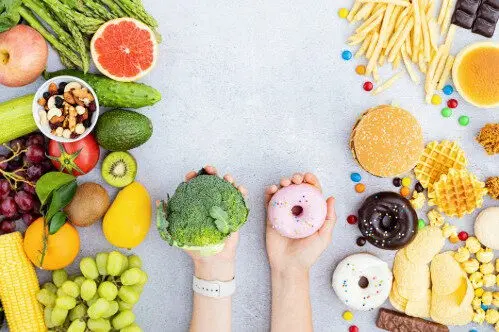
The most shocking data point from the recent NewsBurrow investigations is what researchers are calling the “57% Rule.” In a controlled clinical trial re-analysis, participants who switched to a completely unprocessed wholefood diet didn’t eat less—they ate significantly more by weight. Imagine a dinner plate overflowing with colorful roasted vegetables, quinoa, and leafy greens. By mass, this meal is gargantuan compared to a tiny portion of calorie-dense pasta or a processed meal replacement bar. Yet, because of the low energy density of these whole foods, the total energy consumed plummeted.
This phenomenon is driven by gastric distension. Our stomachs possess mechanoreceptors that send signals to the hypothalamus via the vagus nerve. These receptors respond to volume and weight, not just calorie counts. When you fill your stomach with water-rich, fiber-dense whole foods, those sensors fire off a “fullness” alert long before you’ve over-consumed energy. It is a biological hack that turns the traditional dieting experience on its head: instead of restriction, the path to health is paved with abundance.
| Food Type (Same Calories) | Visual Volume | Satiety Duration | Key Nutrient Impact |
|---|---|---|---|
| 1 Large Apple (approx. 95 kcal) | High (fills the hand) | Long (high fiber) | Antioxidants, Vitamin C |
| 1 Tablespoon Peanut Butter (approx. 95 kcal) | Very Low (tiny smear) | Short (low volume) | Healthy Fats, Protein |
| 2 Cups Steamed Broccoli (approx. 62 kcal) | Extreme (half a plate) | Very Long (bulk) | Fiber, Vitamin K, Folate |
Micronutrient Deleveraging: Why Your Brain Craves Bulk
Why does the brain demand hundreds of grams of vegetables when we eat “clean”? The NewsBurrow Press Team explored a fascinating new theory known as Micronutrient Deleveraging. The hypothesis suggests that our appetites are tuned to specific vitamins and minerals. In a wholefood environment, these nutrients are physically “locked” inside bulky, low-calorie packages like leafy greens and legumes. To get the required dose of zinc, magnesium, or vitamin A, we are biologically driven to eat more of these foods. This forces a beneficial trade-off: you get your nutrients, you feel stuffed, but you don’t over-consume energy.
The danger of modern ultra-processed foods (UPFs) is that they deliver these micronutrients via fortification alongside massive hits of sugar and fat. This effectively “short-circuits” our satiety compass. When a breakfast cereal is fortified with 100% of your daily vitamins, your brain receives the signal that its nutritional needs are met, even though the stomach is still physically empty. This leaves you in a “metabolically hungry” state where you continue to crave energy-dense foods because the physical sensation of fullness was never achieved.
ASCII Representation of Energy Density vs. Food Volume:
[WHOLE FOODS] [====== VOLUME ======] –> [low calories]
[PROCESSED] [= vol =] –> [HIGH CALORIES]
Cracking the ‘Expected Satiety’ Code
Eating is a visual and psychological experience as much as it is a physiological one. The University of Bristol’s “Bristol Satiety Toolkit” has become a central pillar in understanding this. Before you even take a bite, your brain calculates Expected Satiety based on the perceived volume of the food. If you see a large, vibrant bowl of salad, your brain prepares the body for fullness. Conversely, if you see a tiny, calorie-dense snack, your brain remains on high alert for more food, regardless of the calorie count.
This “perceived volume” heuristic is why volume eating is so sustainable. It addresses the psychological trauma of dieting—the fear of not having enough. By consciously choosing “Group 1” foods (water-rich greens, berries, and broth-based soups), you can satisfy the visual part of your brain that demands a full plate. This turns off the “starvation alarm” that typically triggers binges and cravings in traditional restrictive diets.
- Visual Fullness: Large plates of greens convince the brain that food is plentiful.
- Slower Digestion: Fiber and water content slow gastric emptying, keeping you full for hours.
- Hormonal Harmony: Whole foods help suppress the “hunger hormone” ghrelin more effectively than refined carbs.
- Gut Health: High-fiber intake fosters a diverse microbiome, which is increasingly linked to mental well-being and weight regulation.
Strategic Pairing: Why Volume Needs a Protein Anchor
While the volume comes from plants, the staying power comes from a balanced plate. The NewsBurrow Health Desk suggests that the ultimate volume eating strategy involves anchoring your massive portions of greens with lean proteins and healthy fats. Protein triggers cholecystokinin (CCK), a hormone that signals the end of a meal. Without this anchor, you might find yourself full but “unsatisfied”—a state that leads to late-night snacking. Think of volume eating as the “engine room” of your diet, while protein and fats act as the “stabilizers.”
The “DRESS Code” for 2026—Diet, Relationships, Exercise, Stress, and Sleep—aligns perfectly with this approach. When we are well-rested and less stressed, our hormonal response to food volume is more accurate. Research shows that sleep deprivation can actually dull the brain’s response to satiety signals, making us crave high-density “junk” even if our stomachs are physically full of healthy volume. It’s a holistic cycle: the more whole foods you eat, the better you sleep; the better you sleep, the easier it is to choose whole foods.
The Verdict: Reclaiming Nutritional Intelligence
The era of the “mathematical burden” is coming to a close. By embracing wholefood diet volume eating, we are returning to a primitive but powerful form of health management. This research proves that we don’t need to be afraid of the dinner plate; we just need to be more selective about the architecture of our meals. When we choose foods in their natural form, we aren’t just eating—we are communicating with our biology in a language it understands. We are finally proving that we can eat more, feel better, and live longer by simply trusting our inbuilt nutritional intelligence.
What do you think? Are you ready to ditch the calorie tracker and start filling your plate with volume? Join the conversation on NewsBurrow.com and share your favorite volume-eating hacks. Has switching to whole foods changed your relationship with hunger? Let’s talk about it below!
The evidence is overwhelming: the most sustainable way to achieve lasting metabolic health isn’t by eating less, but by eating smarter. By leveraging the high-volume, low-calorie density of whole foods, you can finally silence the hunger hormones that often sabotage even the most disciplined fitness journeys. Transitioning to this lifestyle doesn’t just improve your physical silhouette; it restores your psychological relationship with food, replacing the anxiety of restriction with the satisfaction of abundance.
To help you master this art of nutritional intelligence, the NewsBurrow Press Team has curated a selection of resources designed to simplify your journey toward a fuller plate and a healthier life. These tools are specifically chosen to provide practical, chef-driven strategies for incorporating high-volume meals into a busy modern schedule. Whether you are a beginner looking for a structured 4-week jumpstart or an experienced athlete seeking to optimize satiety, these resources bridge the gap between academic research and your kitchen counter.
Take the first step toward a diet you can actually enjoy by exploring our top-rated recommendations below. We invite you to join our growing community by subscribing to the NewsBurrow newsletter for weekly breakthroughs in health science and leaving a comment to share your own volume-eating success stories. Your journey toward evidence-based wellness starts with the very next meal you prepare.


GIPHY App Key not set. Please check settings