

 Emily Carter
Table of Contents
Arizona Utility Rate Lawsuit
AG Kris Mayes Sues Over Project Blue: Will Your Arizona Electric Bill Skyrocket?
Arizona utility rate lawsuit developments suggest a massive legal showdown as Attorney General Kris Mayes takes on state regulators to block potential price hikes for Tucson residents.
AG Kris Mayes Sues Over Project Blue: Will Your Arizona Electric Bill Skyrocket?
The Billion-Dollar Battle for Arizona’s Power Grid
In a move that has sent shockwaves through the Copper State’s political and utility landscape, Arizona Attorney General Kris Mayes has officially declared war on the Arizona Corporation Commission (ACC). The catalyst? A massive, “hyperscale” data center known as Project Blue, which is poised to swallow as much energy as 57,000 homes. Mayes argues that the regulatory body essentially handed the keys to the vault to big tech developers, bypassing constitutional safeguards that protect everyday families from predatory energy pricing.
This isn’t just a legal skirmish; it is a fundamental clash over who truly owns the future of Arizona’s infrastructure. While the ACC claims its approval of an Energy Supply Agreement (ESA) was a standard procedural step to foster economic growth, Mayes contends the deal was a “backroom giveaway” that could leave Tucson residents footing the bill for a private entity’s massive power appetite. The stakes are immense, as the outcome of this lawsuit will likely dictate the rules of engagement for the AI-driven tech boom sweeping across the Southwest.
The “shock factor” here lies in the sheer scale of the energy demand. We are talking about 286 megawatts of capacity—a load so heavy it could strain even the most robust electrical grids during the blistering Arizona summer. As Mayes files her appeal in the Maricopa County Superior Court, the question on every ratepayer’s mind is no longer *if* their bills will go up, but by how much. For a community already grappling with a proposed 14% rate hike from Tucson Electric Power (TEP), this legal fight is the last line of defense against what many are calling “corporate greed.”
Project Blue Unmasked: The Tech Giant Looming Over Tucson
Behind the cryptic codename “Project Blue” lies a massive $3.6 billion data center campus proposed for a 290-acre swath of land near the Pima County Fairgrounds. While developers originally attempted to shield their identity behind non-disclosure agreements, investigative reports have linked the project to heavyweights like Beale Infrastructure Group. The facility is designed to be the physical backbone of the digital age, housing thousands of servers that power everything from AI training to global cloud storage.
However, the sheer size of Project Blue is what has neighbors and environmentalists on edge. Unlike a standard office building or even a traditional factory, a hyperscale data center operates 24/7 at peak intensity. This continuous “baseload” demand requires a constant flow of electricity and, in many cases, millions of gallons of water for cooling. In a region where water and energy are increasingly viewed as zero-sum resources, the introduction of a giant that consumes more power than a small city is bound to ignite fierce debate.
The project’s energy profile is staggering. According to TEP filings, the facility will require significant infrastructure upgrades to handle the load. While the developers promise these upgrades will improve grid efficiency, skeptics point out that the cost of maintaining this “super-grid” often trickles down to residential customers through subtle tariff adjustments. It is a classic tale of two Arizonas: the high-speed, high-tech future versus the local community trying to keep its lights on without breaking the bank.
| Metric | Project Blue Estimated Impact | Equivalent Consumption |
|---|---|---|
| Energy Capacity | 286 Megawatts (MW) | ~57,200 Average Arizona Homes |
| Investment Value | $3.6 Billion | Largest industrial project in Pima history |
| Water Commitment | 100% Replenishment Pledge | Contested by local advocacy groups |
The ‘Sweetheart Deal’ Allegations: A Constitutional Crisis?
Attorney General Mayes’ primary legal ammunition is Article 15, Section 3 of the Arizona Constitution. This specific clause grants the ACC the *exclusive* power to set utility rates. Mayes argues that by approving a private agreement that allows TEP and the developer to “choose their own rate” behind closed doors, the Commission effectively abdicated its constitutional duty. “The loophole created for the developers… to secretly set electricity rates… is a dangerous recipe for massive price hikes,” Mayes stated in a scathing press release.
The lack of transparency is perhaps the most damning part of the AG’s complaint. Large portions of the Energy Supply Agreement remain heavily redacted, hidden from public scrutiny and even from the eyes of intervenors like the City of Tucson. When the public is cut out of the loop, trust evaporates. Mayes is essentially accusing the Republican-led commission of running a “star chamber” for big tech, where assumptions about economic benefits are accepted as gospel without being tested under oath or cross-examined.
To visualize the growing energy demand vs. current capacity, consider the following ASCII projection of Arizona’s projected “Big Tech” load growth over the next decade:
Arizona Grid Demand Forecast (2025-2035)
Load (MW)
^
|          / [2035: 16,000 MW Pipeline]
|         /
|        /|       /  [2028: Project Blue fully online]|      /
|/_______________> Time
2025 (8,500 MW Peak)
This graph illustrates the “Giga-gap” that utilities must bridge. The Attorney General’s concern is simple: if the grid takes 140 years to build capacity for 8,500 MW, how can it safely and fairly add 16,000 MW of demand in just a few years without shifting the financial burden onto those who can least afford it?
The Pima County Pocketbook: Will Residential Rates Suffer?
While TEP has officially stated that the Project Blue agreement is unrelated to its current 14% rate hike request, the Attorney General’s expert testimony suggests otherwise. Her office claims that TEP’s proposed hike is fueled by “blatant corporate greed,” arguing that the utility could maintain reliability with a mere 4% increase. The discrepancy—a massive $148 million per year—is essentially a “wealth transfer” from Tucson families to TEP shareholders.
The fear is that Project Blue acts as a catalyst for these hidden costs. When a utility builds new substations or transmission lines for a single large customer, the capital expenditures are often rolled into the “rate base,” meaning every customer pays a portion of the interest and depreciation on those assets. Even with “guardrails” in place, the sheer gravity of a 286 MW load pulls on the entire system’s finances. If the data center ever fails or scales back, who pays for the abandoned infrastructure? The answer, historically, has been the ratepayer.
Consider the potential savings for a typical Tucson household under the AG’s proposed alternative vs. TEP’s current plan:
- TEP Proposed Hike: Average bill increases by ~$240 annually.
- AG Mayes Alternative: Average bill increases by only ~$40 annually.
- Net Annual Savings: $200.00 per household.
For a family living paycheck to paycheck, $200 is more than a statistic; it’s a month of groceries or a car repair. This is the heart of the “consumer advocacy” angle that makes this story so combustible.
The Regulatory Defense: “We’re Protecting You,” Says the ACC
Not everyone sees a villain in the Corporation Commission. Commissioners who voted in favor of the deal, such as Nick Myers and Rene Lopez, argue that *without* the contract, Project Blue could simply enter the grid under existing heavy-user tariffs that have *fewer* protections. They contend the Energy Supply Agreement actually insulates the public by requiring the developer to pay for infrastructure upgrades and guaranteeing minimum monthly payments regardless of energy use.
The ACC’s defense rests on the idea of “spreading the fixed costs.” Their logic is straightforward: the more kilowatt-hours sold to a massive industrial customer, the lower the per-unit cost of the entire grid for everyone else. By attracting a multi-billion dollar project, they claim they are diversifying the tax base and funding the very “clean energy transition” that climate advocates have been demanding for years. In their view, Kris Mayes is playing politics with economic development.
However, the sole dissenting vote, Rachel Walden, highlighted a critical flaw. She noted that similar contracts in other states are often much longer—14 to 17 years—compared to Arizona’s 10-year deal. “I don’t want Arizona to have the worst contract compared to other states,” she warned. This subtle “shock factor” suggests that while other states are driving hard bargains with Big Tech, Arizona regulators might be getting “taken to the cleaners.”
The AI Power Guzzle: Grid Stability in the Hot Seat
Data centers are increasingly evolving into “AI factories.” Artificial Intelligence training jobs don’t just use power; they pulse it. High-frequency oscillations in power demand from thousands of GPUs can create “ripples” across the electric grid that threaten stability. In a state like Arizona, where air conditioners already push the grid to its limits during the 115°F summer peaks, adding a hyperscale data center is like trying to plug a hair dryer into an outlet that’s already powering a stadium.
Grid reliability is the ultimate wild card. While TEP remains confident in its ability to meet peak load, they have notably declined to include “curtailment” language in the Project Blue contract. This means that during a grid emergency—say, a massive heatwave that threatens brownouts—Project Blue might not be legally required to power down to save the lights in residential neighborhoods. This omission is a major point of contention in the Attorney General’s lawsuit.
The environmental impact is also heating up. Preliminary research from ASU’s School of Geographical Sciences suggests that the waste heat expelled by massive data centers can actually raise neighborhood temperatures by several degrees. For Tucson, a city already battling the “urban heat island” effect, the addition of a 286 MW heater in the desert isn’t just an energy issue—it’s a public health crisis waiting to happen.
The Water vs. Watts Trade-off: Cooling the “Silicon Desert”
If the energy demand doesn’t get you, the water demand might. Tucson is a city that “draws the line” on water waste. The original Project Blue proposal was rejected by city leaders over concerns that it would drain local aquifers. While the developers have since moved to unincorporated Pima County and pledged a “100% replenishment” model, activists remain skeptical. The math simply doesn’t add up for many who have seen similar promises made and broken in other arid states.
The “economic value” of water in the desert is far higher than its market price. When a data center uses millions of gallons for cooling, it isn’t just “buying” water; it’s consuming a finite resource that cannot easily be replaced. If the Colorado River supplies are cut—a near certainty in the coming decade—who gets priority? The servers running AI chatbots or the farmers and families of Southern Arizona? This resource conflict is a ticking time bomb for state regulators.
The “No Desert Data Center” coalition has been relentless in its opposition, reminding supervisors that “selling off our environment to companies with no vested interest” is a recipe for long-term disaster. They argue that the promise of 163 jobs (a relatively low number for a $3.6 billion project) does not justify the potential depletion of Pima County’s most precious liquid asset.
The Verdict: A Legal Showdown with National Implications
As the case moves to the Maricopa County Superior Court, the eyes of the nation are on Arizona. This isn’t just about one data center in Tucson; it’s about setting the “rules of the road” for the trillion-dollar AI infrastructure build-out. Will utilities be allowed to negotiate “sweetheart rates” in the shadows, or will the public’s right to transparent, fair pricing prevail? Attorney General Kris Mayes is betting her political legacy on the latter.
For the residents of Tucson, the message is clear: your electric bill has become a battleground. This lawsuit represents a critical opportunity to demand accountability from both the utility companies and the regulators who oversee them. As the 2026 election cycle approaches, the “political consequences” promised by advocacy groups are likely to become a reality for anyone seen as siding with “Big Tech” over the “Little Guy.”
We want to hear from you. Is the economic promise of the “Silicon Desert” worth the risk of skyrocketing utility bills and strained resources? Or is it time for Arizona to put a hard cap on data center expansion? Join the conversation in the comments below and share your thoughts on the future of our state’s energy grid. Your voice is the only thing more powerful than the grid itself.
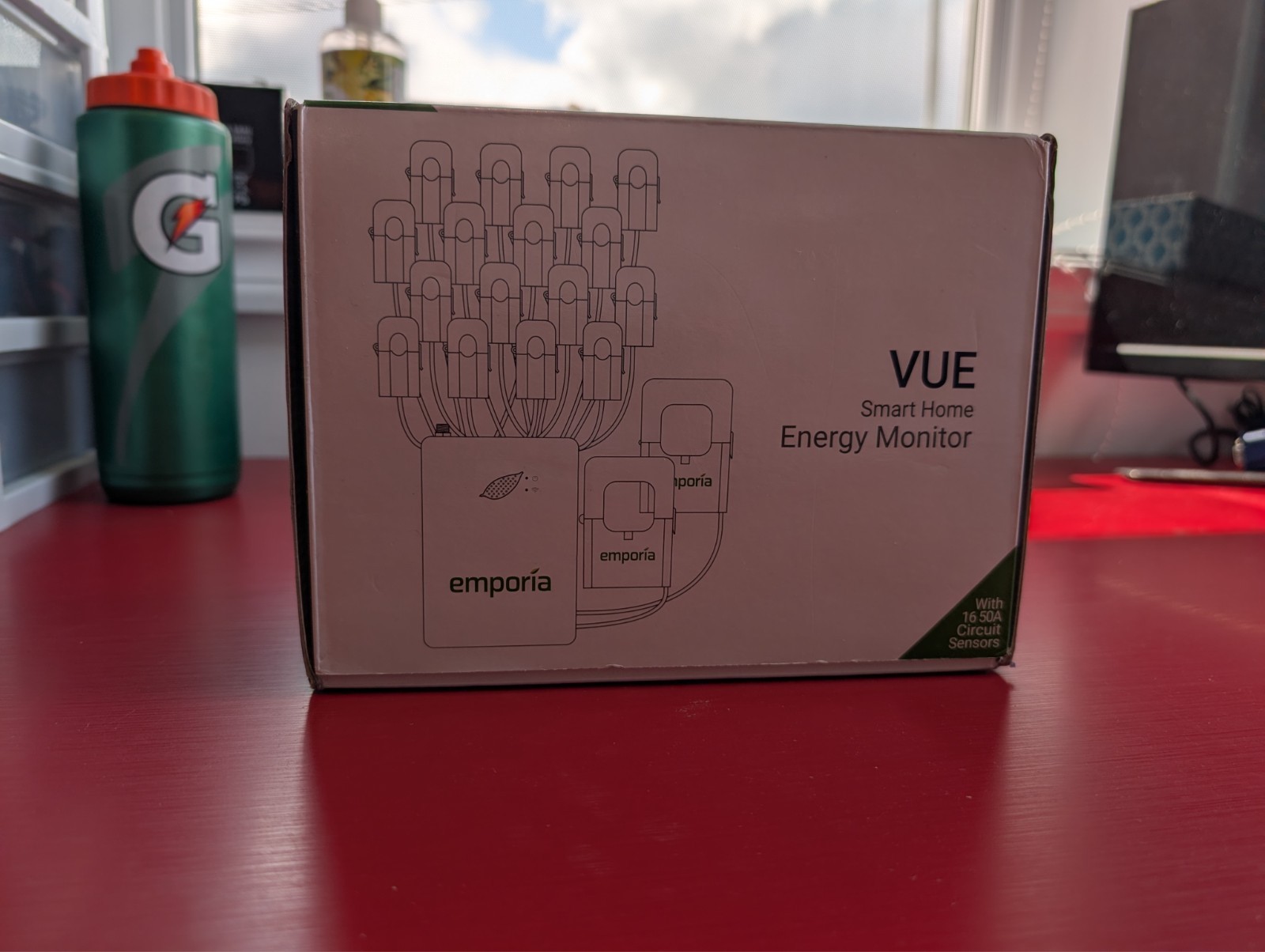
As the legal battle between Attorney General Kris Mayes and state regulators intensifies, Arizona households are finding themselves caught in the middle of a complex energy tug-of-war. With the looming threat of significant utility rate hikes to support massive data center expansions like Project Blue, the need for residential energy transparency has never been more urgent. While the courts deliberate on constitutional protections and corporate accountability, proactive homeowners are taking matters into their own hands by uncovering exactly where their power—and money—is going in real time.
Waiting for a monthly bill to arrive is no longer a viable strategy for budgeting in a volatile energy market. Modern residential technology now allows you to identify “power hogs” and phantom loads with surgical precision, providing the data needed to push back against rising costs. By monitoring your home’s “baseload” and shifting heavy appliance use to off-peak hours, you can effectively insulate your wallet from the fallout of these high-level policy disputes. Knowledge is the ultimate power in this fight for ratepayer rights.
We invite you to join the conversation by sharing your thoughts on Arizona’s energy future in the comments below. To stay informed on the latest developments in the Arizona utility rate lawsuit and receive exclusive tips on protecting your home budget, be sure to subscribe to the NewsBurrow newsletter. Take the first step toward total energy independence today by exploring the cutting-edge tools designed to put you back in control of your monthly expenses.
Shop Products On Amazon
Shop Products on Ebay





Trending Similar Stories in the News
Q&A: Arizona’s AG Takes on Utilities, Big Water Users and the Trump Administration Inside Climate News...
Arizona Corporation Commission not exempt from agency rulemaking statutes, court rules Arizona Capitol Times...
Trending Videos of Arizona Utility Rate Lawsuit

#ArizonaNews #UtilityRates #CleanEnergy #TucsonLife #ArizonaPolitics
Arizona news, utility rates, Kris Mayes, Project Blue, energy law


GIPHY App Key not set. Please check settings