

 Emily Carter
Table of Contents
Tucson Ice Policy Ordinance
Tucson Blocks ICE: City Council Passes Historic Ban on Federal Use of Public Property
Tucson ICE policy ordinance developments have reached a fever pitch as local leaders vote unanimously to bar federal agents from using parks, parking lots, and recreation centers for enforcement operations.
By Emily Carter (@ECarterUpdates)
Political Analyst, NewsBurrow News Network
The Line in the Sand: Tucson’s Unanimous Defiance of Federal Overreach
On a chilly Tuesday evening that will likely be etched into the political history of the Southwest, the Tucson City Council took a stand that reverberated far beyond the Sonoran Desert. In a unanimous 7-0 vote on January 21, 2026, city leaders directed the drafting of a historic ordinance—a legislative fortress designed to bar Immigration and Customs Enforcement (ICE) and Homeland Security from setting foot on city-owned property for civil enforcement. The move is not merely a policy shift; it is a declaration of jurisdictional war in an era where the boundary between local safety and federal mandate has become dangerously blurred.
The atmosphere inside the council chambers was electric, charged with the weight of thousands of constituents who have spent months living in the shadow of unmarked vans and sudden raids. For many, this ordinance represents a desperate attempt to reclaim the soul of a city that has long prided itself on being a welcoming “Old Pueblo.” By instructing City Attorney Roi Lusk to formalize this ban, the council is effectively telling the federal government that while the desert may be vast, the city’s public spaces are no longer a playground for federal staging.
This legislative maneuver comes at a time of unprecedented friction. As federal agencies ramp up efforts across Arizona, Tucson has chosen to lead the resistance, joining a small but growing cadre of “sanctuary-style” cities that are testing the limits of the Supremacy Clause. The message is clear: the City of Tucson will not be a silent partner in the deportation machine. Critics argue it is a symbolic gesture that federal law will eventually steamroll, but for the local families watching from the gallery, it was the first time in years they felt the city truly had their backs.
Mayor Regina Romero’s Vision: Restoring ‘Certainty and Safety’ to Local Parks
Mayor Regina Romero, the primary architect of this legislative push, did not mince words when she addressed the council. Her vision centers on a simple, human premise: every resident, regardless of their documentation, should be able to walk their dog in a city park or take their child to a recreation center without fear of being detained. Romero’s advocacy isn’t just political; it’s deeply rooted in the lived experience of a border community that feels the immediate pulse of immigration policy changes.
The Mayor emphasized that the ordinance is about creating “certainty.” When public spaces become sites for federal staging, they cease to be public in the eyes of the vulnerable. Romero’s plan includes rigorous staff training and a centralized contact point for any federal requests, ensuring that no city employee is caught off guard or unintentionally facilitates a civil arrest. It is a proactive strategy designed to replace chaos with a clear, city-wide protocol that prioritizes the sanctity of municipal services.
Under her direction, the city is not just blocking access; it is building a shield. The proposed rules would require a 30-day implementation report, forcing city departments to audit their current interactions with federal agents. This move is as much about internal accountability as it is about external defiance. By hardening the city’s infrastructure against federal use, Romero is betting that a well-organized municipal government can provide the protection that national policy currently lacks.
Defining the ‘Protected Zones’: Where ICE is No Longer Welcome
The scope of the “Tucson ICE policy ordinance” is intentionally broad, covering every square inch of property the city controls. From the multi-story parking garages downtown to the sprawling vacant parcels on the city’s periphery, the ban is designed to leave no sanctuary for federal staging. Public facilities, including libraries and bill-payment centers, are also on the list, effectively creating “safe zones” where municipal business can be conducted without the looming threat of surveillance.
Recreation centers like El Rio and Donna R. Liggins have been specifically highlighted as areas that must remain neutral ground. These are the hearts of Tucson’s neighborhoods, serving as hubs for youth programs and senior services. The ordinance aims to prevent these community anchors from being used as “debriefing” or “processing” sites. To illustrate the scale of these protected areas, consider the following breakdown of city-owned assets that fall under this new protection:
| Property Category | Examples of Protected Sites | Primary Use Case |
|---|---|---|
| Public Parks | Reid Park, Sentinel Peak (A-Mountain) | Recreation and community gatherings |
| Transit Facilities | Ronstadt Transit Center, Sun Tran Hubs | Public transportation and commuting |
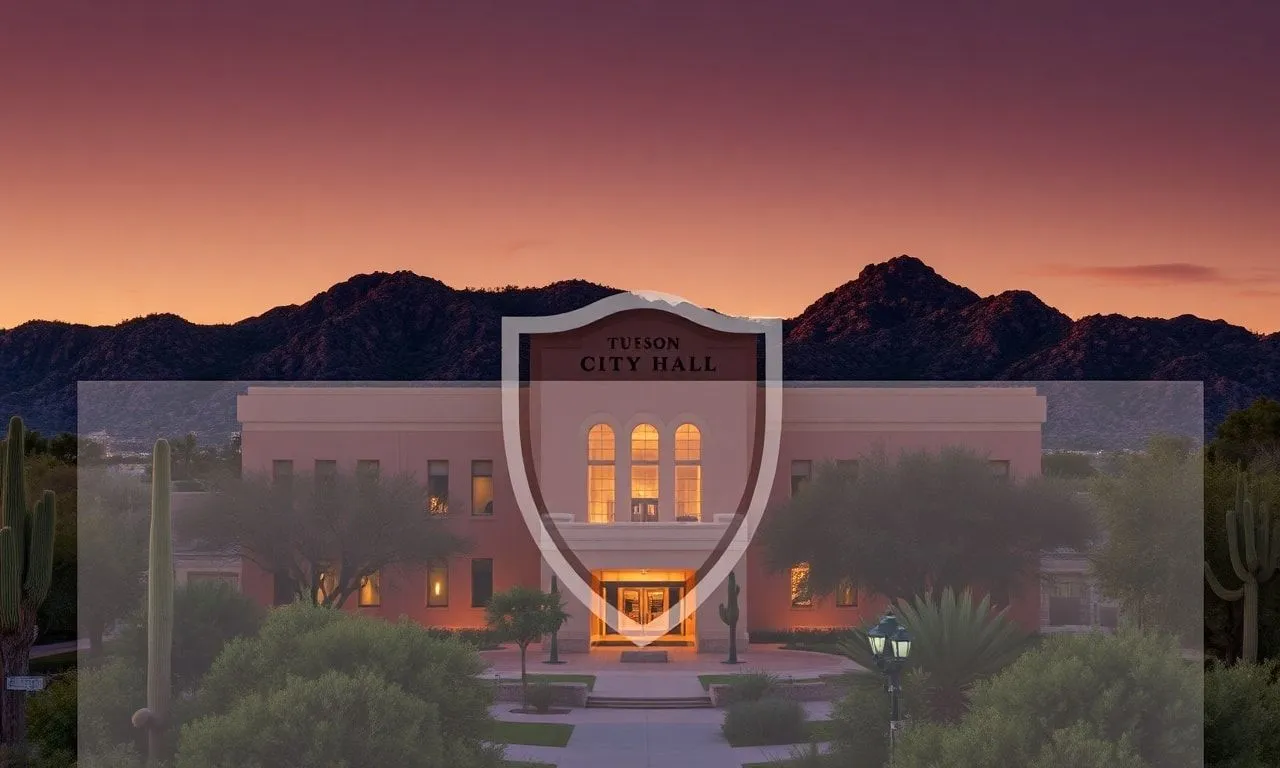
| Administrative Buildings | City Hall, Price Service Center | Utility payments and city governance |
| Public Works | Parking Garages, Vacant City Lots | Infrastructure and future development |
The Deciding Spark: From the December Raids to the National Strike
The catalyst for this sudden legislative urgency can be traced back to a series of high-profile incidents that shattered the city’s peace. In early December 2025, a massive Homeland Security Investigation operation swept through local restaurants and homes, detaining over 40 individuals in a single morning. The sight of tactical gear in local diners and unmarked vehicles in quiet residential streets sparked an immediate and visceral backlash from the community.
The tension reached a boiling point on January 30, 2026, when the Tucson Unified School District (TUSD) was forced to shutter 21 schools, including Tucson High and Pueblo High. Thousands of staff and teachers walked out as part of a national strike, protesting what they called “Gestapo-like” tactics used by federal agents. The strike wasn’t just about labor rights; it was a loud, collective refusal to educate children in a climate where their parents might not be there to pick them up at the end of the day.
This “shock factor”—the closure of nearly a quarter of the city’s schools—served as a wake-up call for the Council. They realized that the fear of ICE was no longer a background hum; it was an active force disrupting the fundamental functions of the city. The ordinance is a direct response to this community trauma, an attempt to douse the flames of a public safety crisis that federal policy ignited and local residents are now forced to extinguish.
City Hall vs. The Supremacy Clause: Can a Local Ordinance Truly Block ICE?
Despite the moral clarity of the Council’s vote, a massive legal shadow looms over the proceedings: The Supremacy Clause. Constitutional experts are already debating whether Tucson has the legal standing to block federal agents from property that, while city-owned, still falls under the jurisdiction of the United States. Federal preemption is a powerful tool, and the Department of Justice has a long history of overriding local “sanctuary” laws that they believe impede federal operations.
The legal battle likely centers on whether the city is “obstructing” or simply “withholding consent.” While the federal government can use eminent domain to seize property, doing so for a temporary staging area is a logistical nightmare. Tucson is banking on the “Anti-Commandeering Doctrine,” which suggests that the federal government cannot force local officials to use their resources or property to enforce federal programs. It’s a high-stakes gamble that could end up in the Supreme Court.
The graph below illustrates the escalating tension between local ordinances and federal enforcement actions over the last several years, highlighting the “tipping point” Tucson has reached in 2026.
Federal vs. Local Jurisdictional Conflict Index (2022-2026)

Level of Conflict
^
|          / [2026: Tucson Ordinance & School Strikes]
|         /
|        /  [2025: Massive December Raids]
|    ___/
|   /   [2024: Increased Surveillance]
|__/
+---------------------------------------------> Time
2022     2023     2024     2025     2026
Voices from the Council: Why Local Leaders Likened Tactics to the ‘Gestapo’
Perhaps the most jarring moment of the Council meeting came from Ward 2 Council Member Paul Cunningham. Known for a generally measured approach, Cunningham’s rhetoric took a sharp, dramatic turn when he compared recent federal operations to the “Gestapo.” He argued that the presence of masked, unidentified agents in local neighborhoods made him feel “less safe” than any perceived threat they were supposedly investigating. This comparison, while controversial, reflects the deep-seated anger bubbling in Tucson’s leadership.
Vice Mayor Lane Santa Cruz, who proposed the motion, echoed this sentiment, noting that her office had been flooded with messages from constituents who were terrified to leave their homes. “Fear creates chaos,” she noted, pointing out that when residents don’t know who is knocking on their door, they stop engaging with the city entirely. For Santa Cruz, the ordinance is about restoring the chain of command and ensuring that local police—not federal agents—are the primary faces of authority in Tucson neighborhoods.
The Council’s rhetoric isn’t just about shock; it’s about signaling. By using such powerful language, they are letting both their constituents and the federal government know that the “business as usual” era of quiet cooperation is over. They are framing federal enforcement not as a matter of national security, but as a direct threat to the urban peace and social cohesion of the city they were elected to protect.
Rapid Response: How Tucsonans Are Training to Document Federal Activity
While the City Council fights the legal battle, a grassroots army is mobilizing on the streets. Groups like the Tucson Community Rapid Response network have seen a surge in volunteers willing to be “community observers.” These individuals are trained not to interfere, but to document—using smartphones and legal “know-your-rights” cards to ensure that any federal interaction is recorded and held to account. Mayor Romero herself has shared the rapid response hotline in city communications, effectively endorsing this civilian oversight.
This network operates a 24-hour hotline where residents can report ICE sightings. Once an alert is verified, trained observers are dispatched to the scene to serve as witnesses. This isn’t just about activism; it’s about creating a paper trail for the Pima County Attorney’s Office, which has promised to prosecute any illegal conduct by federal agents. To help our readers understand the scale of this mobilization, we’ve outlined the core functions of the Rapid Response team:
- Verification: Bilingual volunteers vet calls to ensure reports are accurate and not based on rumors.
- Documentation: Observers use high-definition video and photos to record agent IDs and vehicle plates.
- Legal Support: Connecting impacted families with pro-bono immigration attorneys within minutes of an arrest.
- Family Care: Providing immediate childcare or emergency resources if a primary breadwinner is detained.
A Tale of Two Cities: Tucson’s Defiance vs. Mesa’s 287(g) Collaboration
Tucson’s bold stance creates a stark contrast with other Arizona municipalities. Just a short drive north, the city of Mesa maintains a long-standing 287(g) agreement with ICE. Under this model, local law enforcement effectively acts as an extension of federal immigration agencies, checking the status of individuals during the booking process. The difference between the two cities represents the deepening political fissure in Arizona: one city chooses total integration, while the other chooses total separation.
This regional split creates a confusing patchwork of safety for the state’s immigrant population. A family could feel secure in a Tucson park but find themselves in the crosshairs of a federal-local partnership just an hour away in Maricopa County. This inconsistency is precisely what Tucson’s council is trying to address—at least within their own borders. They are attempting to create a “haven” in a state that has historically been the testing ground for some of the nation’s harshest immigration laws.
The “Old Pueblo” is betting that its history of autonomy and its unique cultural identity will allow it to withstand the pressure from the state capital and the federal government. While Mesa follows a path of cooperation to receive federal funding, Tucson is willing to sacrifice those dollars for the sake of community trust. It is a fundamental disagreement on the definition of “public safety” in the modern American West.
The Looming Warehouse: DHS Expansion in the Desert
The urgency of Tucson’s ordinance is underscored by a massive federal development just 100 miles away. In January 2026, the Department of Homeland Security finalized a $70 million cash purchase of a 418,000-square-foot warehouse in Surprise, Arizona. ICE has since confirmed this site will be converted into a 1,500-bed processing facility—a massive industrial hub designed for rapid booking and deportation. The facility is roughly the size of seven football fields, a haunting physical manifestation of the federal government’s intent.
For Tucsonans, the Surprise facility is the “hub,” and their city is seen as a “spoke.” They fear that city property will be used as the collection point for those destined for the 1,500 beds in the West Valley. This industrial-scale expansion suggests that the raids seen in December were just the beginning of a larger, more systemic effort. The “Tucson ICE policy ordinance” is a preemptive strike against being integrated into this new, high-capacity deportation network.
The “shock” of a $70 million warehouse being bought in secret has rattled the entire state. Local officials in Surprise were reportedly not even notified of the purchase until it was finalized. Tucson leaders are using this lack of transparency as a justification for their own secrecy-shattering ordinance. If the federal government won’t share their plans, Tucson won’t share its property.
The 30-Day Implementation: What Happens Next for the Ordinance?
The clock is now ticking. The City Council has given the City Attorney and City Manager exactly 30 days to return with the finalized language of the ordinance. This period will be one of intense legal vetting. The city must ensure that the language is “bulletproof” against the inevitable lawsuits from the Department of Justice. Meanwhile, city staff are being prepared for a shift in their daily operations—a new “manual of arms” for interacting with federal agents who may show up at their facilities.
During this window, we expect to see increased public debate. Supporters will likely hold rallies to keep the pressure on, while opponents may seek state-level intervention from the Arizona Legislature to nullify the city’s power. The ordinance will also include a “transparency clause,” requiring the city to report back every month on any attempted federal incursions or requests for access. This will create a public record of federal activity that has, until now, remained largely hidden from view.
We encourage our readers to stay vigilant during this time. The next 30 days will determine if Tucson becomes a true “Sanctuary for Public Spaces” or if the ordinance will be tied up in the courts for years. Your voice matters in this conversation. Does a city have the right to choose who uses its parks? Or does federal authority supersede local ownership? Join the discussion on our social platforms and let us know where you stand.
Protecting the Heart of the Old Pueblo: The Future of Resident Trust
Ultimately, this story is not about legal jargon or warehouse square footage. It is about the social contract between a city and its people. When a grandmother is afraid to pay her water bill because an unmarked van is idling in the parking lot, the city has failed its most basic duty. By passing this ordinance, the Tucson City Council is attempting to repair that broken trust. They are making a high-stakes investment in the psychological well-being of their community, betting that a sense of safety is the most valuable commodity a city can offer.
The future of Tucson will be defined by how this conflict resolves. If the city succeeds, it could provide a blueprint for other municipalities across the nation looking to protect their public infrastructure from federal overreach. If it fails, it will serve as a cautionary tale about the limits of local power in the face of a determined federal agency. But for now, the residents of Tucson can look at their parks and recreation centers and know that, at least in the eyes of their local leaders, those spaces belong to the people—and the people alone.
As this historic ordinance moves toward its final vote, NewsBurrow will be on the ground, covering every development. This is a story of a city fighting for its identity in a rapidly changing political landscape. We invite you to follow us for deep-dive analysis and human stories from the heart of the “ICE Out” movement. The desert is quiet for now, but the political storm in Tucson is just beginning.
The recent legislative shift in Tucson underscores a critical reality for residents across the Old Pueblo: understanding your constitutional protections has never been more vital. While the city’s move to block federal use of municipal property provides a significant layer of protection, the complexities of federal law mean that individuals must remain personally prepared and informed. For many, navigating the intricate balance of local safety zones and federal enforcement requires more than just awareness; it requires accessible, reliable resources that can be deployed at a moment’s notice.
Empowerment begins with education, and having the right tools on hand can make a profound difference during unexpected encounters. From understanding the difference between judicial and administrative warrants to knowing how to document interactions safely, being equipped with verified information is the best way to safeguard your community and your loved ones. As we continue to follow the implementation of the Tucson ICE policy ordinance, we are committed to providing you with the knowledge needed to stay safe and secure in an ever-evolving political landscape.
We invite you to explore the essential resources we have curated below to help you and your family stay prepared and protected. Don’t forget to join the conversation in the comments section to share your thoughts on these historic changes, and subscribe to the NewsBurrow newsletter for the latest updates delivered straight to your inbox. Your proactive involvement is what keeps our community strong and informed.
Shop Products On Amazon
Shop Products on Ebay
Trending Similar Stories in the News
Trending Videos of Tucson Ice Policy Ordinance


GIPHY App Key not set. Please check settings