

 Chief Editor
Table of Contents
Supportive Housing Toronto Parkdale
Dunn House 2.0: How Toronto’s New ‘Social Medicine’ Housing is Saving Lives and Millions in Healthcare
Supportive housing Toronto Parkdale projects like the newly announced Dunn House Phase 2 are proving that prescribing a home is just as vital as prescribing medicine for our city’s most vulnerable residents.
Beyond Four Walls: Toronto’s Radical ‘Social Medicine’ Experiment Hits High Gear
For decades, Toronto‘s strategy for the unhoused has been a revolving door of emergency shelters and siren-filled hospital hallways. But on January 20, 2026, a groundbreaking shift occurred. In the heart of Parkdale, a rare coalition—federal, provincial, and municipal—unveiled Dunn House Phase 2, a modular housing complex that isn’t just about providing a roof; it’s about providing a prescription for survival.
This isn’t your standard public housing announcement. The NewsBurrow Press Team has learned that this project is the first major win for the newly minted federal agency, Build Canada Homes. By treating housing as essential clinical infrastructure, Toronto is effectively bypassing the bureaucratic red tape that has long kept medicine and real estate in separate silos. This is “Social Medicine” in action—a clinical intervention where the pharmacy is replaced by a safe, studio apartment.
The urgency is palpable. With nearly 85,000 people now experiencing homelessness across Ontario—a staggering 8% increase in just one year—the status quo has become a fiscal and humanitarian death trap. Dunn House 2.0 represents a middle finger to the old way of doing things, proving that when the government actually works in unison, the results are both faster and cheaper than the alternative.
The Triple-Threat Alliance: How Unprecedented Synergy Unlocked Parkdale’s Potential
In a political landscape often defined by finger-pointing, the funding model for Dunn House Phase 2 stands as a shocking anomaly of cooperation. The federal government, through Build Canada Homes, has injected $21.6 million into the project, while the Province of Ontario has committed up to $2.6 million annually for operational costs. The City of Toronto, acting through CreateTO, is the boots-on-the-ground developer leading the charge.
“Building on the success of Dunn House, Phase 2 exemplifies what is possible when every partner pulls in the same direction,” stated an official statement from the NewsBurrow Press Team. This isn’t just a win for Parkdale; it’s a template for the entire nation. By leveraging federal land owned by the University Health Network (UHN), the partners have eliminated the single greatest barrier to affordable housing: the cost of the dirt itself.
This rare alignment allows for the integration of wrap-around services that most social housing can only dream of. Residents aren’t just given a key; they are given a community. With doctors, social workers, and primary care nurses literally steps away from their front doors, the “revolving door” of the Emergency Room is finally being slammed shut.
The $2.1 Million Dividend: The Cold, Hard Math of Compassion
Critics often decry the high cost of supportive housing, but the data from Dunn House Phase 1 tells a much different story—one of massive savings. Preliminary analysis of Phase 1 residents reveals a fiscal miracle: a 52% reduction in Emergency Department visits and a breathtaking 79% drop in hospital bed days. For a healthcare system currently gasping for air, these numbers are life-saving.
The NewsBurrow Press Team has calculated that these health improvements translate to an estimated $2.1 million in annual cost savings for the Ontario healthcare system. In short, it is significantly cheaper to house someone than it is to let them deteriorate on the street and cycle through acute care. The chart below illustrates this dramatic shift in resource utilization:
Dunn House Health Impact Comparison
| Metric | Pre-Housing (1 Year) | Post-Housing (1 Year) | % Reduction |
|---|---|---|---|
| Emergency Room Visits | ~2,000 Total | ~960 Total | 52% |
| Hospital Bed Days | High Utilization | Low Utilization | 79% |
| Estimated System Savings | N/A | $2.1M / year | Infinite ROI |
Lego-Style Logistics: Why Modular is the Only Way Forward
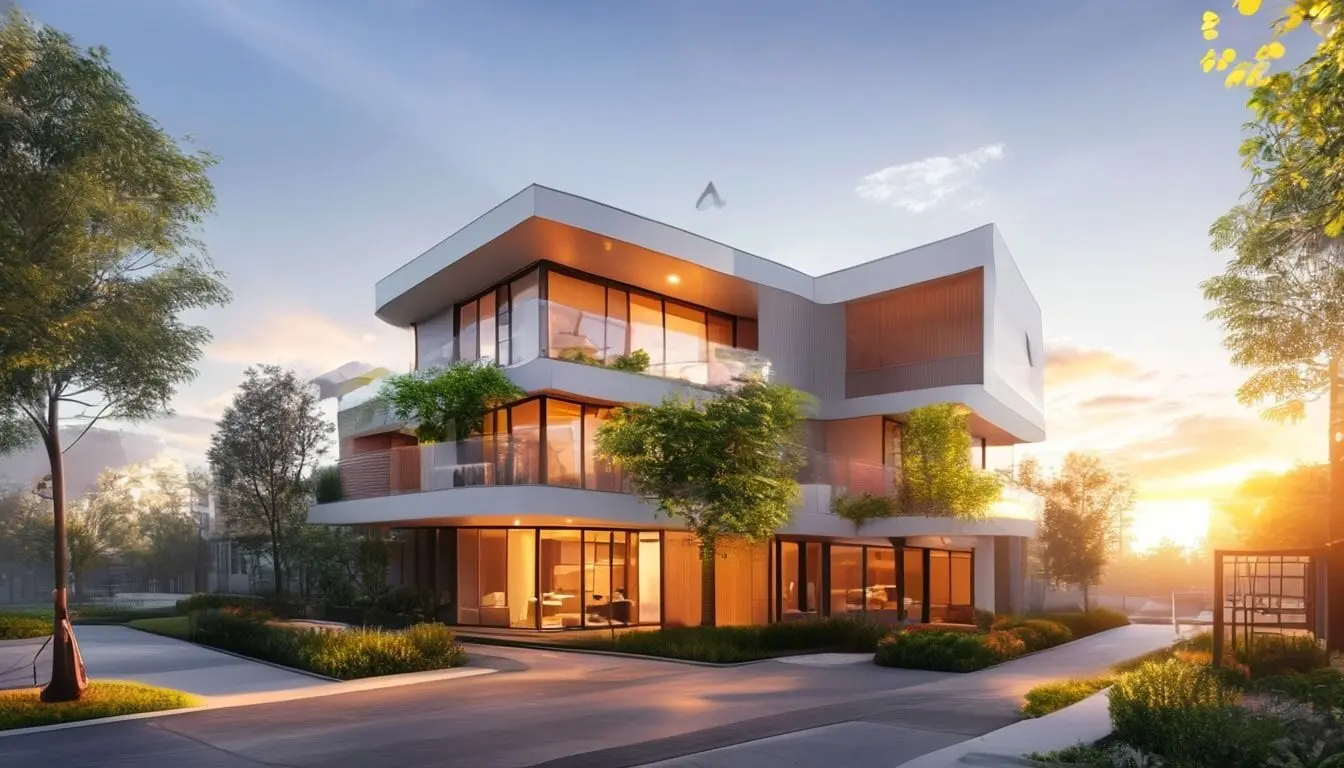
The traditional construction industry in Toronto is famously slow, bogged down by labor shortages and soaring material costs. To fight this, Dunn House 2.0 is utilizing advanced modular housing construction. These aren’t temporary trailers; they are high-quality, factory-built studio units that are craned into place, reducing build times by as much as 50%.
By shifting construction from a muddy site to a climate-controlled factory, the project minimizes material waste and nearly eliminates the environmental impact on the surrounding Parkdale neighborhood. For at-risk seniors currently living in shelters or hospital hallways, every day saved in construction is a day closer to safety. It is a “Lego-style” approach to a crisis that demands industrial speed.
The NewsBurrow Press Team spoke with engineering sources who confirm that the modular design includes specialized soundproofing and energy-efficient systems that outperform many luxury condos in the downtown core. This isn’t just about building fast; it’s about building better.
The Grey Crisis: Protecting the Invisible Seniors of Parkdale
While youth homelessness often grabs the headlines, the fastest-growing and most vulnerable unhoused population in Toronto is its seniors. These are individuals managing heart failure, diabetes, and mobility issues while sleeping in chairs at 24-hour respite centers or on subway grates. For them, Dunn House 2.0 offers a literal lifeline.
The project will deliver 54 rent-geared-to-income studio units specifically designed for seniors with complex medical needs. This is “at-risk seniors housing Toronto” at its most compassionate. Beyond the physical structure, the Social Medicine Housing initiative addresses the silent killer of social isolation, providing communal dining areas and programming designed to reconnect residents with their dignity.
“Dunn House has provided strong early evidence that secure housing is the essential missing piece of the healthcare puzzle,” says Dr. Kevin Smith, President and CEO of UHN. For a senior who has spent years in survival mode, a studio with its own kitchen and bathroom isn’t just property—it’s a sanctuary.
Prescribing a Home: The University Health Network’s Gatusso Model
At the center of this revolution is the UHN Gattuso Centre for Social Medicine. Led by the visionary Dr. Andrew Boozary, the center operates on a simple, albeit radical, premise: you cannot treat a patient effectively if you are discharging them back to a park bench. Boozary has pioneered a system where doctors can effectively “prescribe” housing to patients who are frequent users of emergency services.
This model integrates social determinants of health—like food security and housing stability—directly into the care plan. It is a fundamental redesign of the hospital’s role in society. UHN isn’t just treating the infection; they are treating the environment that caused it. This “prescription for change” is what makes supportive housing Toronto Parkdale a world-class case study in urban health.
However, the transition hasn’t been without its scars. Sources told NewsBurrow.com that the first year of Phase 1 was intense. Staff faced high levels of burnout as they navigated the complex trauma of residents, and there were reported instances of involuntary hospitalizations. Phase 2 aims to learn from these growing pains by increasing on-site mental health staffing and Peer Support Workers.
The $13 Billion Blueprint: Build Canada Homes Goes National
While Dunn House 2.0 is a local victory, it serves as the pilot for a massive national experiment. The Build Canada Homes agency, launched in late 2025 with an initial $13 billion budget, is looking to scale this model across the country. The agency’s mandate is clear: identify public lands, cut through the red tape, and build at scale.
With an initial $1 billion specifically earmarked for transitional and supportive housing, the federal government is signaling that the era of passive funding is over. They are now active developers. This proactive stance is a direct response to the national housing crisis, where the private market has failed to produce units affordable for those on social assistance.
The NewsBurrow Press Team analysis suggests that if BCH can replicate the Parkdale model in cities like Vancouver, Winnipeg, and Halifax, the strain on the national healthcare budget could decrease by billions. The “Dunn House Model” is quickly becoming the most talked-about policy export in Canadian urban planning.
A Future Forged in Steel and Compassion
As the cranes move into place on the parking lot near King and Dufferin, the message to Toronto is clear: homelessness is not an unsolvable mystery; it is a policy choice. By choosing to build Dunn House Phase 2, the city is choosing health over sirens, and dignity over decay. This is a story of what happens when we stop treating the symptoms of poverty and start curing the cause.
The NewsBurrow Network will continue to monitor the progress of this project, but for now, 54 seniors in Toronto can see a future that doesn’t involve an ER waiting room. This is more than real estate; it is a revolution in how we care for one another. We want to hear from you—is this the model Toronto needs to adopt city-wide? Should hospitals become the new developers of affordable housing?
Join the conversation below and share your thoughts on the future of Social Medicine.
Reported by Aiden Hughes (@AidenReports), NewsBurrow Press Team.
"@context": "https://schema.org", "@type": "NewsArticle", "headline": "Dunn House 2.0: How Toronto's New ‘Social Medicine' Housing is Saving Lives and Millions in Healthcare", "author": "@type": "Person", "name": "Aiden Hughes" , "publisher": "@type": "Organization", "name": "NewsBurrow Network" , "datePublished": "2026-01-22"
The success of the Dunn House initiative highlights a pivotal moment in urban development: the realization that high-quality, sustainable living spaces can be constructed with incredible speed and precision. As modular construction moves from a specialized niche to a mainstream solution for the housing crisis, many are beginning to see the potential for this technology to transform private living as well. Whether you are looking to build a backyard studio for a loved one or exploring a complete lifestyle shift toward efficient, modern living, the tools to create your own sanctuary are now more accessible than ever.
For those inspired by the innovative design and rapid deployment seen in Parkdale’s latest landmark, the possibility of owning a customizable, high-end modular space is no longer a distant dream. Modern engineering allows these structures to be resilient, energy-efficient, and aesthetically stunning, mirroring the professional standards set by the University Health Network’s newest project. Explore our curated selection of top-tier modular solutions that bring industrial-grade innovation directly to your property.
We invite you to browse the options below to find the perfect fit for your next project and join the conversation in the comments section about how modular builds are changing the face of our city. To stay informed on the latest urban innovations and housing breakthroughs, don’t forget to subscribe to the NewsBurrow newsletter for exclusive weekly updates.


GIPHY App Key not set. Please check settings