

 Aisha Khan
Table of Contents
Global Coral Bleaching Crisis 2026
Global Catastrophe: 50% of World’s Coral Reefs Damaged in Worst Bleaching Event Ever Recorded
Global coral bleaching crisis 2026 has reached a devastating milestone as new data confirms that over half of the world‘s reefs have sustained severe damage, threatening the very foundations of our marine ecosystems.
By Aisha Khan (@AishaKNews)
NewsBurrow Environmental Correspondent
The Great Underwater Fade: 2026 Marks the Year the Color Died
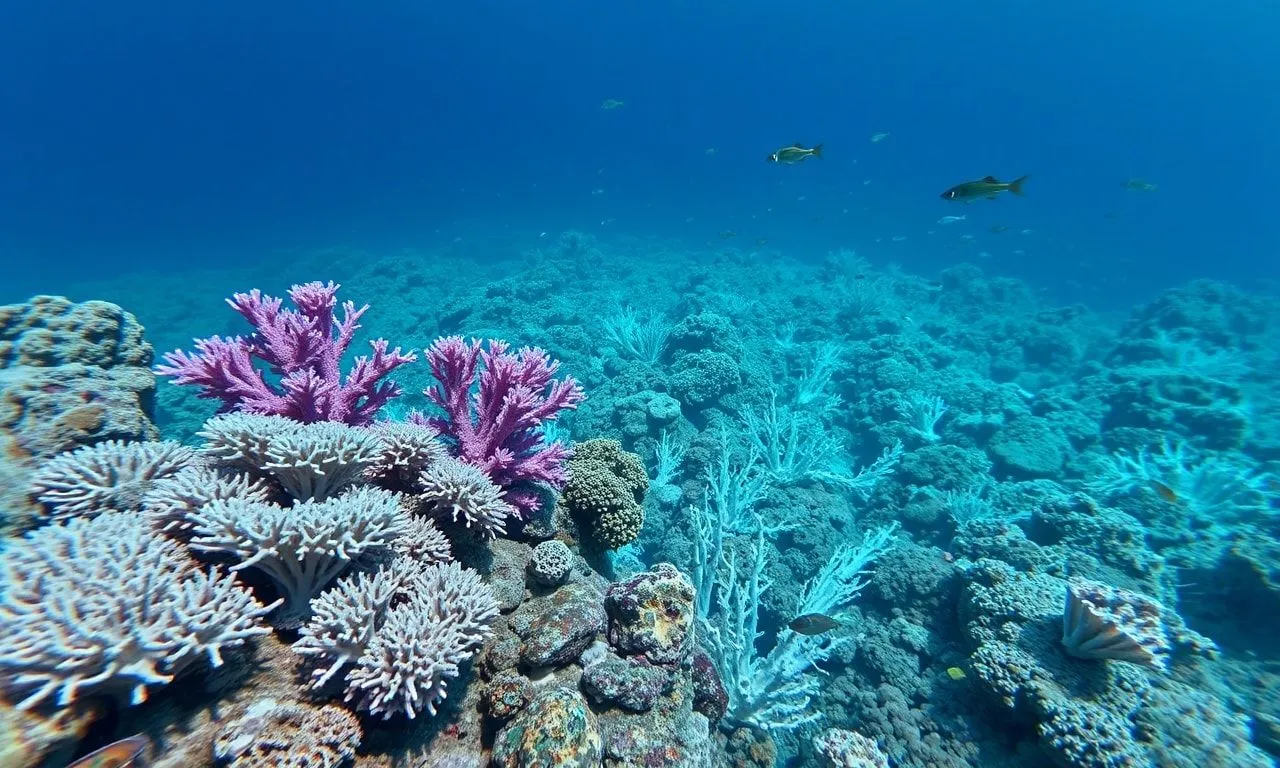
The sapphire waters of our planet’s oceans are hiding a ghostly secret that has finally breached the surface of public consciousness. As of February 17, 2026, international marine monitoring agencies have confirmed a nightmare scenario: the global coral bleaching crisis 2026 has officially damaged 50% of the world’s coral reefs. This isn’t just a seasonal setback; it is the worst coral bleaching ever recorded, a systemic failure of the ocean’s most vibrant life-support systems. From the turquoise lagoons of the Maldives to the sprawling majesty of the Great Barrier Reef, the vibrant purples and neon greens of healthy coral have been replaced by a skeletal, bone-white landscape.
For those of us who have spent years reporting on the slow-motion car crash of climate change, this moment feels different. It’s punchy, it’s visceral, and it’s terrifyingly quiet. When a reef bleaches, the bustling “metropolis” of the sea falls silent. The symbiotic algae that provide both color and food are expelled by heat-stressed coral hosts, leaving behind transparent flesh and bare limestone. If the heatwaves—fueled by a relentless 2025-2026 El Niño cycle—don’t subside within weeks, these skeletons don’t recover; they crumble. We are no longer talking about “saving the reefs” for our grandchildren; we are witnessing the coral reef tipping point 2026 in real-time, on our watch.
The “shock factor” here cannot be overstated. Imagine half of the world’s forests turning to ash in a single season. That is the ecological equivalent of what is happening beneath the waves. This catastrophe is a direct consequence of ocean temperatures that have consistently shattered historical ceilings, pushing marine life into a “Level 5” heat stress emergency—a category that didn’t even exist in the scientific lexicon a few years ago. The silence of the reefs is a deafening alarm for a planet that has ignored its rising fever for too long.
The 50% Threshold: Deciphering the Anatomy of a Global Die-Off
To understand the sheer scale of the mass coral mortality statistics, one must look at the data provided by the latest multi-institutional census. Unlike previous events that were regional, the 2026 crisis is truly planetary. Scientists have utilized a combination of AI-driven satellite imagery and thousands of in-situ “diver-checks” to confirm that the damage is not just widespread, but deep. While “bleaching” is a stress response that corals can theoretically survive, the current duration of thermal stress means that for many, the damage is terminal.
The following table illustrates the devastating progression of global bleaching events over the last decade, highlighting why 2026 is the undisputed champion of ecological destruction:
| Bleaching Event Period | Global Reef Area Affected (%) | Primary Climate Driver | Severity Status |
|---|---|---|---|
| 2014–2017 (3rd Global Event) | 68.2% | Multi-year El Niño | Extreme |
| 2023–2024 (Initial 4th Event) | 84.0% | Record Surface Temps | Critical |
| 2025–2026 (The Surge) | Over 84.4% (50% Damaged/Dead) | Consecutive El Niño Cycles | Catastrophic |
What makes the 2026 data so grim is the lack of “recovery windows.” Usually, reefs have several years between heatwaves to regrow. However, the transition from the 2024 heat to the 2026 El Niño was so rapid that coral larvae never had a chance to settle. We are seeing a “compounding trauma” where the survivors of 2024 are being finished off by the current temperatures. The result is a landscape where 50% of reefs are now classified as “significantly damaged,” meaning they have lost the structural integrity needed to support marine life.
The $36 Billion Void: When Paradise Becomes a Liability
While the ecological loss is heartbreaking, the economic impact of reef loss 2026 is a cold, hard reality that is already destabilizing national budgets. Coral reefs are the “blue ATMs” of the tropics, powering a global tourism industry worth billions. In places like the Bahamas, Thailand, and Australia, the reef is the primary product. But tourists don’t pay thousands of dollars to snorkel over algae-covered graveyards. We are seeing an immediate “vacation pivot,” where bookings for reef-based resorts have plummeted by 40% in the last quarter alone.
The economic ripple effect is staggering. Small island nations that rely on “dive tourism” are facing sovereign debt crises as their primary source of foreign exchange evaporates. This isn’t just about luxury travel; it’s about the waiter, the boat captain, and the local hotel owner whose livelihoods are tied to the health of the coral. The global tourism and fisheries collapse is no longer a forecast; it is a line item in the 2026 fiscal reports of dozens of nations.
Below is a visual representation of the projected economic losses across the three primary reef-dependent sectors by 2030 if current trends hold:
Projected Annual Global Economic Loss ($ Billions)Tourism    | ************************************ ($36B)
Fisheries  | ************************ ($24B)
Coastal Protection | ******************************************** ($44B)
+---------+---------+---------+---------+---------+
0        10        20        30        40        50
As the “natural armor” of the reefs crumbles, coastal property values are also taking a hit. Without the reef to break the energy of storm surges, beachfront hotels and homes are suddenly “front-line” victims of every passing tropical storm. Insurance premiums in reef-adjacent areas have surged by 300% since January, making “paradise” unaffordable for the very people who live there.
Empty Nets and Silent Markets: The Fisheries Crisis
If you think the death of coral only matters to scuba divers, look at your dinner plate. One in every four fish in the ocean spends at least part of its life cycle in a coral reef. These are the nurseries of the sea. As the global tourism and fisheries collapse intensifies, we are seeing a terrifying decline in biomass for staple species like grouper, snapper, and tuna. In West Africa and Southeast Asia, where fish provide the primary source of protein for millions, the empty nets are a harbinger of a looming humanitarian disaster.
The collapse of reef-based fisheries is creating a “nutritional vacuum.” When the reef dies, it is quickly overgrown by fleshy macro-algae. This shifts the entire ecosystem from a high-protein fish factory to a low-productivity “algal barrens.” The artisanal fishers—the men and women in small wooden boats who feed their villages—are the first to suffer. They are now forced to travel further out to sea into dangerous waters, often returning with nothing but “trash fish” that lack the nutrient density of traditional catches.
- Nursery Habitat Loss: 25% of all marine species lose their “home” as structures collapse.
- Protein Scarcity: Over 1 billion people face a direct threat to their primary animal protein source.
- Supply Chain Shock: Global seafood prices for reef-associated species have risen 150% in the last 18 months.
- Biodiversity Debt: Extinction risks for specialized reef fish have reached an all-time high in 2026.
Policy Own-Goals: When Deregulation Meets a Dying Planet
In a move that many environmentalists are calling “strategic arson,” the U.S. administration’s 2026 repeal of the Endangerment Finding has pulled the rug out from under global climate negotiations. By stripping the legal requirement to regulate greenhouse gases, the world’s second-largest emitter has effectively signaled a “free-for-all” for fossil fuel interests. This isn’t just a domestic policy shift; it is a death sentence for the reefs. Coral cannot survive in a world where the primary driver of their destruction—carbon emissions—is no longer even recognized as a legal threat by the world’s most powerful economy.
The irony is thick and bitter. While the administration claims deregulation will save the “American Dream,” the resulting climate disasters—intensified by the lack of reef protection—are projected to cost the U.S. economy $4.7 trillion in the coming decades. From the bleaching reefs of the Florida Keys to the parched grazing lands of the West, the cost of “not worrying about it” is being billed directly to the American taxpayer. The repeal has turned the U.S. into a “climate pariah,” the only nation now refusing to participate in the UN Framework Convention on Climate Change.
This policy vacuum creates a “legal lawlessness” where corporations are shielded from climate litigation while the ecosystems they depend on wither. At NewsBurrow, we’ve spoken to legal experts who warn that this move doesn’t just damage the environment; it creates a “domino effect” of deregulation that could dismantle decades of air and water quality standards. It is a gamble with the planet’s life-support systems where the house—and the reef—always loses.
The Robotic Race: Can AI and “Super Corals” Save the Day?
Amidst the gloom, a high-tech resistance is forming. In labs from Taiwan to the Maldives, scientists are deploying a “Manhattan Project” for the oceans. Using collaborative robots and sophisticated AI, researchers are identifying and mass-producing “Super Corals”—individuals that have naturally evolved to survive in water temperatures as high as 37°C (98.6°F). These aren’t GMOs; they are the “Olympians” of the reef, selected by AI “tank-hopping” algorithms that can test heat tolerance in weeks rather than years.
The innovation is breathtaking. We are seeing the rise of “Coral IVF” and robotic planters that can attach thousands of coral fragments to a reef in a single day—a task that would take human divers months. New conductive pastes are being used to “glue” corals to the sea floor while stimulating their growth with low-voltage electricity. It’s a mix of material science and marine biology that feels like something out of a sci-fi novel, but in 2026, it is our only realistic hope for a “baseline” survival.
- AI Surveying: Digital twins of reefs allow scientists to predict exactly which zones will bleach next.
- Robot Gardening: Automated systems can out-plant 10,000 “heat-tolerant” corals per week.
- Selective Breeding: Using robots to rapidly cross-breed the most resilient wild species.
- Cloud Brightening: Experimental tech to “shade” the Great Barrier Reef during peak heat weeks.
The Tipping Point: Our Final Choice for the Blue Planet
As we close this report, the question isn’t whether the global coral bleaching crisis 2026 will end, but what will be left when it does. We are at a crossroads where technology is racing against a ticking clock of political apathy and rising temperatures. The “50% damaged” figure is a warning shot across the bow of humanity. We can continue to dismantle the legal protections of our atmosphere, or we can embrace the radical innovation required to keep our oceans alive.
The reefs are more than just a vacation spot; they are the heart of our planet’s biological heritage. If they go, they won’t go alone. They will take the fisheries, the tourism, and the coastal safety of billions with them. The shock of 2026 should not lead to despair, but to a fierce, unrelenting demand for change. Join the conversation below: Do you think high-tech “Super Corals” can outpace the damage of global deregulation? Or have we already crossed the point of no return?
The NewsBurrow Press Team wants to hear from you. Share this story and let your voice be heard in the fight for our blue planet. #SaveTheReef #ClimateCrisis2026 #NewsBurrowExclusive
While the statistics surrounding the global coral bleaching crisis 2026 are undeniably staggering, they also serve as a clarion call for individual responsibility. Every year, thousands of tons of sunscreen wash off our skin and into the delicate marine ecosystems we enjoy. Traditional chemical blockers, particularly oxybenzone and octinoxate, have been scientifically linked to exacerbating coral stress and disrupting the reproductive cycles of already vulnerable reefs. Even if you are miles from the coast, these persistent chemicals eventually find their way into our shared waterways through simple daily routines.
Making a conscious pivot toward sustainable personal care is one of the most immediate ways you can help mitigate the pressure on these “underwater metropolises.” Mineral-based alternatives, utilizing non-nano zinc oxide or titanium dioxide, act as a physical shield for your skin without releasing toxic residues into the sea. This small change in your travel kit or daily skincare routine represents a tangible commitment to the survival of the reefs we have left. By choosing products that reflect sunlight rather than absorbing it into the ecosystem, you are casting a vote for a more resilient, blue future.
We invite you to join the NewsBurrow community in our mission to protect the planet’s natural wonders. Please share your thoughts on sustainable living in the comments section below and subscribe to our newsletter for the latest environmental breakthroughs and actionable eco-tips. Take the next step in your conservation journey by exploring our curated selection of top-rated, reef-safe protection and see how easy it is to safeguard both your skin and the sea.
Shop Products On Amazon
Shop Products on Ebay


![[Ph. Hubby] 1 Gram Sunscreen Spf 50 + Pa ++++ Reef-Safe Made In Korea Skincare](https://i.ebayimg.com/images/g/1twAAOSwsFhg46Be/s-l1600.jpg "Global Catastrophe: 50% Of World’s Coral Reefs Damaged In Worst Bleaching Event Ever Recorded 20")
Trending Similar Stories in the News
Half the World’s Coral Reefs Devastated by Record Ocean Heat SciTechDaily...
Severe and widespread coral reef damage during the 2014-2017 Global Coral Bleaching Event Nature...



GIPHY App Key not set. Please check settings