

 Chief Editor
Table of Contents
Abule Egba Tanker Crash
Heroic Rescue: Teenager Saved as Fatal Tanker Crash Devastates Abule Egba
Abule Egba tanker crash survivors recount the terrifying moments a runaway fuel truck plowed into local shops, sparking a desperate race against time to save those trapped in the debris.
Panic at Ekoro Junction: The Moment Abule Egba Stood Still
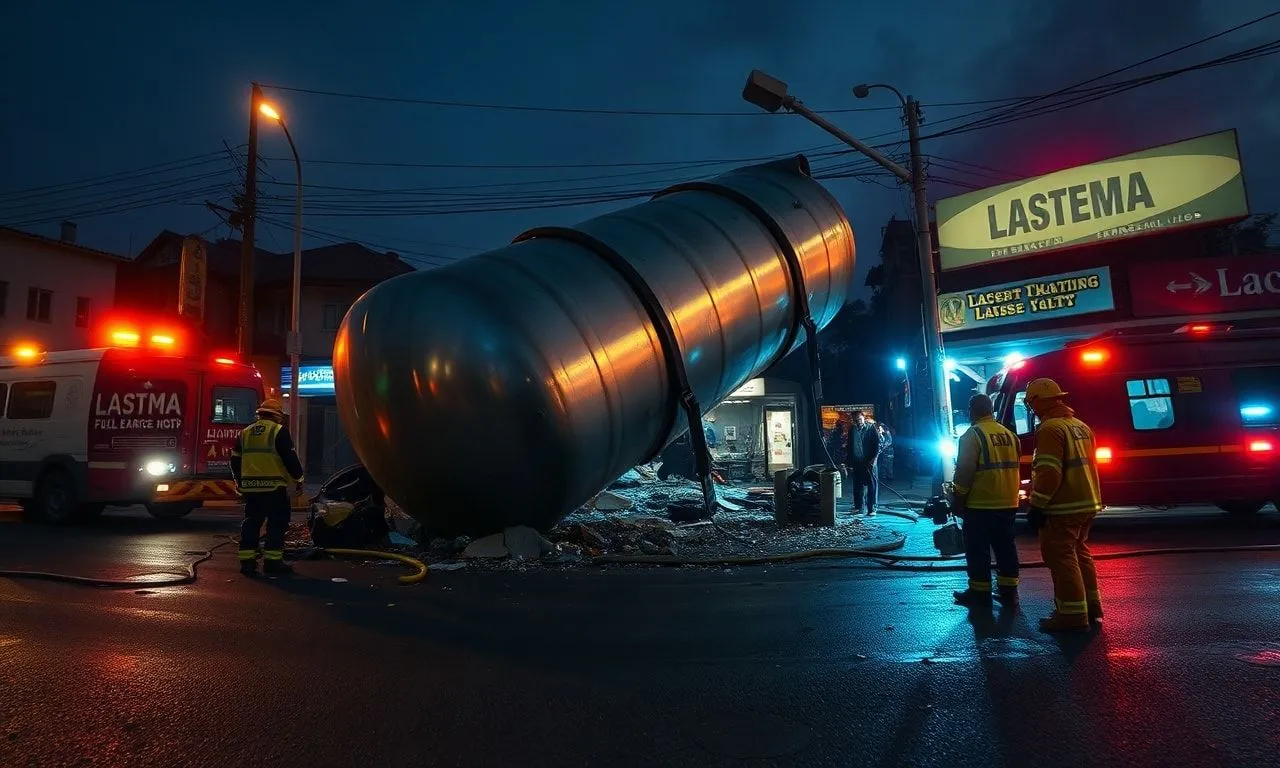
The golden hour over Abule Egba usually signals the frantic rush of commuters heading home, but this past Friday, the routine hum of Lagos life was shattered by the screech of grinding metal and the roar of a runaway beast. A fuel tanker, laden with highly flammable premium motor spirit, became a high-speed projectile as it descended toward the bustling Ekoro Junction. Eyewitnesses describe a scene of pure, unadulterated terror as the massive vehicle bypassed every attempt by the driver to slow its momentum.
Dust clouds erupted as the tanker veered off the asphalt, acting less like a vehicle and more like a wrecking ball. The sound of the impact—a sickening crunch of concrete meeting steel—echoed through the neighborhood, followed by a momentary, haunting silence. For those standing just meters away, the world seemed to slow down as they realized the magnitude of the disaster unfolding before their eyes.
Within seconds, the silence was replaced by screams. The smell of spilled fuel began to waft through the air, triggering a secondary wave of panic as residents feared a repeat of the fiery explosions that have historically plagued this corridor. It wasn’t just a traffic accident; it was a localized earthquake that leveled shops and trapped unsuspecting citizens under layers of brick and twisted iron.
As the dust settled, the true scale of the devastation became clear. What was once a vibrant row of roadside businesses was now a graveyard of merchandise and debris. The community, initially paralyzed by fear, soon found its voice, calling out into the wreckage for survivors, even as the threat of an inferno loomed large over the Ekoro axis.
Chronicle of a Disaster: How Mechanical Failure Led to Tragedy
Preliminary investigations into the Abule Egba tanker crash point toward a catastrophic mechanical failure that highlights a systemic rot in Nigeria’s heavy haulage industry. Reports from the scene suggest that the tanker’s braking system failed entirely as it approached the incline leading to the junction. This wasn’t a sudden snap, but the inevitable conclusion of what many believe was a history of neglected maintenance and technical oversight.
Lagos State officials have begun scrutinizing the vehicle’s registration and its history of roadworthiness. The reality of “flying tankers”—heavy vehicles with depleted brake pads and aging tires—is a frequent nightmare for Lagosians. In this instance, the driver reportedly realized the brakes were gone several hundred meters before the impact, yet had nowhere to steer the massive weight but into the structures lining the road.
The interaction between the tanker and the environment was violent and total. As the truck plowed into the shops, it didn’t just stop; it compressed everything in its path. Experts suggest that the force of a fully loaded tanker moving at even moderate speeds is equivalent to several tons of TNT upon impact. The structural integrity of the roadside buildings offered almost no resistance to the metal behemoth.
Below is a breakdown of the incident specifics as recorded by emergency responders:
| Metric | Recorded Detail |
|---|---|
| Location | Ekoro Junction, Abule Egba, Lagos |
| Primary Cause | Brake System Failure (Mechanical) |
| Vehicle Type | Articulated Fuel Tanker (33,000 Liters) |
| Immediate Casualties | 1 Adult Female (Deceased) |
| Successful Rescues | 4 Individuals (Including 1 Teenager) |
The Miracle Beneath the Rubble: A 15-Year-Old’s Narrow Escape
Amidst the grim tally of destruction, a story of incredible survival emerged that has captivated the heart of Lagos. A 15-year-old girl, who was inside one of the shops during the moment of impact, found herself encased in a pocket of space created by two collapsed beams. While the world outside was a chaotic blur of sirens and shouting, she remained pinned in a dark, suffocating corner, waiting for a miracle.
Rescuers from the Lagos State Emergency Management Agency (LASEMA) used delicate sensing equipment and manual labor to pick through the wreckage. Every movement of a brick carried the risk of further collapse. When the first signs of life were detected—a faint tapping from deep within the rubble—the atmosphere changed from recovery to a desperate race against time. The girl’s father, standing at the perimeter, was a picture of stoic agony as he watched the team work.
The rescue was nothing short of surgical. Using hydraulic cutters and brute strength, responders created a small opening. When the teenager was finally pulled free, dusty but alive, a roar of triumph went up from the gathered crowd. It was a rare moment of light in an otherwise dark day. Medical teams immediately stabilized her on-site, noting that while she suffered from shock and minor bruises, she was, by all accounts, a survivor of an impossible situation.
This “miracle rescue” has sparked a wider conversation about the resilience of the youth and the bravery of the men and women who risk their lives to dig into unstable ruins. Her survival serves as a poignant reminder that even in the face of absolute devastation caused by negligence, the human spirit, aided by professional intervention, can prevail against the odds.
First Responders on the Frontline: The LASTMA and LASEMA Coordination
When the call went out, the response was a synchronized ballet of emergency services. The Lagos State Traffic Management Authority (LASTMA) and LASEMA were on the scene within minutes, setting up a perimeter to keep a curious and panicked public away from a potential blast zone. Their coordination was critical; without the swift containment of the spilled fuel, the fatality count could have easily reached double digits.
The Lagos State Fire Service played a pivotal role by blanketing the crash site in chemical foam. This proactive measure suppressed the volatile vapors rising from the ruptured tanker, allowing the rescue teams to work without the immediate threat of a fireball. It was a high-stakes environment where one spark from a rescue tool could have ended dozens of lives. The professionalism displayed by these agencies underscores a significant improvement in the state’s disaster management capabilities.
However, the operation wasn’t without its hurdles. Crowds of onlookers, many filming with their phones, hampered the movement of heavy machinery. It is a recurring problem in Lagos where the “spectator effect” often endangers both the public and the rescuers. Despite this, the agencies managed to clear the primary wreckage and secure the site in record time, proving that their training for mass-casualty events is yielding results.
Consider the following visualization of the response timeline and agency efficiency:
Emergency Response Performance Index (0-100 Scale)Notification Speed : [##########----------] 50 On-Site Arrival : [################----] 80 Containment Success : [##################--] 90 Public Crowd Control : [####----------------] 20 Rescue Execution : [##################--] 90(Graph represents agency effectiveness based on initial reports)
Beyond the Headlines: Remembering the Victim Lost to the Wreckage
While we celebrate the survivors, a heavy cloud hangs over the family of the adult female who did not make it out. She wasn’t just a statistic; she was a mother, a trader, and a neighbor who was simply in the wrong place at the wrong time. Her life was extinguished not by a natural disaster, but by the failure of a machine that should never have been on the road.
She was reportedly tending to her business when the tanker veered into the shop. Unlike the teenager who found a protective crevice, she bore the full weight of the initial impact. Her death has sent shockwaves through the local community of traders, many of whom are now too terrified to return to their stalls. There is a profound sense of “it could have been me” lingering in the air at Ekoro Junction.
This tragedy forces us to look at the “collateral damage” of our urban logistics. We rely on these tankers to fuel our city, yet we often ignore the human cost when safety is bypassed for profit. The victim’s family is now left to navigate a future without her, facing not just emotional trauma but the sudden loss of a breadwinner. Their grief is a silent, powerful indictment of the status quo.
There are already calls for the state to provide compensation to the families of the victims. While no amount of money can replace a life, it serves as a necessary acknowledgment of the state’s failure to keep its citizens safe from foreseeable hazards. We must remember her name and her story, ensuring that her death becomes a catalyst for the change that Lagos so desperately needs.
Gridlock and Grit: Navigating the Abule Egba Traffic Nightmare
The aftermath of the crash transformed the Abule Egba corridor into a labyrinth of stagnant vehicles. With Ekoro Road blocked and the main expressway partially closed for clearing, commuters were forced into a grueling test of patience. The traffic tailbacks stretched for kilometers, affecting routes as far as Agege and Meiran. It was a stark reminder of how fragile the Lagos transport network remains.
LASTMA officials worked through the night to divert traffic, but the sheer volume of vehicles in the area made it an uphill battle. For many, a typical one-hour commute turned into a five-hour ordeal. The frustration was palpable as drivers navigated narrow side streets, many of which were not designed to handle the diverted load of the main artery.
To assist our readers, we have compiled a list of current navigation tips and road statuses following the incident:
- Ekoro Junction: Currently restricted to emergency and recovery vehicles only. Avoid this area entirely.
- Lagos-Abeokuta Expressway: Expect heavy delays at the Abule Egba flyover; use the upper bridge to bypass the ground-level congestion.
- Alternative Route A: Commuters heading toward Ipaja should utilize the command road through Meiran to bypass the crash zone.
- Alternative Route B: If coming from Oshodi, consider using the Agege-Motor Road and connecting through Ogba to avoid the Abule Egba bottleneck.
The Shadow of the Past: Why Abule Egba Remains a High-Risk Zone
Abule Egba is no stranger to tragedy. For decades, this neighborhood has been a flashpoint for disasters, ranging from the horrific pipeline explosions of 2006 and 2020 to frequent heavy-vehicle accidents. There is a haunting sense of déjà vu every time sirens wail in this part of Lagos. Why does the same soil keep drinking the blood of its residents?
The geography of the area plays a role. As a major transit hub connecting Lagos to Ogun State and beyond, the concentration of heavy-duty vehicles is naturally higher. However, the lack of dedicated “truck lanes” means these giants are constantly competing for space with micro-businesses and pedestrians. It is a recipe for disaster that has been cooked and served many times over.
Furthermore, the historical lack of stringent zoning laws allowed residential and commercial properties to sprout directly along high-risk transport corridors. We are seeing the consequences of decades of poor urban planning. Every new accident is a reminder that the current layout of Abule Egba is fundamentally at odds with the safety of its inhabitants.
Critically, the “shock factor” here isn’t just the accident itself—it’s the realization that we have learned so little from the past. After the 2006 explosion, promises were made about “securing the corridor.” After the 2020 fire, we were told “regulations would be tightened.” Yet, here we are in 2026, digging a teenager out of a pile of rubble caused by a truck that couldn’t stop. The cycle of tragedy must be broken by more than just words.
Lagos Fuel Tanker Safety Regulations: A Call for Iron-Fisted Enforcement
The Abule Egba tanker crash must be the final straw for the “business as usual” approach to truck safety in Lagos. The current regulations exist on paper—mandatory speed limiters, night-travel restrictions, and quarterly roadworthiness checks—but the enforcement is clearly porous. How does a tanker with failing brakes pass a state inspection? The answer often lies in a system plagued by compromise and corruption.
We need an iron-fisted approach. It is time to implement a “Three Strikes and Out” policy for transport companies. If a company’s vehicle is involved in a preventable accident due to mechanical failure, their operating license should be suspended immediately. Furthermore, the use of technology like GPS tracking and remote diagnostic monitoring for all fuel-carrying vehicles should be mandatory, not optional.
There is also the pressing issue of driver welfare. Many of these “flying tankers” are piloted by exhausted, underpaid drivers who are pushed to meet impossible deadlines. A fatigued driver is just as dangerous as a faulty brake pad. Regulations must also address the working conditions of the men behind the wheel, ensuring they are mentally and physically fit to handle thirty tons of combustible material through a crowded city.
The public conversation is shifting from “how did this happen” to “who is going to pay.” We must demand that the Ministry of Transportation and the Federal Road Safety Corps (FRSC) stop the rhetoric and start the impoundments. Every unmaintained tanker on a Lagos road is a ticking time bomb, and the residents of Abule Egba have already paid the price for our collective negligence.
What do you think? Should heavy tankers be completely banned from residential roads during daylight hours, or is the solution strictly in maintenance enforcement? Join the conversation on our social media handles and let your voice be heard. The lives of our neighbors depend on the actions we demand today.
Reported by Aiden Hughes (@AidenReports) for NewsBurrow News Network.
The tragedy at Abule Egba serves as a harrowing reminder that road safety is not merely a matter of policy, but a critical necessity for every individual sharing the asphalt. While the heroic efforts of our first responders saved a life today, the unpredictability of mechanical failure means that being prepared is often the only line of defense between a close call and a catastrophe. Whether you are a professional driver or a daily commuter, having the right tools on hand can significantly alter the outcome of an emergency.
Investing in high-quality safety gear and proactive maintenance equipment is a small price to pay for the peace of mind it provides on our increasingly busy Lagos corridors. From advanced warning signals to heavy-duty restraint systems, the right equipment ensures that you are never left helpless when the unexpected occurs. We have curated a selection of essential safety solutions designed to protect you, your vehicle, and your community from the devastating impact of road mishaps.
We invite you to explore these vital safety tools below and take a proactive step toward securing your journey. Don’t forget to share your thoughts on road safety in the comments section and subscribe to the NewsBurrow newsletter for the latest updates and life-saving insights delivered straight to your inbox. Your safety is our priority, and staying informed is your best defense.
Shop Products On Amazon
Shop Products on Ebay





Trending Similar Stories in the News
Petrol Tanker Accident Claims One Life in Lagos TVC News...
Tanker crash claims one life in Lagos Vanguard News...



GIPHY App Key not set. Please check settings