

 Chief Editor
Table of Contents
Calgary Winter Storm Warning 2026
Calgary Winter Storm Survival Guide: Snow Priority Plans, 18+ Crashes, and How to Navigate the 30cm Deep Freeze
Calgary winter storm warning 2026 alerts have been upgraded as a massive polar air mass slams into the city, bringing blizzard-like conditions and a sudden end to our mild February.
The Whiteout Return: Why Calgary’s February Blizzard is Catching Commuters Off Guard
Calgary’s deceptive early-February thaw has come to a bone-chilling halt. After weeks of unseasonably mild temperatures that had locals dreaming of an early spring, the Calgary winter storm warning 2026 has officially slammed the brakes on the city. A potent moisture-laden system from the Pacific has collided head-on with a frigid polar air mass, turning the city into a sprawling whiteout zone practically overnight. Environment Canada has raised the stakes, forecasting between 15 and 25 cm of heavy snow, with some localized pockets in the south expected to see up to 30 cm by the time the system tapers off late Tuesday evening.
The transition has been nothing short of violent. On Monday, the city sat at a comfortable 1°C, but by Tuesday morning, temperatures plummeted toward -17°C. The psychological shock of the “winter comeback” is amplified by wind gusts of up to 80 km/h, which are whipping fresh powder into a blinding frenzy. Visibility on major routes like Deerfoot Trail and Stoney Trail has frequently dropped to near-zero, leaving commuters navigating a landscape that feels more like the high Arctic than a modern metropolitan hub.
For many Calgarians, the “Spring Fever” of last week has been replaced by “Storm Fatigue.” This isn’t just a dusting; it is a high-impact weather event that has paralyzed regional travel. Environment Canada is urging residents to postpone non-essential travel as the “deep freeze” settles in, with wind chills expected to reach a life-threatening -33°C by Wednesday morning. The rapid onset of this storm serves as a stark reminder: in Alberta, winter is never truly finished until it says so.
The Morning Mess: Tracking the First 18 Crashes and Roadway Chaos
The chaos began long before the sun rose on Tuesday. Between midnight and 8:00 a.m., Calgary Police responded to a staggering 18 collisions as the first waves of snow glazed the city’s pavement. Most of these incidents were attributed to drivers failing to adjust to the sudden lack of traction. The transition from dry asphalt to “black ice” and deep slush happened in a matter of hours, catching early-bird commuters in a dangerous trap. The sheer volume of stalled vehicles and minor fender-benders has turned the morning rush into a slow-motion nightmare.
Public safety officials are noticing a disturbing trend this year. Even before this blizzard hit, Calgary was on pace for a record-breaking year in fatal collisions. With five fatalities recorded in the first six weeks of 2026, this latest storm threatens to push those numbers even higher if driver behavior doesn’t change. The Alberta RCMP has already issued a “tow ban” for the QEII corridor north of the city, citing conditions so hazardous that even emergency recovery vehicles are at risk of being struck by sliding motorists.
Beyond the fender-benders, the “shock factor” of this storm lies in its reach. It isn’t just Calgary; the entire Alberta corridor is feeling the pinch. Multiple vehicles have been reported in ditches along Highway 45 and Highway 41, with some stretches declared “impassable” due to heavy snow mixed with ice. Authorities are pleading with the public: if you don’t need to be out, stay home. The risk of being stranded in sub-zero temperatures is simply too high.
Decoding the ‘Snow Clock’: How Calgary’s Priority Plan Tiers Actually Work
When the snow starts to stack up, the City of Calgary’s “Snow Clock” begins to tick. Understanding this plan is the difference between a smooth commute and getting high-centered in your own neighborhood. The city operates on a council-approved hierarchy that prioritizes high-volume roads to keep the “blood flow” of the city moving. This means that while your residential cul-de-sac might look like a ski hill, the major arteries are being hit with everything the city has.
The fleet—comprising 27 graders, 76 tandem trucks, and six industrial snow blowers—is currently deployed in “Priority 1” mode. These are the roads with over 20,000 vehicle trips per day. Think Crowchild Trail, Glenmore Trail, and Memorial Drive. The goal is to keep these routes clear during the snowfall and for the first 18 hours after the flakes stop falling. “Priority 2” routes, which include bus routes and community collector roads with 5,000 to 20,000 vehicles, are next on the list, typically cleared within 18 to 36 hours.
| Priority Level | Road Type Examples | Completion Target (Post-Snowfall) |
|---|---|---|
| Priority 1 | Crowchild, Glenmore, Macleod Trail | 0 – 18 Hours |
| Priority 2 | Bus Routes, Acadia Dr, Kensington Rd | 18 – 36 Hours |
| Pedestrian | LRT Platforms, City Sidewalks | 0 – 24 Hours |
| Residential | Neighborhood Streets, Back Alleys | Monitored (No Plowing to Pavement) |
It is important to note that the city does not plow residential streets to bare pavement. Instead, crews only enter these areas to level out ruts once the priority routes are stabilized. If you are waiting for a plow to clear your front door, you will likely be waiting a long time. The city’s strategy is designed for mobility, not convenience, focusing its $40M+ annual winter budget on the 10% of roads that carry 90% of the traffic.
The Cold Truth About Roadside Assistance: AMA Wait Times and Battery Blues
For those whose cars didn’t survive the overnight freeze, the news is grim. The Alberta Motor Association (AMA) is currently reporting a massive surge in service requests. As of mid-morning Tuesday, wait times for a tow in Calgary have ballooned to over 3 hours, while battery boosts are seeing a 90-minute delay. In extreme cold events like this, the AMA often shifts to “Essential Service” mode, prioritizing members stranded at the roadside over those safe at home with a dead battery.
The sudden drop to -17°C (and lower overnight) is a “battery killer.” If your vehicle’s battery is more than three years old, the chemical reaction required to start your engine slows down significantly. Proactive Calgarians are plugging in their block heaters, but for many, it’s too late. The AMA reminds members that if they are in a dangerous location—such as stalled on a high-speed freeway—they should call 911 immediately rather than waiting for a tow truck, as visibility issues make stationary vehicles “sitting ducks” for collisions.
The “shock factor” here? In previous deep freezes, Calgary has seen AMA wait times exceed 40 to 60 hours. While we haven’t reached that level of crisis yet for the Calgary winter storm warning 2026, the backlog is growing. If you manage to get your car started, experts suggest driving it for at least 30 minutes to allow the alternator to replenish the charge. Short trips in this weather only serve to drain the battery further, virtually guaranteeing a “no-start” the following morning.
Blizzard-Proofing Your Commute: Essential Winter Driving Hacks for -30°C
Navigating a Calgary commuter survival guide snow event requires more than just winter tires; it requires a shift in physics. When temperatures drop below -15°C, road salt loses its effectiveness, and the city switches to “pickle”—a mixture of sand and salt that provides traction rather than melting. This means the roads won’t look black; they will stay packed with white, slippery snow. The golden rule: increase your following distance to at least three times what you would use on a dry day.
If you find yourself sliding, the instinct to slam on the brakes is your worst enemy. Modern ABS (Anti-lock Braking Systems) will help, but they cannot create traction where none exists. Instead, look where you want to go, not at the obstacle you are trying to avoid. Your hands tend to follow your eyes. If your car is equipped with a “Winter Mode” or manual shifting, use lower gears to slow the vehicle down using the engine rather than the brake pads.
Visibility is the silent killer in this storm. With 80 km/h winds, “drifting snow” can obscure your taillights and headlights in minutes. Before you set off, perform a full “360-degree clear.” This means removing snow from your roof (to prevent “snow ghosts” blinding the person behind you), clearing your sensors for blind-spot monitoring, and ensuring your tailpipe is clear to prevent carbon monoxide buildup if you get stuck.
Transit in the Tundra: Snow Detours and LRT Platform Priorities
For those opting for public transit to avoid the “demolition derby” on the roads, Calgary Transit has activated its city-wide snow detours. Starting with the first Tuesday trips, buses are being rerouted away from known trouble spots—specifically steep hills and narrow unplowed collectors. While this may add 10-15 minutes to your commute, it prevents buses from becoming “stuck anchors” that block entire neighborhoods. All “Snow Detour” routes are marked with blue signs at bus stops, and riders are encouraged to check the live “Plan a Trip” app before leaving home.
The CTrain system remains the most reliable spine of the city during a blizzard, but it isn’t immune to the cold. High-volume LRT platforms are considered “Priority Pedestrian Infrastructure” and are targeted for clearing within 24 hours of the snow stopping. However, during the height of the storm, commuters should expect slippery stairs and wind-swept platforms. Maintenance crews are working around the clock to keep switches from freezing, a common point of failure when the mercury drops below -20°C.
A recent tragedy has also cast a shadow over Calgary’s transit and pedestrian corridors. The recent death of a two-year-old in a stroller at a marked crosswalk has sparked an intense public conversation about safety. In weather like this, the margin for error is zero. Pedestrians are urged to make eye contact with drivers before crossing, as stopping distances for vehicles are currently quadruple the seasonal norm. NewsBurrow joins the call for extreme vigilance: no commute is worth a life.
The 24-Hour Shovel Rule: Your Legal Responsibilities as a Property Owner
Once the snow stops falling, the “Bylaw Clock” begins for homeowners. Under Calgary Bylaw 20M88, you have exactly 24 hours to clear the public sidewalks bordering your property down to the “bare surface.” Failure to do so isn’t just a neighborly faux pas; it can lead to a minimum fine of $250. If the city has to send a crew to clear it for you, you’ll be slapped with an additional $150 (plus GST) administration fee, which—if unpaid—is tacked directly onto your property taxes.
Many residents are surprised to learn that they can shovel snow from the public sidewalk onto the road, but they cannot shovel snow from their private driveway onto the road. This distinction is vital for maintaining the effectiveness of the city’s plowing operations. Piling private snow onto the street creates hazardous “windrows” that can trap smaller cars or block emergency vehicles. The city encourages “Snow Angels”—those who help neighbors with mobility issues—to ensure the entire community remains walkable and safe.
Calgary Sidewalk Clearing Standards:
- Timeline: 24 hours after snowfall ends.
- Requirement: Clear to “bare surface” (concrete/asphalt).
- Width: Minimum of 1.5 meters where applicable.
- Liability: Homeowners can be held civilly liable for “slip and fall” injuries occurring on their uncleared sidewalks.
The Deep Freeze Forecast: What to Expect as Temperatures Plummet to -33°C
The worst of the cold is yet to come. While the snow is the immediate headline, the plunging temperatures are the long-term threat. By Wednesday morning, Calgary is forecast to hit a daytime high of just -21°C. When you factor in the wind chill, we are looking at values near -33°C. This is well below the “safe” threshold for outdoor activity, particularly for children and seniors. At these temperatures, exposed skin can begin to freeze (frostbite) in as little as 10 to 30 minutes.
Health officials are warning of the “silent” symptoms of hypothermia: confusion, slurred speech, and loss of coordination. The danger of the -30°C “Deep Freeze” is that it taxes the cardiovascular system. Shoveling 25 cm of heavy, wet snow in extreme cold is a major trigger for heart attacks. Residents are urged to take frequent breaks, push the snow rather than lifting it, and avoid the “hero” mentality. If you feel shortness of breath or chest pain, stop immediately and seek warmth.
CALGARY TEMPERATURE TREND (Feb 17 - Feb 21)
High (°C)
0 |
-10 |       * (Fri -7)
|    * (Tue -17)  * (Sat -9)
-20 |          * (Wed -21)
|             * (Thu -16)
-30 |_________________________
T   W   T   F   S
(Graph: Steep drop Tuesday/Wednesday followed by slight recovery)
As we look toward the weekend, a slight recovery is expected with highs of -7°C by Friday, but another dip to -15°C is looming for Sunday. This “weather roller coaster” is typical of a Calgary February, but the sheer volume of snow currently on the ground means the melting process will be slow and messy. Stay tuned to NewsBurrow for real-time updates as we navigate this winter comeback together. What’s your “survival hack” for the deep freeze? Join the conversation below and share your tips with the community!
Reported by Aiden Hughes (@AidenReports) for NewsBurrow News Network.
As the mercury drops to record lows and the Calgary winter storm warning 2026 intensifies, the distance between a routine commute and a life-threatening emergency can shrink in an instant. With the Alberta Motor Association reporting hours-long delays and the Calgary Police attending to dozens of whiteout-induced collisions, the vulnerability of being stranded in -33°C wind chills is a stark reality for every local driver. In these extreme conditions, your vehicle is your primary shelter, but it requires more than just a full tank of gas to sustain you until help arrives.
Preparation is the only insurance policy that pays out when cell signals fail and roadside assistance is stretched to its limit. Experts emphasize that a high-quality survival setup can mitigate the risks of hypothermia and provide the critical tools needed to regain traction or signal for rescue in near-zero visibility. Equipping your trunk with professional-grade gear—ranging from high-output jump starters to thermal-rated emergency blankets—is no longer an optional luxury; it is an essential component of responsible winter travel in the Canadian Prairies.
To help you fortify your vehicle against this week’s brutal polar air mass, we have curated a selection of the most reliable, field-tested recovery tools and survival essentials currently available. Taking a moment to verify your onboard supplies today could be the most important decision you make this season. We invite you to explore these vital resources, share your own winter driving tips in the comments below, and subscribe to the NewsBurrow newsletter for the latest safety updates and breaking news throughout this storm cycle.
Shop Products On Amazon

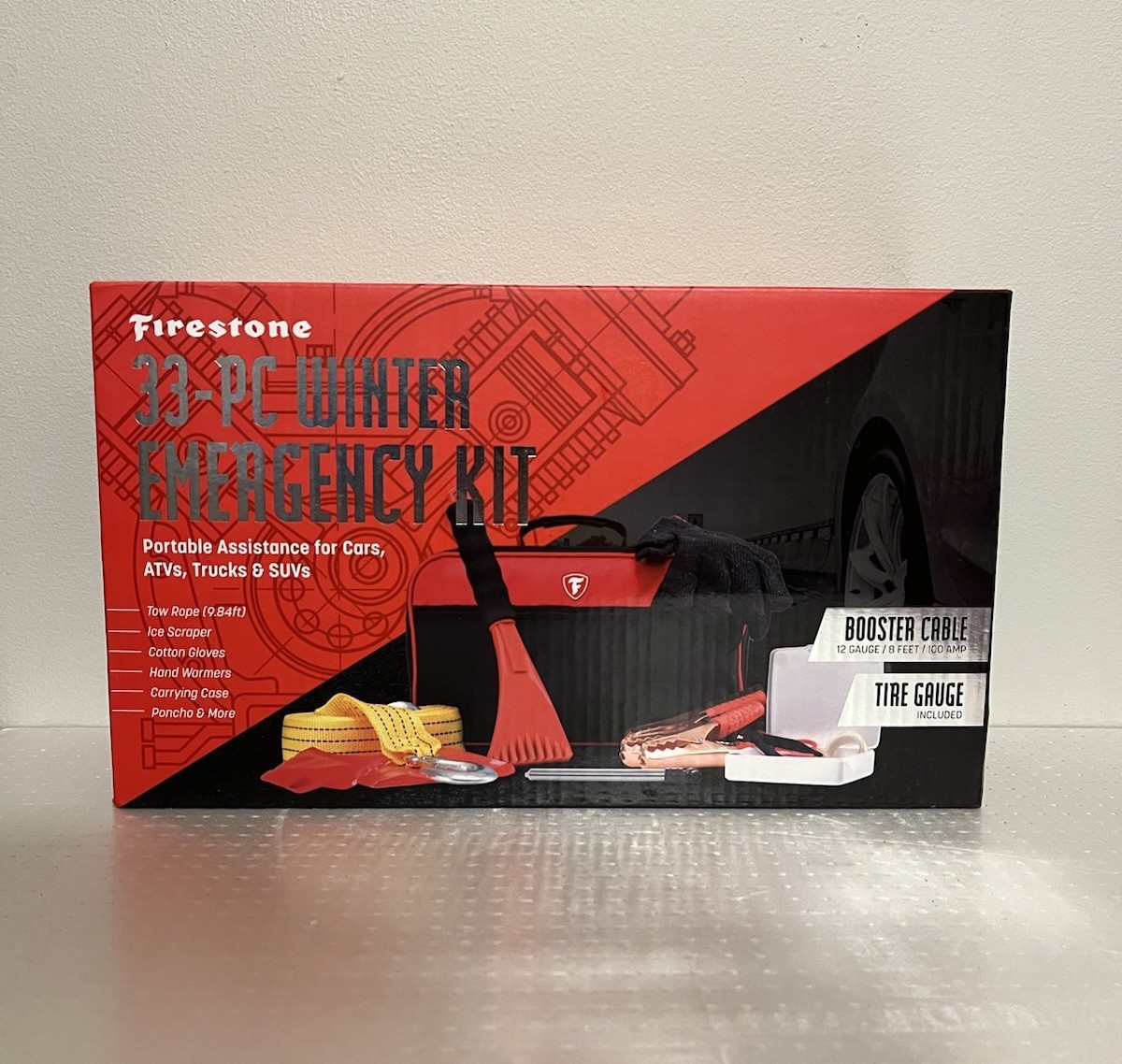
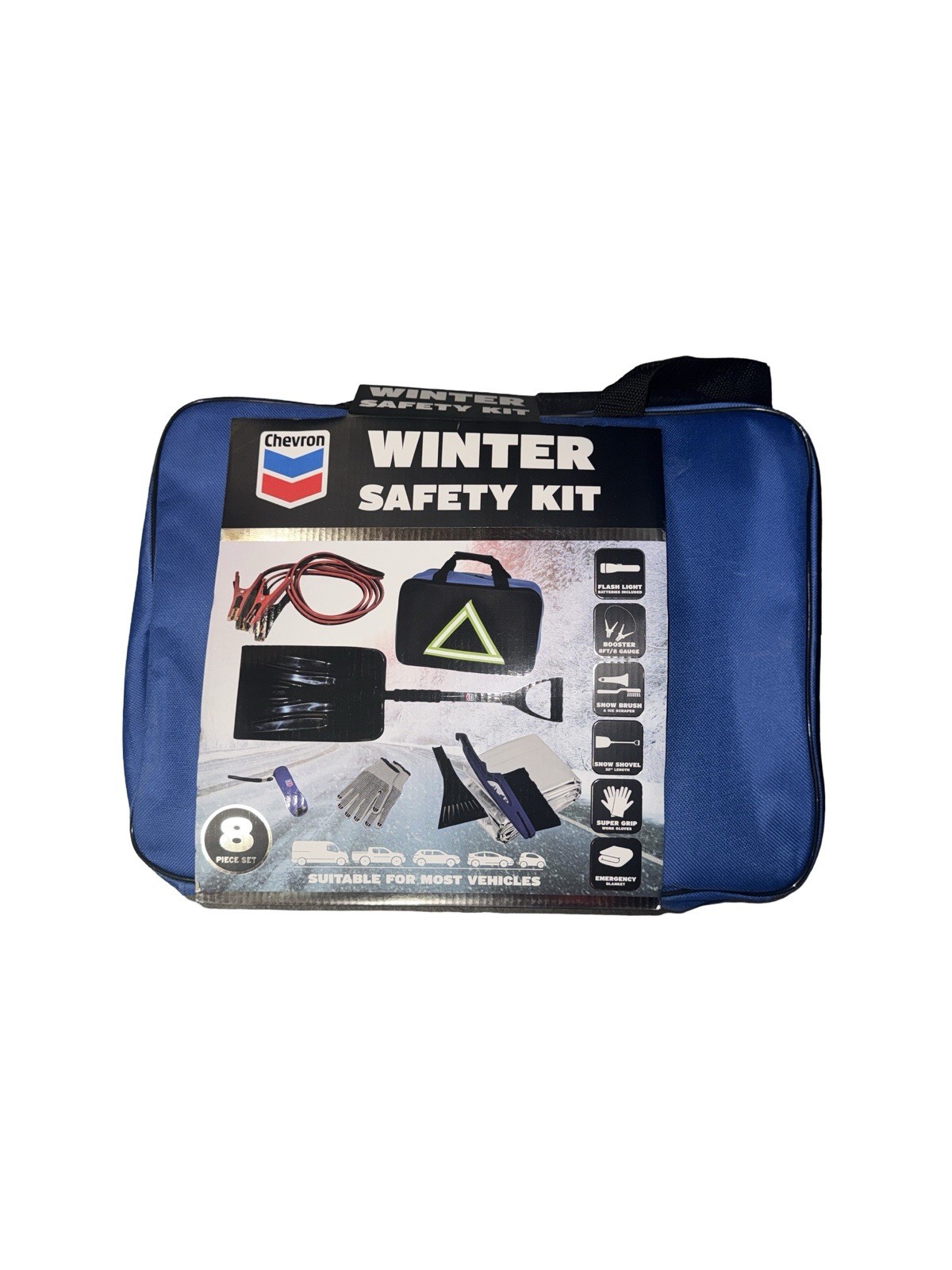
Car Roadside Emergency Kit,Auto Vehicle Truck Safety Emergency Road Side Assistance Kits with Jumper Cables,Safety Hammer,Reflective Warning Triangle,Tire...
- 🚗【Stay Safe On The Road】Be prepared with this compact,practical emergency roadside kit for car,including Jumper Cables,Tow Rope,Safety Hammer,Reflective Warning Triangle,Reflective Safety Vest,Tire Pressure Gauge, Safety Gloves, Mechanical Flashlight,Screwdriver,Rain Coat,Snow shovel,PVC Tape,Voltage Tester,Fuse Set,Whistle and Multi-function tool card so you can quickly and confidently get back on the road.
- 🚗【Multipurpose Assistance】Our Auto Emergency Kit is made with the highest quality, durable tools designed to last. Designed to handle most emergencies that drivers might encounter, this kit provides peace of mind and safety wherever you travel,ensuring you are always safe and prepared.
- 🚗【Suitable for Any Emergency】This small but packed emergency kit can be stored anywhere from your backseat to your trunk or even your spare tire compartment. With tools and accessories easily accessible and physically listed on the safety kit bag, convenience and safety come first. It’s lightweight and compact yet holds everything for life’s unexpected events.
- 🚗【Gift for All Occasions】This roadside emergency kit is a must-have travel companion for road-trippers, commuters, and families. It makes an ideal travel emergency kit for women, men, adults, and teens and is a great gift for new drivers, high school and college students.It is helpful in winter weather,at home, outdoors, car, in camping, in school, and in survival. Keep your loved ones safe on the road with our all-inclusive emergency survival kit.
- 🚗【Excellent Customer Service】We pride ourselves on quality products and exceptional customer service. This kit is backed by a full refund guarantee. If you have any questions or concerns, our customer service team is here to help provide the best service possible.
Shop Products on Ebay



Trending Similar Stories in the News
Winter makes comeback as storm warning hits Calgary CityNews Calgary...
Calgary weather: Weather warnings issued for most of southern Alberta as winter returns CTV News...
Trending Videos of Calgary Winter Storm Warning 2026


GIPHY App Key not set. Please check settings