

 David Goldberg
Table of Contents
Google Kansas City Data Center
Google Confirms Massive $10 Billion ‘Project Mica’ Data Center for Kansas City’s Northland
Google Kansas City Data Center expansion has officially been confirmed as a $10 billion ‘Project Mica’ powerhouse, signaling a new era for the Northland.
By David Goldberg (@DGoldbergNews)
NewsBurrow Business & Economic Correspondent
The Dawn of Project Mica: Google’s $10 Billion Northland Reveal
For months, the rumors swirled through the windy plains of Missouri like a summer storm. Whispers of a “Project Mica”—a clandestine, multi-billion dollar tech fortress—occupied the boardrooms of Port KC and the dinner tables of Clay County residents. On February 13, 2026, the silence finally broke. Google officially pulled back the curtain, confirming it is the architect behind a staggering $10 billion data center complex in Kansas City’s Northland. This isn’t just another server farm; it is a seismic shift in the American technological landscape, positioning the “Silicon Prairie” as a formidable rival to the traditional tech hubs of the coasts.
The scale of the commitment is almost difficult to wrap the mind around. Spanning nearly 500 acres at the strategic junction of Interstate 435 and U.S. Highway 169, Project Mica is set to become one of the most significant private investments in Missouri’s history. As a reporter who has followed the “Great Data Center Rush,” I can tell you that this level of capital injection usually comes with strings attached. However, Google’s regional head of data center public affairs, Trystine Payfer, was quick to frame this as a partnership. “We’ve found a home in Kansas City,” she remarked, noting that construction is already well underway, with cranes now a permanent fixture of the Northland horizon.
The announcement comes at a pivotal moment. With Kansas City preparing to host the 2026 World Cup, the city is desperate to prove it can handle global-scale infrastructure. Project Mica provides that proof in spades. It represents a transition from a hidden, codenamed mystery to a tangible, brick-and-mortar reality that will house the brains of the modern internet. The drama of the reveal has sparked intense public conversation, as residents weigh the massive economic promise against the sheer physical and resource footprint of such a behemoth.
For the uninitiated, here is the quick breakdown of what Project Mica actually entails:
- Location: 500 acres in Clay County (Northland KC).
- Investment: $10 Billion in total development value.
- Infrastructure: Five hyperscale buildings totaling 1.56 million square feet.
- Power Demand: Nearly 700 Megawatts (MW) at full capacity.
Mapping the Megaplex: 500 Acres of Hyperscale Power
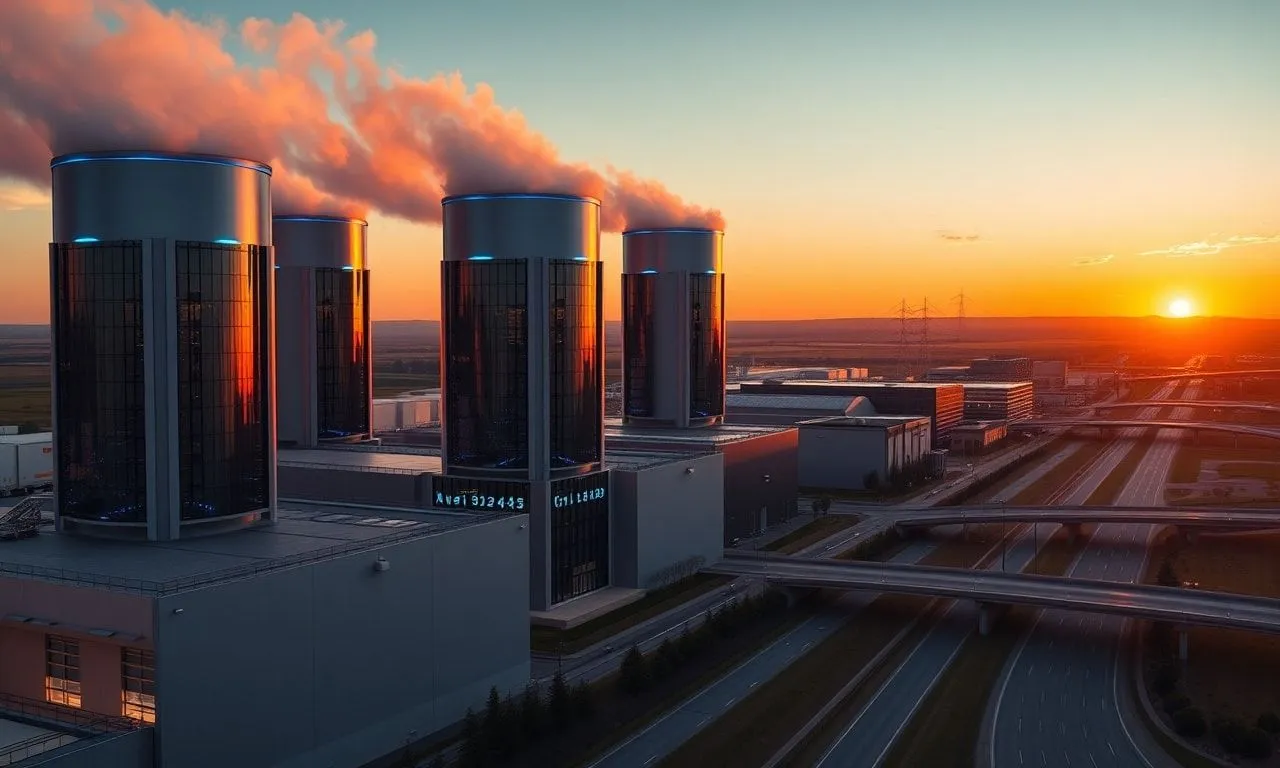
To understand the sheer magnitude of Project Mica, one must look at the geography. This isn’t just a building; it’s a small city of silicon and steel. The site plan includes five massive hyperscale data centers, each designed to operate with the precision of a Swiss watch. Collectively, these structures will encompass roughly 1.56 million square feet of computing space. That is equivalent to nearly 27 American football fields, all filled with humming racks of servers that will power everything from Google Search to the latest advancements in generative AI.
The location near I-435 and Highway 169 wasn’t chosen by accident. Data centers are the vampires of the infrastructure world—they require immense amounts of land and even more power. The Northland offers a unique combination of available space and proximity to the Nashua Power Station. This ensures that the massive 700 MW draw—enough to power hundreds of thousands of homes—can be managed through dedicated substations and high-capacity transmission lines. It is a logistical masterpiece that effectively turns a quiet corner of Missouri into a central nervous system for the global web.
Construction is already a beehive of activity. Observers in the nearby Woodland Creek neighborhood report that the skyline has changed overnight. Towering cranes and convoys of construction equipment are working in phases to bring the first of the five buildings online. Google has remained tight-lipped about the exact completion date for the entire campus, citing variables like supply chain timing and labor availability, but the momentum is undeniable. This phased approach allows the facility to start processing data while the rest of the campus continues to rise from the dirt.
The complexity of the site is summarized in the table below:
| Feature | Specification |
|---|---|
| Total Site Acreage | 497.8 Acres |
| Building Count | 5 Hyperscale Structures |
| Primary Power Station | Nashua Power Station |
| Connectivity Access | I-435 & U.S. 169 Interchange |
Why Kansas City? The Strategy Behind the Silicon Prairie Surge
Critics often ask why a tech titan like Google would dump $10 billion into the heart of the Midwest instead of doubling down on Northern Virginia or Silicon Valley. The answer lies in a mix of strategic geography and economic pragmatism. Kansas City is the “central relay station” of the United States. Its location minimizes latency—the delay in data transmission—to both the East and West coasts. In a world where milliseconds matter for stock trades and AI responses, being in the middle is a billion-dollar advantage.
Furthermore, Missouri has been aggressive in its courtship. The state offers significant sales tax exemptions on the millions of dollars of server equipment that must be refreshed every few years. When you are buying hardware at this scale, a few percentage points in tax savings equals hundreds of millions of dollars in liquid capital. Google’s Payfer noted that local leadership has been “great to work with,” a polite way of saying the city has cleared the bureaucratic hurdles that often stall projects in more congested tech corridors.
There is also the “World Cup Effect.” Kansas City is currently undergoing a massive civic upgrade. From the new KCI airport terminal to the streetcar extensions, the city is branding itself as a modern, world-class metro. Google’s investment serves as the ultimate “stamp of approval.” If the most valuable data company in the world trusts its $10 billion infrastructure to the Northland, other tech firms are bound to follow. We are witnessing the birth of a tech corridor that stretches from the Crossroads downtown up through the Northland, creating a digital backbone for the entire region.
The growing tech density in KC is visualized in the ASCII trend chart below, showing the rise in data center investment over the last three years:
Investment (Billions $)
|
10|                   * (2026: Project Mica)
8|
6|
4|
2|      * (2024)
0|||______|
2024   2025   2026
The $10 Billion Bond: Decoding the Port KC Incentive Package
Now, let’s talk about the money—and the controversy. To lure Google, Port KC authorized up to $10 billion in taxable revenue bonds. To the average taxpayer, that number sounds like a terrifying liability. However, it’s important to clarify: these bonds are repaid by Google, not the public. No taxpayer funds are being risked here. Instead, the bonds serve as a legal vehicle to grant Google a 25-year, 75% property tax abatement and 100% exemptions on sales taxes for construction materials. It’s a “pay-to-play” model that has sparked a fierce debate over whether the city is giving away too much.
Supporters argue that 25% of a $10 billion project is still a massive windfall for the city compared to 100% of an empty field. The millions in new revenue generated—even with the abatements—will fund roads, schools, and public services that wouldn’t otherwise exist. Yet, skeptics point to the lack of long-term jobs. While construction requires thousands of workers, once a data center is operational, it can often be run by a skeleton crew of fewer than 50 people. Is a tax break this large worth it for a handful of permanent roles?
This “incentive war” is the shock factor that has the community talking. Some local leaders, including City Council members, have recently pushed for stricter oversight. They argue that these deals are often made behind closed doors with little public input. In response, Kansas City recently passed landmark zoning changes to ensure that future data centers have to go through a more rigorous public approval process. Project Mica may be the last of its kind to get such a “smooth ride” through the municipal machinery, signaling a shift toward more cautious urban planning.
Fueling the Future: The Evergy Partnership and 700MW Demands
You cannot run a $10 billion computer without an ungodly amount of electricity. Project Mica is expected to draw nearly 700 MW of power. For context, one megawatt can typically power between 400 to 900 homes. This means Google’s new campus will consume as much energy as a mid-sized city. Naturally, this has residents terrified that their own electric bills will skyrocket to pay for the grid upgrades needed to support the tech giant. This is where the partnership with Evergy comes into play.
Google and Evergy have entered into a “Large Load Power Tariff” agreement. Google is essentially acting as the anchor investor for the grid. Under this plan, Google covers the full energy costs associated with both of its Northland campuses, including the costs of the new infrastructure. Evergy claims this ensures data centers “pay their fair share” and actually helps insulate residential customers from rate hikes. It’s a high-stakes gamble on the future of the regional power grid, forcing Evergy to accelerate its transition to renewable energy to meet Google’s 24/7 carbon-free goals.
The energy agreement includes several critical “guardrails”:
- 12-Year Minimum Service: Google must stay on the grid for at least a decade.
- 80% Minimum Bill: Google pays for 80% of their contracted demand even if they use less.
- Infrastructure Funding: Google is responsible for the transmission upgrades specifically required for their site.
AI at the Core: How Project Mica Powers Next-Gen Innovation
Why does Google need this much space right now? The answer is two letters: AI. We are in the midst of an artificial intelligence arms race, and data centers are the armories. Training a single large language model (LLM) requires thousands of specialized chips (GPUs) running around the clock. Project Mica is being built with these specific workloads in mind. This isn’t just about storing your old emails; it’s about the massive computational power required for real-time AI translation, medical research, and autonomous systems.
Clay County Commissioner Jason Withington called the project “transformative for AI innovation.” By housing this infrastructure in the Northland, Kansas City becomes a literal node in the global AI brain. This attracts secondary businesses—AI startups, specialized cooling companies, and tech consultants—who want to be near the hardware. It transforms the region from a place that uses technology to a place that creates the foundations of it. The ripple effect could redefine the local economy for the next thirty years.
However, the AI boom brings a new set of challenges. These AI-optimized servers run much hotter than traditional ones, requiring advanced cooling systems. Residents have raised concerns about the noise generated by the massive fans and the millions of gallons of water needed for cooling. Google has countered by highlighting its water-stewardship goals, but for neighbors like George Hawkins in Woodland Creek, the hum of the “Mica Monster” is a constant reminder that the future of AI is being built in his backyard, whether he likes it or not.
Investing in the Next Generation: Smithville and Northland Career Support
To soften the blow of the tax abatements, Google is writing some very large checks to local education. Specifically, they have committed $1.5 million to the Smithville School District’s workforce development program and $250,000 to the Northland Career Center. These are upfront payments, not tied to the completion of construction. It’s a strategic move to build a “homegrown” pipeline of tech talent. If you want to work at a $10 billion data center, Google is saying they will help you get the training you need right here in Missouri.
This investment is particularly vital for vocational and trade schools. The construction of Project Mica alone will sustain hundreds of trade jobs—welders, electricians, and HVAC technicians—for years. By funding these programs, Google is ensuring that the local workforce isn’t just watching the cranes from afar but is actually on the payroll. For a district like Smithville, $1.5 million is a “game-changer” that could fund state-of-the-art labs and equipment that were previously out of reach.
But is it enough? Some critics argue that $1.75 million is a drop in the bucket for a company valued at nearly $2 trillion. They view these “community grants” as PR moves designed to distract from the 25-year tax break. Regardless of the intent, the impact on the ground is real. Students in the Northland now have a clear path to high-paying tech and trade careers without having to leave the state. It changes the narrative for local youth: you don’t have to go to Silicon Valley to build the future; the future is being built at the corner of I-435 and 169.
A New Digital Horizon: What’s Next for Kansas City Tech?
As we stand at the threshold of 2026, Kansas City finds itself in an unfamiliar position: a tech leader. Google’s Project Mica is the crown jewel of a digital corridor that now includes Meta, Patmos, and several other major players. The “Silicon Prairie” is no longer just a catchy nickname; it’s a $10 billion reality. The city has successfully traded its empty Northland fields for the humming heart of the internet, but the journey is just beginning.
The success of Project Mica will be measured not by the height of the buildings, but by the stability of the grid, the quality of the jobs created, and the integration of these massive facilities into the community. The “shock factor” of the investment has certainly captured the public’s imagination, sparking a necessary conversation about incentives, energy, and the kind of city Kansas City wants to become. We are no longer just a cowtown or a barbecue destination; we are a hyperscale hub.
What do you think? Is a $10 billion data center the best use of our land and resources, or are we paying too high a price for tech prestige? The conversation is just starting, and NewsBurrow wants to hear from you. Join the debate in the comments below and let us know your thoughts on the Northland’s new neighbor.
Join the Conversation: Are you a Northland resident? How do you feel about Google’s $10B expansion? Share your views and follow us for more deep dives into the Silicon Prairie boom.
As Kansas City’s Northland emerges as a premier destination for global data infrastructure, local business leaders and tech enthusiasts are increasingly looking at how they can leverage this digital boom within their own operations. The arrival of Google’s $10 billion Project Mica underscores a critical shift toward high-density computing and AI-ready environments, making professional-grade hardware more relevant than ever for startups and growing enterprises. For those inspired by the scale of the Silicon Prairie, the transition from standard office setups to structured, high-performance systems is the natural next step in staying competitive.
Implementing a robust local infrastructure starts with the same foundational logic used by hyperscalers: organization, airflow, and security. Whether you are managing a boutique creative agency, a growing e-commerce platform, or a dedicated home lab for AI development, housing your equipment in a professional environment is essential for longevity and reliability. Moving your critical hardware into a dedicated space not only protects your investment from physical environmental factors but also ensures that your networking and storage systems can scale alongside the region’s expanding tech corridor.
To help you mirror the efficiency of the world’s largest data centers on a scale that fits your specific business needs, we have curated a selection of high-quality hardware solutions designed for maximum performance and durability. Exploring these professional options can streamline your workflow and provide the structural backbone necessary for the next decade of innovation. We invite you to share your thoughts on the Northland’s tech transformation in the comments below and subscribe to the NewsBurrow newsletter for the latest updates on the region’s economic evolution.
Shop Products On Amazon
Shop Products on Ebay
Trending Similar Stories in the News
Trending Videos of Google Kansas City Data Center


GIPHY App Key not set. Please check settings