

 Emily Carter
Table of Contents
Mark Carney Quebec City Unity Speech
The Carney Doctrine: PM Issues Ominous Warning on Canadian Sovereignty in Quebec City Unity Speech
Mark Carney Quebec City unity speech at the historic Citadelle marks a definitive shift in Canadian strategic posture against rising global authoritarianism and U.S. economic pressure.
By Emily Carter (@ECarterUpdates) | NewsBurrow Press Team
Echoes of 1812: The Citadelle as a Bastion of Modern Defiance
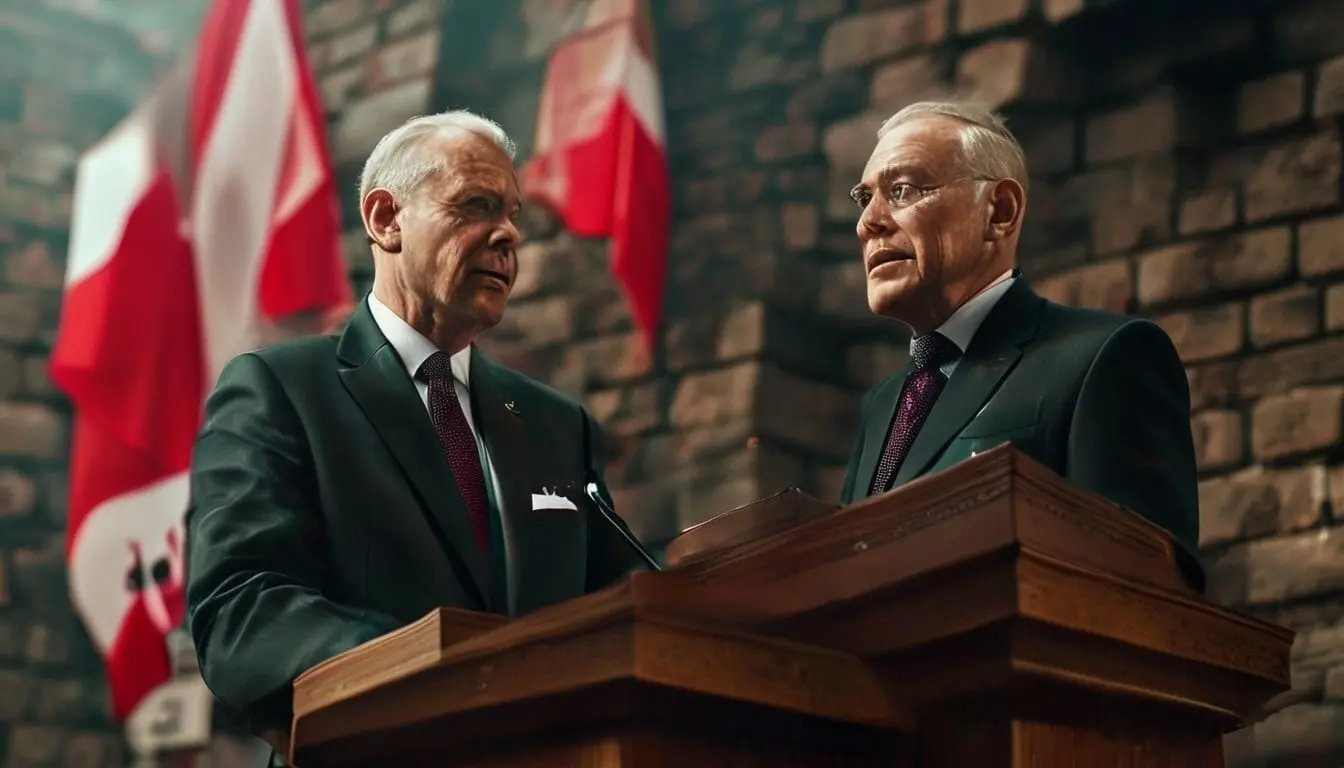
The morning air in Quebec City was brittle, the kind of cold that seems to freeze time itself, as Prime Minister Mark Carney stood before the thick masonry of La Citadelle. This was no accidental backdrop. The fortress, a 19th-century masterpiece of defensive engineering built to repel American incursions, served as a silent witness to a speech that many are already calling the most consequential of Carney’s premiership. It was here, at the Governor General’s second official residence, that the “Carney Doctrine” moved from the abstract halls of Davos to the front lines of Canadian sovereignty.
For decades, Canada has existed in a comfortable state of geographic security, shielded by three oceans and a seemingly unbreakable alliance with the world’s lone hegemon. But as the sun glinted off the snowy ramparts, Carney’s tone was anything but comfortable. He spoke of a “rupture,” not a transition, signaling an end to the postwar era of predictable globalism. The setting, historically intended to stop an invasion of muskets and cannons, now provided the acoustics for a leader preparing the nation for a different kind of siege: one waged with tariffs, critical mineral buyer’s clubs, and the weaponization of supply chains.
The NewsBurrow Press Team observed a palpable shift in the atmosphere as Carney directly addressed the “brutal reality” of current geopolitics. By standing on the same ground where empires once collided, Carney wasn’t just giving a speech; he was erecting a mental fortress for a nation that has, for too long, viewed its sovereignty as a gift from its neighbors rather than a prize to be defended. The choice of the Citadelle effectively turned the page on a century of Canadian passivity, framing 2026 as the year the nation stopped “performing sovereignty” and started practicing it.
Beyond the ‘Sign in the Window’: Decoding the Carney Doctrine
In a candid admission that sent shockwaves through the diplomatic corps, Carney described the “rules-based international order” as a fiction that Canada had participated in as a “useful ritual.” For years, he argued, middle powers like Canada placed a “sign in the window,” pretending the system worked while hegemons exempted themselves whenever convenient. This “Carney Doctrine” posits that the bargain—safety in exchange for subordination—is officially dead. The era of “going along to get along” has been replaced by a gritty, values-based realism that acknowledges the world as it is, not as we wish it to be.
The core of this doctrine rests on a sharp pivot away from extreme global integration. Carney warned that when integration becomes the source of subordination, the illusion of mutual benefit cracks. His vision for 2026 is one of “strategic autonomy,” where a country must be able to fuel itself, feed itself, and defend itself. This isn’t isolationism; it’s a sophisticated hedge against a world where hegemons increasingly “monetize their relationships.” The NewsBurrow Network has learned that the Prime Minister’s office views this doctrine as a survival guide for middle powers who are currently “at risk of being on the menu if they aren’t at the table.”
| Key Pillar | Old Assumption | The Carney Doctrine (2026) |
|---|---|---|
| Global Trade | Linear, benign hyper-globalization | Transactional “Variable Geometry” coalitions |
| Security | Geographic and alliance protection | Sovereign “Strategic Autonomy” & 2% GDP base |
| Foreign Policy | Naive multilateralism | Principled and Pragmatic Realism |
| Resource Control | Just-in-time global supply chains | Domestic control of food, energy, and minerals |
Biting Back: The Direct Rebuttal to Washington’s Rhetoric
The most dramatic moment of the address came when Carney discarded his prepared remarks to respond directly to the American President’s recent claim that “Canada lives because of the United States.” The U.S. President’s rhetoric in Davos, which included a dismissive reference to Canada as the “51st state,” was met with a icy resolve that few expected. “Canada doesn’t live because of the United States,” Carney stated, his voice carrying across the Citadelle’s courtyard with unexpected force. “Canada thrives because we are Canadian.”
This verbal counter-offensive was not merely for domestic consumption. It was a calculated risk aimed at signaling a “rupture” in the traditional submissiveness of Ottawa toward Washington. By biting back at the “Canada lives because of” narrative, Carney effectively signaled that the time of “accommodation as a safety strategy” is over. This is a high-stakes gamble; responding to a hegemon’s transactionalism with a declaration of independence could lead to further economic friction, yet Carney’s team argues that silence only invites further subordination.
Inside sources tell the NewsBurrow Press Team that the Prime Minister’s deliberate mention of “middle-power non-compliance” was a direct nod to other nations like Australia and Mexico, who find themselves similarly caught in the vise of great power rivalry. The speech was less of a lecture and more of a manifesto for a new “Third Path,” where middle powers combine their influence to resist being bullied by the giants. It was a “shock factor” moment that suggests Canada is ready to weather the storm of a trade war if it means securing the integrity of its own values.
The Middle-Power Manifesto: Alliances of ‘Variable Geometry’
Carney’s vision for the future of Canadian influence doesn’t rely on the crumbling postwar institutions but on a “dense web of connections” across trade, investment, and culture. He proposed a “variable geometry” for international relations—a flexible approach where Canada builds issues-based coalitions with like-minded democracies. This includes bridging the Trans-Pacific Partnership with the European Union to create a massive trading bloc of 1.5 billion people, effectively bypassing the need for hegemonic approval.
The Prime Minister’s pragmatic realism was further evidenced by his announcement of Canada’s deeper integration into European defense procurement through the SAFE program. By diversifying military and economic partnerships, Carney intends to reduce Canada’s historic “black box” dependence on U.S. defense infrastructure. The goal is clear: ensure that Canada has options. As Carney pointed out, a country with few options has no sovereignty, only the “performance” of it. The NewsBurrow Network analyzes this as a “pragmatic pivot” to protect Canadian interests in a fractured world.
- Coalition of the Like-Minded: Strengthening ties with the EU, Australia, and Nordic allies.
- Resource Sovereignty: Establishing “Buyers’ Clubs” for critical minerals within the G7.
- Technological Independence: Prioritizing domestic AI and 6th-generation aircraft development.
- Arctic Resolve: Standing firmly with Greenland and Denmark as a test of NATO’s Article 5.
Arming for Autonomy: The Trillion-Dollar Sovereignty Fund
Words at a fortress mean little without the steel to back them up. Carney used the Quebec City stage to reiterate his government’s commitment to a trillion-dollar investment strategy targeting energy, AI, and critical minerals. This is the economic foundation of the Carney Doctrine—a move to transform Canada from a “laggard” into a resilient energy and technological powerhouse. The plan includes fast-tracking domestic manufacturing to ensure that Canada’s defense industrial base is not just an outpost for U.S. orders, but a sovereign engine of growth.
This surge in spending is staggering by Canadian standards. The government has already committed to hitting the 2% GDP defense target by the end of the 2025-2026 fiscal year, with a long-term roadmap to reach 5% by 2035. This “warlike footing” for a peacetime economy reflects the Prime Minister’s belief that sovereignty in the 21st century is anchored in the ability to withstand pressure. The NewsBurrow Press Team notes that this includes significant funding for “digital foundations” to protect against cyber threats and a “Buy Canadian” policy that prioritizes domestic materials and services.
Canadian Defense Spending Trajectory (2024-2035 Projection)
% of GDP
^
5%|                                    /
|                                   /
4%|                                  /
|                                 /
3%|                                /
|                 /-------------/
2%|        /-------/
|_______/________________________________> Year
2024  2026   2030             2035
The graph above illustrates the aggressive “catch-up” plan outlined by the Carney administration to transition Canada from a defense “laggard” to a leading middle power.
Defending the North: The Greenland Crisis as a Sovereignty Test
Perhaps the most “ominous” part of the speech was Carney’s flat refusal to entertain U.S. rhetoric concerning the “annexation” of Greenland. Labeling the situation a “test of NATO,” Carney stated that Canada stands fully with Greenland and Denmark in their right to determine their own future. This stance puts Canada on a direct collision course with the current U.S. administration’s “predatory nationalism.” The Arctic, once a quiet frontier, has become the “rupture point” where the Carney Doctrine faces its most physical challenge.
By positioning Canada as a shield for its Arctic allies, Carney is attempting to create an “off-ramp” for U.S. security concerns while simultaneously countering Russian expansionism in the North. This is a delicate balancing act that requires a high-readiness military force. The NewsBurrow Network has tracked the government’s recent efforts to acquire new conventional submarines and patrol ships, specialized for Arctic conditions—vessels that Carney hinted could be developed in partnership with European rather than U.S. suppliers to avoid “development bloat.”
The Domestic Front: Bridging the Divide in the Shadow of the Plains
While the international implications were massive, Carney did not ignore the domestic friction within Canada. Delivering his speech on the historic Plains of Abraham, he acknowledged that the foundation of the country was “imperfect” and relied on the dispossession of Indigenous peoples. However, he argued that Canada’s unique history of “adaptation over assimilation” and “partnership over domination” is exactly what makes the nation a model for a world struggling with rising populism and ethnic nationalism.
The cabinet retreat in Quebec City also tackled the “affordability crisis” head-on. Between the lofty rhetoric of sovereignty, Carney met with Quebec City Mayor Bruno Marchand and local food bank officials. The NewsBurrow Press Team highlights this as a critical strategic link: you cannot have a sovereign nation if the population is struggling with basic survival. The “Carney Doctrine” domesticates the international rupture by promising that strategic autonomy will lead to lower taxes on business investment and the removal of interprovincial trade barriers, effectively building a “domestic fortress” of economic resilience.
A Nation Awakened: Campaign Rhetoric or Governance Shift?
Critics, including those from the NewsBurrow Press Team, have noted that the address had all the hallmarks of an election speech. Opposition leader Pierre Poilievre has already dismissed the “Carney Doctrine” as high-minded rhetoric that fails to address the immediate “results” needed in energy and resource security. There is a legitimate concern that these trillion-dollar promises could lead to a state-directed economic nationalism that proves costly and counterproductive for the average taxpayer.
However, the international reaction suggests Carney has touched a nerve. From the Finnish President calling it a “manifesto of free people” to the Australian Treasurer being “stunned” by its clarity, the world is taking notice of a Canada that is finally “back” on the world stage—but not in the way we expected. Carney has replaced “naive multilateralism” with a gritty, proactive defense of the middle path. Whether this is a permanent shift in Canadian governance or a high-stakes political branding exercise will be the defining question of the 2026 political cycle.
Join the conversation! Do you believe Canada is truly ready to stand alone from the United States, or is the “Carney Doctrine” a dangerous gamble with our closest trading partner? Share your thoughts with us on social media using #CarneyDoctrine and #NewsBurrowSovereignty.
The unveiling of the Carney Doctrine at the historic Citadelle signals more than a mere policy shift; it represents a profound psychological reawakening for the Canadian state. As geopolitical tectonic plates shift, understanding the man behind the mandate has become essential for anyone looking to navigate the new landscape of Canadian sovereignty. His evolution from a global central banker to a defiant nationalist leader offers a blueprint for how middle powers can survive an era of hegemonic volatility.
To truly grasp the weight of these warnings and the strategic depth of the “principled and pragmatic” approach, one must look back at the historical precedents and intellectual foundations that shaped this vision. The path from the halls of Davos to the ramparts of Quebec City is paved with complex economic theories and a lifetime of high-stakes diplomatic maneuvering. Exploring the definitive accounts of our nation’s most influential leaders provides the necessary context to decode the true intent behind today’s headlines.
We invite you to deepen your perspective by exploring the curated resources below, designed to give you an insider’s view of the power dynamics at play in Ottawa. Don’t forget to join the conversation in the comments section and subscribe to the NewsBurrow newsletter for exclusive, deep-dive analysis delivered straight to your inbox. Take the next step in your journey through Canadian political history and discover the stories that define our sovereign future.
Shop Products On Amazon
Shop Products on Ebay
Trending Similar Stories in the News
Trending Videos of Mark Carney Quebec City Unity Speech


GIPHY App Key not set. Please check settings