

 Emily Carter
Table of Contents
Trump Credit Card Rate Cap
Trump Pushes 3 Massive Credit Changes Feb 1st: The 10% Rate Cap and Your New Credit Score
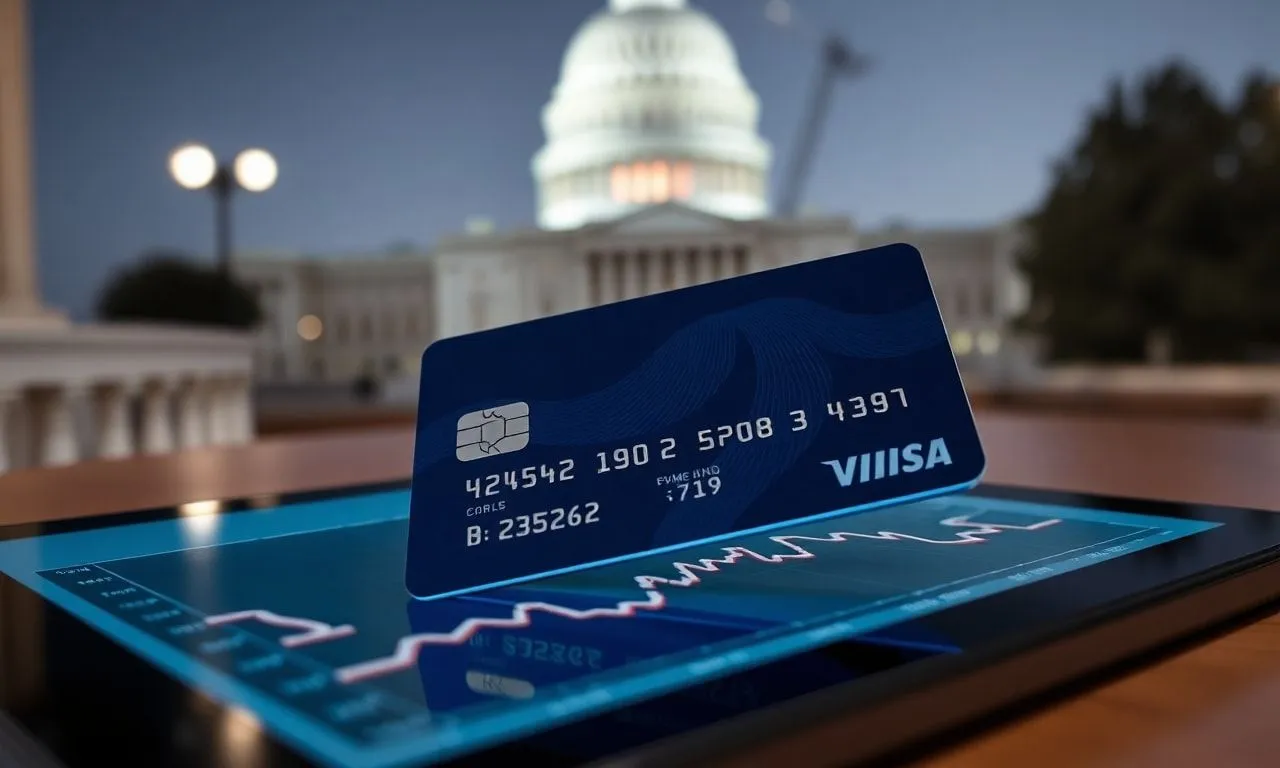
Trump credit card rate cap initiatives are set to trigger a seismic shift in how millions of Americans manage their debt and build their financial future starting February 1st.
Trump Pushes 3 Massive Credit Changes Feb 1st: The 10% Rate Cap and Your New Credit Score
The February 1st Credit Revolution: Why Your Wallet Just Entered a New Era
The dawn of February 1, 2026, marks more than just a new month; it signals a tectonic shift in the American financial landscape. Under the direct influence of the Trump administration’s populist economic agenda, a series of radical credit reforms have officially moved from the campaign trail to the consumer’s kitchen table. This isn’t just policy talk—it is a live experiment on the $1.23 trillion mountain of credit card debt currently held by U.S. households.
For the average American, the news feels like a paradoxical mix of relief and high-stakes risk. While the headlines scream about lower interest rates and easier paths to high credit scores, a darker undercurrent of bank retaliation is already beginning to pull at the edges of the economy. At NewsBurrow, we have spent weeks dissecting the fallout of these three massive shifts to help you navigate a world where your credit score might look better, but your ability to actually use it could be hanging by a thread.
As President Trump took to the world stage in Davos just days ago, his message was clear: the “Biden disaster” would be countered by a direct war on what he termed “usury.” By targeting the 50% profit margins of card issuers, the administration has set the stage for a dramatic showdown between the White House and Wall Street. Whether you are a “super-prime” borrower or someone struggling with a “thin file,” the rules of engagement for your money have permanently changed.
Decoding the 10% Interest Rate Cap: A Lifeline or a Lending Lockdown?
At the heart of this disruption is the proposal to cap credit card interest rates at 10% per annum for one year. Announced as a temporary emergency measure, this move aims to slash the current average APR—which hovers around a staggering 21% to 24%—to a level not seen in decades. Proponents argue this will save consumers over $100 billion in interest payments annually, essentially giving a $58-a-month raise to anyone carrying a $5,000 balance.
However, the banking industry is sounding an alarm that borders on the apocalyptic. JPMorgan Chase CEO Jamie Dimon has branded the proposal an “economic disaster,” warning that price controls will force banks to cut off credit to the very people they are meant to help. The math is simple and brutal: if a bank cannot charge enough interest to cover the risk of a borrower defaulting, they will simply stop lending. This has sparked fears of a “credit desert” where cards become a luxury reserved only for the wealthy.
Despite the pushback, the administration is leaning into the “Credit Card Competition Act” to further squeeze merchant fees. By forcing competition on the processing rails used by Visa and Mastercard, the White House hopes to lower costs for small businesses. Yet, critics note that these interchange fees fund the rewards programs—the cash back and airline miles—that millions of Americans use to subsidize their lifestyle. If the fees go, the points may go with them.
Comparison of Consumer Savings vs. Bank Revenue Risk
| Metric | Current Market (Avg) | Trump Proposal (Cap) | Impact Analysis |
|---|---|---|---|
| Average APR | 24.0% | 10.0% | 58% Reduction in Rate |
| Monthly Interest ($5k Balance) | $100.00 | $41.67 | $58.33 Monthly Savings |
| Annual Industry Revenue | $170B+ | $70B (Est.) | $100B Loss for Issuers |
| Access to Subprime Credit | Moderate | High Risk | Potential 80% Drop in Access |
The Rise of ‘Full-File’ Reporting: How Your Rent and Utilities Finally Count
For years, renters have complained that their largest monthly expense—thousands of dollars paid on time to landlords—did nothing for their credit score, while a single missed $20 credit card payment could tank it. As of today, the Credit Access and Inclusion Act of 2026 changes that game. The Fair Credit Reporting Act (FCRA) has been amended to provide legal clarity for landlords, utility companies, and telecom providers to report positive payment history directly to the bureaus.
This “Full-File” reporting approach is designed to help the nearly 50 million Americans who are either “credit invisible” or have “thin files.” By acknowledging the financial responsibility required to keep the lights on and a roof overhead, the new system creates a “synthetic” credit history. For someone who has paid rent on time for 10 years but never owned a credit card, this could lead to an immediate score jump of 100 points or more.
But there is a catch that many consumers are overlooking. Reporting is a two-way street. While positive data can build a score, a single dispute with a landlord or a late water bill could now haunt your FICO score for seven years. The “shock factor” here is the loss of the traditional buffer that utility payments once provided. Your credit score is no longer a reflection of just your debt; it is a live-tracking monitor of your entire lifestyle.
The ‘Thin File’ Breakthrough: Boosting Scores Without New Debt
The strategic shift toward newer scoring models like VantageScore 4.0 and FICO 10 represents the most significant update to credit math in a generation. These models move away from the “snapshot” approach—which only looks at what you owe today—and toward “trended data.” This means the bureaus are now looking at your behavior over a 24-month period to see if you are actively paying down debt or just treading water.
For the “thin file” consumer, this is a golden opportunity. Because these models incorporate the newly available rent and utility data, the path to homeownership has been shortened for millions. The administration’s goal is to turn “renters into owners” by making it easier to qualify for FHA and conventional mortgages through these expanded data categories. It is a bold attempt to bypass traditional banking gatekeepers who have long relied on narrow definitions of creditworthiness.
However, the rapid transition has created a “data lag” that savvy consumers must manage. Not all lenders have upgraded their systems to read these new “trended” scores. This has created a bifurcated market where you might be a “Prime” borrower at a fintech lender but still “Subprime” at a traditional local bank. Navigating this gap requires knowing exactly which bureau your lender pulls from and ensuring your rent data is being reported correctly via services like Experian Boost or similar built-in tools.
Underwriting in the Crosshairs: Why Banks Are Redrawing the Lines
While consumers celebrate potential rate drops, the “empire is striking back.” In response to the 10% cap, major issuers like Capital One and Synchrony—who hold large portfolios of high-APR revolving debt—are already tightening their underwriting standards. The shock factor for many cardholders this week won’t be a lower rate, but a “Notice of Account Closure” or a drastic reduction in their credit limit.
The American Bankers Association (ABA) suggests that up to 159 million cardholders could see their credit lines reduced or accounts closed. Banks are moving toward a “Flight to Quality,” meaning they will only lend to “Super-Prime” borrowers with scores above 780. If you are a middle-of-the-road borrower, you might find that while your interest rate is lower, your “liquidity”—the actual money you can spend—has vanished.
Furthermore, a new and controversial metric is entering the underwriting process: citizenship and residency status. As banks look to minimize risk in a lower-profit environment, they are reportedly scrutinizing the long-term residency of applicants. This move, tied to the administration’s broader immigration policies, could make it significantly harder for non-citizens to access refinances or new lines of credit, even if they have perfect payment histories.
The Invisible Hand: Swipe Fees and the Credit Card Competition Act
While the interest rate cap gets the most attention, the silent war over “swipe fees” (interchange fees) is arguably more important for the long-term structure of the economy. The Credit Card Competition Act of 2026 requires large banks to offer merchants at least two different networks to process transactions. Proponents say this will save small businesses billions, which could theoretically be passed down as lower prices for consumers.
ASCII Art Representation of the Credit Ecosystem Shift:
    [Consumer] ----> [Merchant] ----> [Competition Act]
                         |                 |
                         |                 v
                [Current: High Fees]   [New: Lower Fees]
                         |                 |
                         v                 v
                [Funded Rewards]      [Reduced Rewards?]
The drama lies in the “Rewards Cliff.” Most of the airline miles, cash-back bonuses, and travel perks that Americans love are funded by these very fees. If the fees are slashed, banks have already warned that the “Golden Age of Rewards” is over. We are likely to see higher annual fees and the “devaluation” of points, where it takes twice as many miles to book the same flight. Your “free” vacation might just be the hidden casualty of this policy war.
Yet, some experts argue that the banks are crying wolf. With profit margins in the credit segment currently four times the banking industry average, there is plenty of room to absorb these cuts without destroying rewards. The real question is whether banks will choose to cut executive bonuses or consumer perks first. History suggests the consumer is usually the first to lose a seat at the table.
Unintended Consequences: When Protective Caps Lead to Credit Deserts
The danger of any price cap is the creation of a “black market” or “gray market” for credit. History shows that when regulated lenders pull back, predatory alternatives often fill the void. If a 10% cap makes credit cards unprofitable for banks, we may see a massive surge in “Buy Now, Pay Later” (BNPL) services, which often operate with less oversight and can lead to a “debt spiral” hidden from traditional credit reports until it’s too late.
Moreover, the American Bankers Association warns that driving consumers away from regulated credit cards could push them toward payday lenders or tribal loans where effective APRs can reach 400%. The “unintended consequence” of Trump’s 10% cap might be the very “ripping off” of consumers he claims to be fighting. It is a high-wire act where the safety net—the credit card—is being rewoven while the economy is still walking across it.
Small businesses are also in the crosshairs. Many entrepreneurs use personal credit cards as their primary source of startup capital. If their limits are slashed by 50% overnight because the bank is “de-risking,” the ripple effect could stifle innovation and slow down GDP growth. We are witnessing a fundamental re-evaluation of what credit is: is it a public utility that should be capped, or a private product that should be priced by risk?
The Consumer Survival Guide: Navigating the February Shift
In this environment, “financial literacy” is no longer a luxury; it is a survival skill. To stay ahead of the February 1st changes, consumers must be proactive rather than reactive. The first step is to perform a “Credit Audit.” Check to see if your rent is being reported, and if not, contact your landlord about using a reporting service. This is the easiest way to offset any potential “underwriting drag” from the new bank rules.
- Audit Your Limits: Expect banks to lower credit limits. Keep your utilization below 30% of your *new* (likely lower) limit to prevent a score drop.
- Lock in Fixed Rates: If you were planning on a personal loan or a consolidation, do it now before banks further tighten their ” citizenship-based” or “risk-based” models.
- Monitor Rewards: If you have a massive stockpile of points, consider “burning” them. Rewards values are likely at their peak right now and could be devalued by summer.
- Diversify Lenders: Don’t keep all your credit with one “Big 4” bank. Regional banks and credit unions may be slower to tighten their rules than the mega-issuers.
Finally, prepare for the “Verification Era.” Banks are going to ask for more documentation than ever before. Be ready to prove your income, residency, and even your utility payment history manually if you are applying for a mortgage this year. The automated “one-click” approval days are temporarily on hold as the industry recalibrates to the 10% world.
Legacy of the Anniversary: Why January 20th and February 1st Matter
The timing of these changes is purely political. By launching these initiatives on the anniversary of his second-term inauguration, President Trump is signaling that economic populism is the cornerstone of his 2026 agenda. It is a direct appeal to the “forgotten man” who feels squeezed by inflation and debt. By making credit “cheaper,” the administration hopes to spur a new wave of consumer spending and housing growth before the midterms.
But the “Davos Declaration” also suggests a broader geopolitical move. By attacking the profit margins of globalist banks, Trump is re-asserting national control over the financial system. This “War on Usury” echoes historical economic movements that sought to curb the power of lenders in favor of the working class. It is a high-risk, high-reward strategy that could either lead to a “Golden Age” of homeownership or a “Credit Freeze” that stalls the economy.
As we move deeper into 2026, the legal challenges to these executive actions and legislative pushes will likely hit the Supreme Court. For now, however, the “law of the land” is a 10% target and a score that includes your rent. The administration has thrown a massive stone into the financial pond, and the ripples are just starting to reach your wallet. Stay tuned to NewsBurrow as we track every surge and dip in this unfolding drama.
The Road Ahead: Is Your Credit Profile Ready for the Next 12 Months?
We are standing at a crossroads. The credit system of 2026 is unrecognizable compared to the one we navigated just two years ago. The inclusion of non-traditional data offers a path to dignity for millions of renters, yet the specter of interest rate caps threatens to pull the ladder up for those who need it most. It is a time of extreme volatility and extreme opportunity.
The “shock” of February 1st will eventually fade into a new normal. Whether that normal is one of financial freedom or restricted access depends largely on how the banking sector chooses to respond to the White House’s pressure. For the consumer, the message is simple: stay informed, stay agile, and don’t take your credit limit for granted. The rules have changed, and only those who understand the new math will thrive.
We want to hear from you. Has your bank already notified you of a limit change? Have you seen your score jump from rent reporting? Join the conversation on social media and let us know how these “Massive Changes” are hitting your pocketbook. The era of silent debt is over; the era of the active borrower has begun. Your credit is no longer just a number—it’s a battlefield.
As the administration’s February 1st mandates take hold, the window for reactive financial planning has closed, replaced by a critical need for proactive strategy. The interplay between the new 10% interest rate cap and tightened bank underwriting means that your current debt levels could soon dictate your future access to capital more than ever before. For many Americans, navigating these systemic shifts requires more than just awareness; it necessitates a physical, organized roadmap to deleverage and protect their standing.
Managing this transition effectively often boils down to the tools you have at your disposal to track every cent and utilization percentage. Whether you are aiming to capitalize on the new rent-reporting boost or bracing for a sudden credit limit reduction, having a dedicated framework to visualize your progress is essential. We have curated a selection of top-tier resources designed to help you master your numbers and remain resilient in this volatile new credit era.
Take charge of your financial narrative today by exploring the professional tools featured below, and ensure your household is ready for whatever the 2026 economy throws your way next. We invite you to join the NewsBurrow community by sharing your thoughts in the comments section and subscribing to our newsletter for exclusive, deep-dive updates on these evolving policies. Don’t just watch the headlines—prepare your portfolio for the long haul.


GIPHY App Key not set. Please check settings