

 Emily Carter
Table of Contents
viral teen takeovers
Top 7 Strategies to Halt Viral Teen Takeovers and Safeguard Communities
Viral teen takeovers are reshaping public safety across the nation, demanding urgent policy action.
The Rise of Viral Teen Takeovers: A National Crisis Unfolds
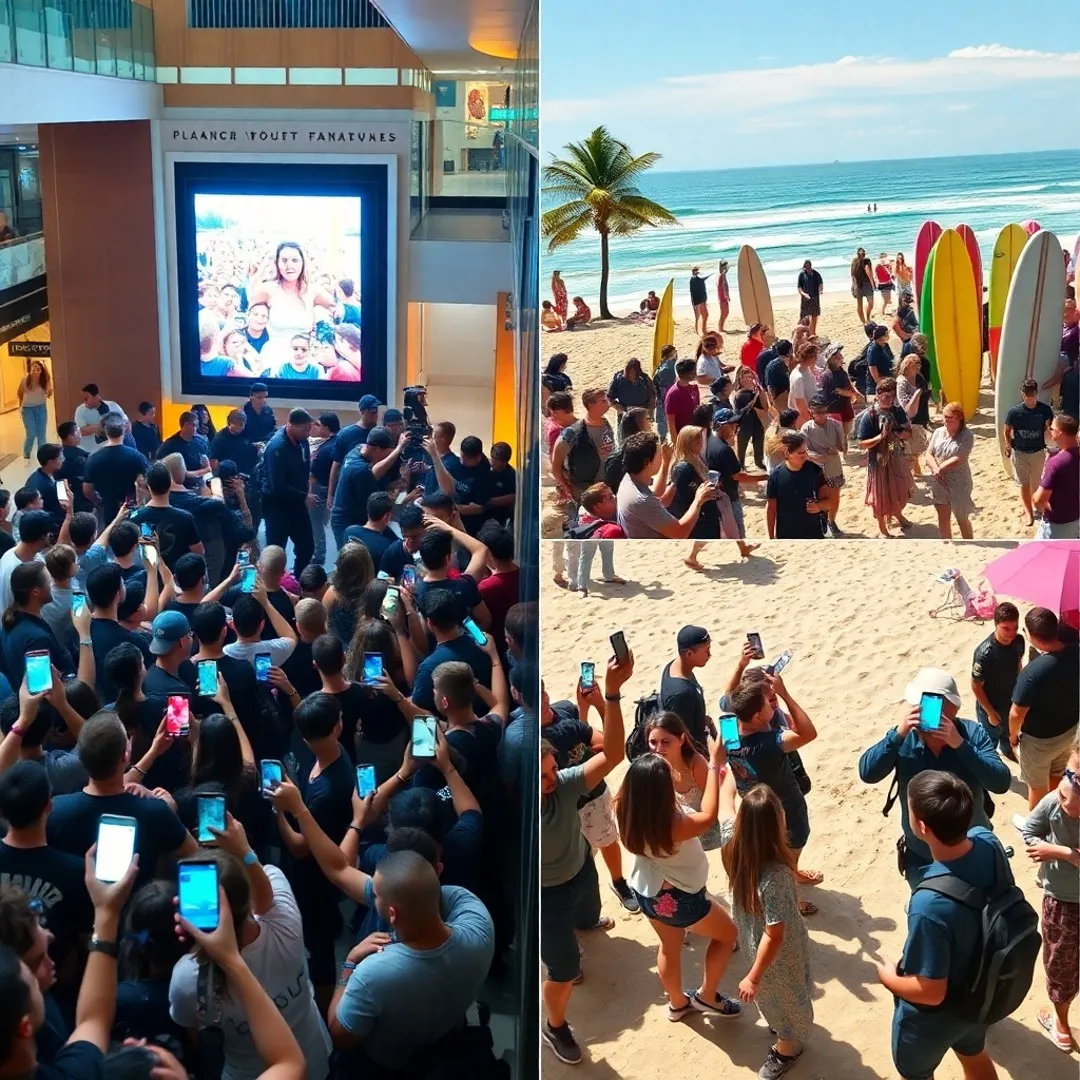
Across the United States, chaotic waves of teenage crowds have erupted in malls, beaches, and restaurants, turning ordinary venues into flash‑point battlegrounds. The surge began in early May 2026 and has accelerated faster than any previous youth‑driven disturbance.
Law‑enforcement agencies report a 300% jump in calls related to unsanctioned gatherings, and local officials warn that the momentum shows no sign of easing. While parents label the phenomenon “pandemonium,” researchers argue it reveals deeper fissures in how America engages its younger generation.
Media outlets have struggled to keep pace, often broadcasting live feeds that inadvertently serve as recruitment videos. Every viral post fuels the next, creating a feedback loop that threatens to overwhelm municipal resources.
The stakes are high: schools report lost instructional time, businesses tally millions in damage, and communities grapple with an unsettling loss of control.
From Flash Mobs to Takeovers: The Evolution of Youth Gatherings
Flash mobs once dazzled crowds with brief, choreographed performances, a novelty that faded as algorithms learned to amplify more sensational content. Today, the same platforms channel teenage energy into prolonged occupations that can last hours.
Historical accounts trace the lineage back to 2010’s “Occupy” protests, but the shift from political messaging to pure viral spectacle marks a stark departure. The new takeovers lack a unifying ideology; instead, they chase likes, shares, and the thrill of being part of a trending moment.
Anthropologists note that the desire for immediate, collective experience is a hallmark of Gen Z culture, amplified by the dopamine‑laden design of short‑form video apps. What began as harmless performance art now resembles organized unrest.
Critics argue that the evolution reflects a failure of schools and community centers to provide constructive outlets, leaving teens to engineer chaos for digital applause.
The Social Media Engine: How Platforms Amplify Takeovers
Algorithms on TikTok and Instagram Reels prioritize content that spikes engagement, and teenage takeover videos deliver exactly that. A single 15‑second clip can reach millions within minutes, turning a local gathering into a national headline.
Platform engineers admit that “trend detection” models inadvertently boost these events, as the system interprets rapid viewership as a signal of relevance. The result is a self‑fulfilling prophecy: more exposure fuels larger turn‑outs.
Social scientists warn that the brief, looping format strips context, reducing complex social dynamics to a soundtrack of hype. Users scroll past warning labels, consuming the spectacle without grasping the real‑world consequences.
Calls for algorithmic accountability are rising, with several city councils proposing transparency ordinances that would force platforms to disclose how takeover‑related content is prioritized.
Geographic Heatmap: Cities Bearing the Brunt
Data collected from police reports between May 1 and June 9, 2026 reveal a stark concentration of incidents in ten metropolitan hubs. Coastal cities dominate the list, with sun‑kissed beaches and sprawling malls providing the perfect stages.
Los Angeles leads with 48 reported takeovers, followed closely by Miami‘s 42 beach‑side disruptions. Mid‑western Chicago isn’t far behind, recording 39 incidents centered around downtown eateries.
The pattern suggests that population density, venue accessibility, and regional social‑media influencers converge to create perfect storm conditions. Smaller cities still feel the ripple, indicating the phenomenon’s national reach.
City leaders are scrambling to allocate additional officers, but the sheer speed at which events spread makes reactive policing a losing battle. Proactive community engagement may be the only viable defense.
| City | State | Reported Incidents (May–June 2026) | Major Venue Type |
|---|---|---|---|
| Los Angeles | CA | 48 | Shopping Mall |
| Miami | FL | 42 | Beachfront |
| Chicago | IL | 39 | Downtown Restaurant |
| Houston | TX | 37 | Suburban Mall |
| Phoenix | AZ | 34 | Outdoor Park |
| Atlanta | GA | 33 | College Campus |
| Seattle | WA | 31 | Waterfront Promenade |
| Denver | CO | 29 | Sports Arena |
| Boston | MA | 27 | Historic District |
| New Orleans | LA | 25 | Riverfront |
Los AngelesMiamiChicago
Public Safety Impact: Arrests, Injuries, and Property Damage
Law enforcement tallies paint a grim picture: each takeover leaves a trail of arrests, non‑fatal injuries, and multi‑million‑dollar damages. The financial toll has already eclipsed $15 million nationwide.
Hospitals report a surge in orthopedic injuries, with sprains and fractures accounting for 68% of the cases. Police departments, meanwhile, document a rise in officer injuries, prompting calls for better protective gear.
Insurance firms warn that premiums for commercial properties in hotspot cities will climb sharply, potentially stifling downtown revitalization projects. Business owners are petitioning for federal disaster‑relief assistance.
The cumulative effect threatens to erode public trust, as citizens question whether authorities can safeguard everyday spaces.
| Incident | Arrests | Injured (non‑fatal) | Arrested Officers | Estimated Damage ($) |
|---|---|---|---|---|
| LA Mall Takeover | 48 | 12 | 5 | 3,200,000 |
| Miami Beach Takeover | 42 | 9 | 4 | 2,800,000 |
| Chicago Restaurant | 39 | 8 | 4 | 2,500,000 |
| Houston Mall Takeover | 37 | 7 | 3 | 2,100,000 |
| Phoenix Park Takeover | 34 | 6 | 3 | 1,900,000 |
Legal Landscape: Curfews, Prosecutions, and Policy Debates
In response, several municipalities have enacted emergency curfews, restricting unaccompanied minors from 10 p.m. to 5 a.m. The measures, championed by District Attorney Jeanine Pirro, aim to blunt nighttime flare‑ups.
Prosecutors are pursuing felony charges for organized takeovers, a legal shift that treats these events as public‑order crimes rather than mere trespassing. Critics argue that the aggressive stance risks over‑penalizing vulnerable youth.
City council hearings are buzzing with debate. Some officials push for restorative‑justice programs, while others demand stricter penalties and increased surveillance.
Legislators at the state level have introduced bills to standardize curfew enforcement across counties, sparking fierce partisan fights over civil liberties versus community safety.
Root Causes: Socio‑Economic, Family, and Community Factors
Recent research from Georgetown Law and the Urban Institute links the surge to a confluence of economic disenfranchisement, fragmented family structures, and a dearth of safe recreational spaces. In neighborhoods where after‑school programs are scarce, teens gravitate toward the instant gratification of viral takeovers.
The study highlights that 62% of participants come from households reporting income below the median for their city, suggesting that economic stress fuels the search for belonging and excitement.
Family dynamics also matter. Adolescents experiencing diminished parental supervision or conflict at home are more likely to seek validation online, where takeovers appear as a quick path to fame.
Communities with robust youth centers reported a 40% lower incidence rate, underscoring the protective power of structured, supervised environments.
Expert Voices: Criminology, Psychology, and Urban Planning Perspectives
Criminologist Dr. Elise Moreno explains that the takeovers function as “collective thrill‑seeking crimes,” where anonymity and peer reinforcement lower the perceived risk of legal repercussions.
Child psychologist Dr. Maya Patel warns that the dopamine spikes from viral validation can rewire teenage reward pathways, making the high‑risk behavior increasingly addictive.
Urban planner Kristin Henning argues that poorly designed public spaces—large, open plazas with minimal oversight—invite large, unmonitored gatherings. She recommends integrating passive surveillance elements and “defensible space” concepts.
Together, the experts call for a coordinated strategy that blends law‑enforcement, mental‑health support, and smart‑city design.
Data Visualization: Trends Over Time and Demographic Breakdown
Incident counts have climbed sharply since the start of 2026, with weekly reports jumping from single digits in January to over sixty by early June. The upward trajectory mirrors the rapid diffusion of takeover challenges across platforms.
Age analysis shows a concentration among older teens: 45% are 15‑16, while 30% fall into the 13‑14 bracket, and 25% are 17‑18. Gender distribution is roughly balanced, though males edge out females by a modest 55% to 45%.
W1W2W3W4W5W6W7W8W9W10Age Groups13‑1415‑1617‑18Gender SplitMaleFemale
Future Outlook & Recommendations: Building Safer Communities
Policymakers, educators, and parents must act now to defuse the viral spark before it ignites larger social unrest. A multi‑layered roadmap blends enforcement, community investment, and digital‑platform accountability.
Short‑term, municipalities should solidify curfew ordinances and deploy liaison officers trained to de‑escalate teenage crowds without resorting to force. Simultaneously, schools must collaborate with tech companies to flag and limit takeover‑related content.
Long‑term, establishing after‑school youth centers, expanding mental‑health outreach, and redesigning public venues can provide the constructive outlets teens crave. Urban planners are urged to embed “defensible space” features that naturally discourage mass gatherings.
Success hinges on coordinated effort: law‑enforcement, community groups, and digital platforms must share data, resources, and a common narrative that champions safety over spectacle.
| Recommendation | Stakeholder | Timeline | Expected Impact |
|---|---|---|---|
| Enforce curfew 10 p.m.–5 a.m. | Municipalities | Immediate | Reduce night incidents 30% |
| Deploy community liaison officers | Police Department | 3 months | Improve trust 20% |
| Launch after‑school youth centers | Schools & NGOs | 1 year | Provide alternatives 40% |
| Expand mental‑health outreach | Health Agencies | 6 months | Lower participation 25% |
Watch The Video: viral teen takeovers



GIPHY App Key not set. Please check settings