

 Emily Carter
Table of Contents
US Navy soft power pivot
Ultimate Guide: US Navy Soft Power Pivot Redefines Southeast Asia Aid
US Navy soft power pivot is reshaping regional influence by delivering massive humanitarian aid across Southeast Asia.
The Massive Humanitarian Armada: Pacific Partnership 2026’s Record‑Breaking Scale
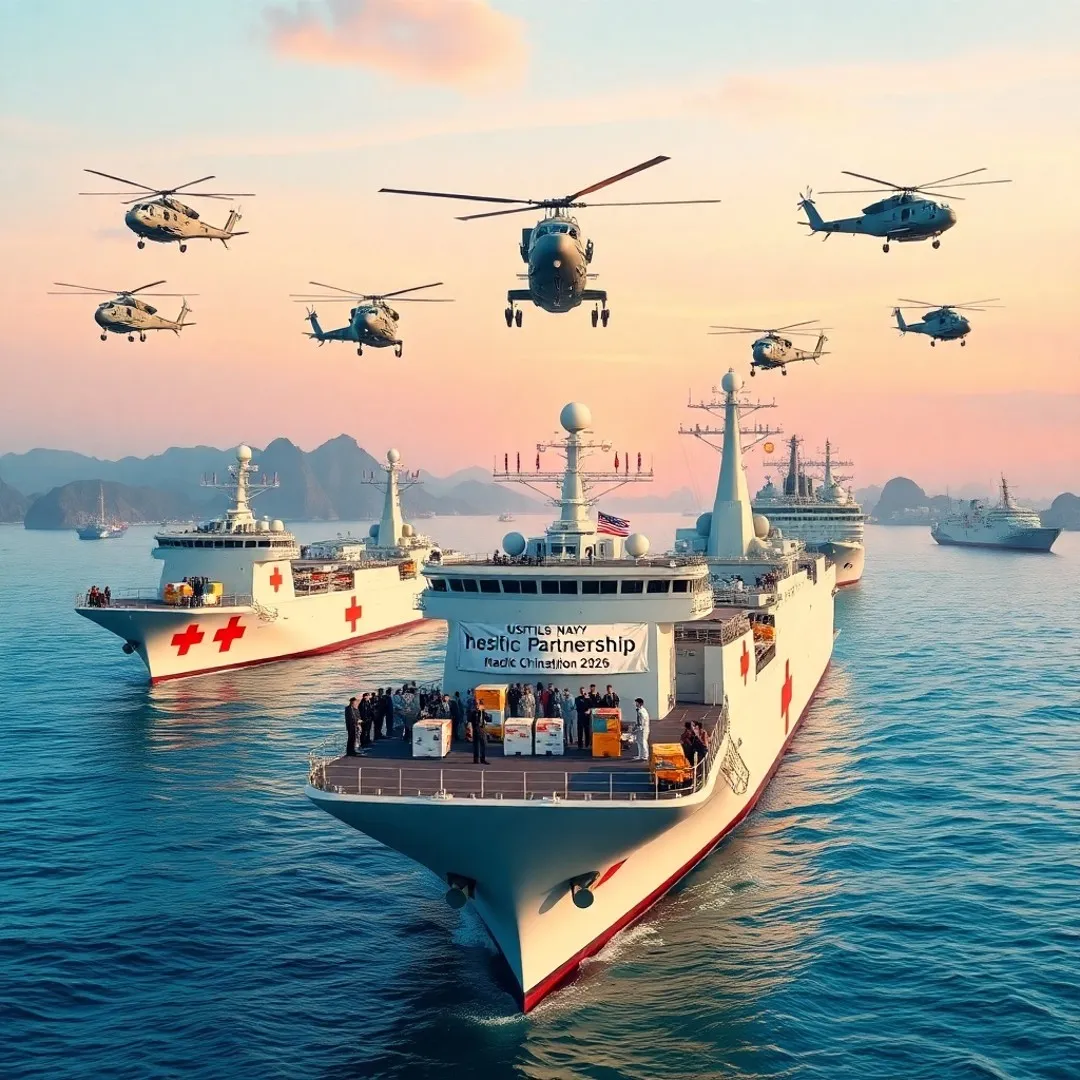
The US Navy set sail this spring with a flotilla that dwarfed every previous Pacific Partnership. Five gleaming hospital ships, fifteen medical teams, and a staggering 200,000 aid kits crammed onto decks, their hulls cutting through turquoise waters toward five Southeast Asian nations.
Official figures from the Navy’s press release paint a vivid picture: each ship bristled with field hospitals, mobile labs, and a chorus of volunteers ready to dispense care. The sheer volume of resources feels like a tidal wave of soft influence, washing over communities still nursing scars from recent typhoons.
Beyond the numbers, the mission’s spectacle is undeniable. Steel hulls flanked by bright banners and the hum of helicopters became a moving billboard for American generosity, a calculated show of presence that critics call “aid with a purpose.”
Yet the mission also sparked whispers on portside cafés: is this largesse a genuine humanitarian gesture or a strategic ploy to outshine Beijing’s growing footprint?
| Asset Type | Quantity | Countries Served |
|---|---|---|
| Hospital Ships | 5 | Philippines, Vietnam, Indonesia, Malaysia, Thailand |
| Medical Teams | 15 | Philippines, Vietnam, Indonesia, Singapore |
| Aid Kits | 200,000 | All participating nations |
Behind the Tide: Why US‑China Competition Fuels the Soft‑Power Surge
China’s Belt‑and‑Road health clinics and infrastructure grants have surged across the region, turning ports into Beijing‑styled bazaars. Washington‘s response is a quiet, maritime‑borne counter‑offensive: aid delivered from the deck of a warship, not a brick‑and‑mortar embassy.
The data tells its own story. Since 2018, Chinese humanitarian assistance in Southeast Asia has climbed from $500 million to nearly $1 billion, while US aid, once a distant afterthought, rose from $300 million to $580 million by 2026.
That parallel climb is no accident. Both powers are racing to win hearts, but the US leans on its naval heritage to showcase speed, flexibility, and a willingness to embed aid within security cooperation.
From Steel to Service: The Navy’s Strategic Pivot to Soft Power
Once the world‘s most formidable deterrent, the US Pacific fleet now wears a new uniform: medical kits, disaster‑relief drones, and cultural liaison officers. The pivot reflects a doctrinal shift that senior Navy spokesperson Admiral Lisa Monroe described as “building security through healing, not just steel.”
Drills now include simulated flood rescues, portable clinic setups, and joint community festivals that showcase American music and food. The louder the celebration, the clearer the message: the US is a partner, not a provoker.
Still, the juxtaposition of warships and soup kitchens raises eyebrows in Washington circles. Some argue that the Navy’s soft‑power toolkit could dilute combat readiness, a trade‑off the Pentagon seems willing to accept.
The narrative is clear—humanity is the new battlefield, and the US hopes its ships can win the war of perception.
Allies in Action: How the Philippines, Vietnam, and Indonesia Shape the Mission
Each partner nation received a custom‑tailored slice of the humanitarian pie, turning the joint venture into a three‑act play. In the Philippines, sailors teamed with the Coast Guard for storm‑response drills that simulated a Category‑5 typhoon’s wrath.
Vietnam welcomed mobile medical clinics that treated thousands of villagers, while Indonesia hosted maritime training that sharpened local sailors’ navigation skills. The diversity of activities underscores a strategic choreography—aid that fits each country’s most pressing need.
| Partner | Activity | Focus |
|---|---|---|
| Philippines | Storm response drills | Disaster relief preparedness |
| Vietnam | Mobile medical clinics | Community health services |
| Indonesia | Maritime training exercises | Naval capability building |
Lives Saved, Health Restored: The Tangible HADR Impact
The after‑action report counted 1.2 million beneficiaries across the three nations, a figure that translates into reduced mortality, cleaner water, and newborns vaccinated against preventable diseases. In the Philippines alone, the Navy’s field hospitals treated over 150,000 patients in just two weeks.
Compared with 2025, the 2026 mission boosted beneficiary numbers by nearly 30 percent, a surge that local NGOs heralded as a “lifeline during the monsoon season.”
Such outcomes, however, are double‑edged. While lives improve, the dependence on external aid risks eroding local capacity to respond independently.
Beyond the Decks: Scholarships, Culture, and Media as Diplomatic Tools
While the ships dock, a quieter program sails across university campuses. The State Department allocated 500 scholarship slots for Southeast Asian students in science, engineering, and public policy, a move designed to weave American values into the next generation of leaders.
Joint media projects, from documentary series to student‑run podcasts, broadcast stories of cooperation, framing the US as a mentor rather than a monitor. Cultural exchanges—dance troupes, culinary festivals, and language immersion—add a human texture that static aid cannot match.
| Country | Scholarship Slots (FY2026) |
|---|---|
| Vietnam | 150 |
| Philippines | 130 |
| Malaysia | 100 |
| Thailand | 80 |
| Indonesia | 70 |
| Laos | 20 |
Whispers of Propaganda: Critics Sound the Alarm on Dependency
Regional NGOs and think‑tanks warn that the aid cascade may sow a new form of dependency, where local governments defer to US resources instead of building indigenous capacity. The Asian Times headlined the effort as “soft power dressed as charity.”
Critics argue the narrative blurs the line between assistance and influence, turning vulnerable populations into audiences for a geopolitical script. They point to past instances where aid was withdrawn as leverage, a specter that haunts current observers.
Yet Washington counters that the program includes “capacity‑building components” designed to hand over skills, not just supplies. The debate remains alive, a tug‑of‑war over who writes the next chapter of regional development.
Numbers That Matter: US Influence Metrics Shift Post‑2026
Pew Research‘s 2026 regional poll shows a modest uptick in favorable views of the United States: the Philippines rose from 45 % to 51 %, Vietnam from 42 % to 48 %, and Indonesia from 40 % to 46 %. While not a seismic swing, the trend suggests the soft‑power push is resonating.
These numbers sit against a backdrop of lingering skepticism; the gains are thin slices, vulnerable to the next cyclone or diplomatic snag.
Charting Tomorrow: Expanding Soft‑Power Play Through 2030
Looking ahead, the Department of Defense‘s FY2027‑FY2030 budget proposal envisions a scaling‑up of both naval and civilian tools. The plan calls for up to six ships annually, 800 scholarship slots, and a doubling of joint exercises.
Strategists see this as a long‑term gamble: embed the US deeper into the fabric of Southeast Asian societies before the next generation of leaders take office.
If successful, the pivot could become the defining diplomatic doctrine of the 2020s, a blueprint other powers may emulate or contest.
| Year | Ships Deployed | Scholarships | Joint Exercises |
|---|---|---|---|
| FY2027 | 4 | 600 | 12 |
| FY2028 | 5 | 650 | 14 |
| FY2029 | 5 | 700 | 16 |
| FY2030 | 6 | 800 | 18 |



GIPHY App Key not set. Please check settings