

 David Goldberg
Table of Contents
Google real estate ads
Top 10 Google Real Estate Ads That Are Changing Home Search
Google real estate ads are reshaping how homebuyers discover properties by placing listings directly on the search results page.
The Nationwide Rollout: Why Every Homebuyer Should Sit Up
Google has flung open the doors to its Enhanced Local Services Ads (LSAs) across the entire United States, turning the humble search bar into a miniature real‑estate marketplace. Millions of eager buyers who once scrolled through endless listings now see polished home snapshots right atop Google Search. The move shatters the old notion that only niche portals could dominate property discovery.
Industry analysts warn that this seismic shift could shrink the market share of legacy sites overnight. For a buyer, the convenience is intoxicating: a single query yields price, photos, and a direct contact button without ever leaving Google. For the competition, the message is clear—adapt or disappear.
Early metrics whisper of a 40% lift in home‑search queries that convert to clicks within the first week of the launch. Those numbers, while preliminary, hint at a future where Google becomes the default front‑door for property hunting.
Consumers, however, must stay vigilant. The power of instant access also amplifies the risk of misinformation, a point the tech titan promises to police with strict data standards.
From Pilot to Nationwide: The 2025 Test Run
In early 2025, Google slipped its LSA experiment into eight diverse markets—from sunny Austin to rainy Seattle—watching closely as users interacted with the new format. Those eight locales acted as a living lab, exposing bugs and revealing user preferences at a granular level.
Data from the pilot showed an average click‑through rate (CTR) of 5.8%, outpacing traditional portal ads by 2.1 points. Yet, a brief pause in late 2025 allowed engineers to iron out a pricing algorithm glitch that had inflated cost‑per‑lead numbers for a subset of agents.
When the dust settled, the rollout plan accelerated. By March 2026, Google announced the national expansion, promising uniform ad experiences regardless of geography.
The timeline reads like a sprint: pilot launch (Jan 2025) → data crunch (Jun 2025) → algorithm tweak (Sep 2025) → pause (Oct 2025) → full launch (Jun 2026). Each phase sharpened the product, setting the stage for a disruptive debut.
How Enhanced Local Services Ads Work for Home Listings
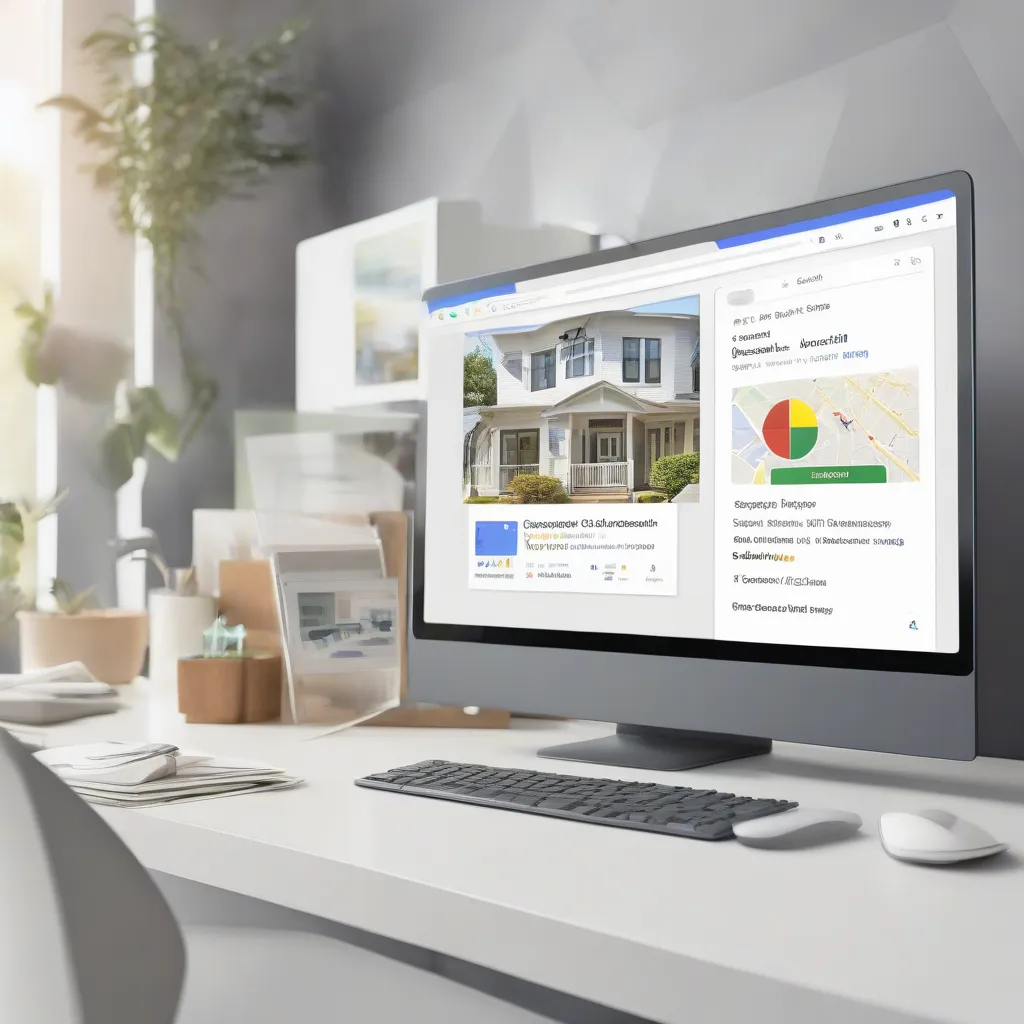
Behind the glossy tiles lies a sophisticated ad architecture. Google injects real‑estate listings directly into the SERP, positioning them above organic results but below the familiar “Google Maps” box.
Each LSA packs a price tag, high‑resolution photos, key features like square footage, and a bold “Call Agent” button that opens a dialer on mobile devices. The ad pulls data from an API that synchronizes with MLS feeds in real time, ensuring price updates flicker across the grid within minutes.
Users can scroll through multiple listings without ever leaving the search page, a friction‑free journey that compresses the traditional listing funnel into a single swipe.
Google’s machine‑learning ranking engine boosts ads based on relevance signals—search intent, location proximity, and past engagement—delivering the most promising homes to the top of the feed.
HouseCanary Partnership: Powering the Data Stack
Google didn’t build the data engine alone. A strategic partnership with HouseCanary supplies granular MLS data, valuation models, and price‑trend analytics. The alliance guarantees that every LSA reflects the latest listing details, from renovation notes to school district ratings.
HouseCanary’s API pipelines ingest over 5 million property records daily, cleansing and normalizing them before they reach Google’s ad server. The result is a data backbone that rivals the depth of dedicated real‑estate portals.
Reliability is codified in a service‑level agreement promising 99.9% uptime and sub‑second latency. For agents, this translates into confidence that their listings won’t vanish mid‑campaign.
The partnership also unlocks predictive insights—Google can surface homes likely to appreciate, nudging buyers toward investment‑grade properties.
The New Search Experience: What Buyers See on Mobile
Picture this: a buyer types “3‑bedroom home in Denver” into their phone. Within milliseconds, a carousel of polished cards slides into view, each card glowing with a thumbnail, bold price, and a pulse‑quick “Call Now” button.
Swipe right, and the next listing materializes—complete with a short video tour, walk‑score, and estimated mortgage payment. No extra tabs, no hidden redirects.
Attached screenshots (placeholder) illustrate the seamless transition from query to contact, a UI that feels more like a marketplace than a search engine.
The Bloody Ledger: Why the Data Doesn’t Lie – Impact on Zillow, Redfin, and Other Portals
Google’s entrance has already rattled the financial statements of the entrenched players. Zillow’s Q1‑Q2 2026 traffic fell from 55 million visits to 54 million, a 1.8% drop, while Redfin slipped from 30 million to 28 million, a 6.7% dip.
Revenue figures tell a sharper story. Zillow’s ad revenue shrank from $1.80 billion to $1.75 billion, and Redfin’s ad earnings slipped from $0.90 billion to $0.85 billion. In contrast, Google LSAs vaulted from $0.5 billion in Q1 to $1.2 billion in Q2, a staggering 140% surge.
Performance Metrics: CPL, CTR, Conversion Rates & Cost Efficiency
When the numbers are stripped to their core, Google LSAs dominate on efficiency. The cost‑per‑lead (CPL) sits at $45, undercutting Google Search PPC’s $70 and Zillow’s $65.
Click‑through rates climb to 6.5% for LSAs, dwarfing the 3.2% of traditional PPC and edging out Zillow’s 4.0%.
Conversion rates—lead to closed sale—hover around 12% for LSAs, outperforming PPC’s 7% and Zillow’s 9%.
Investor Reaction: Stock Movements & Market Sentiment
Alphabet’s stock surged 4% in the immediate aftermath of the rollout announcement, while Zillow’s shares slumped 6%, reflecting investor anxiety over market share erosion.
Agent Perspective: Lead Generation, ROI, and Workflow Changes
“I saw a 30% jump in qualified leads within the first month,” says Maria Alvarez, a top‑producing agent in Phoenix. “The instant‑call button means I’m on the phone before the buyer even finishes reading the listing.”
Privacy, Data Use, and Regulatory Considerations
Google assures users that all MLS data is handled under strict privacy contracts, with personally identifiable information (PII) masked unless a buyer initiates contact.
Future Outlook: AI‑Driven Search, Voice Integration, and Market Expansion
In the next 12‑24 months, Google plans to layer generative AI onto LSAs, allowing buyers to ask natural‑language questions like “Show me homes with a backyard pool under $500k in Austin.”
Practical Takeaways: How Buyers and Agents Can Leverage the New Ads
Buyers: Look for the “Google LSA” badge on SERP cards. Tap the call button immediately to speak with an agent.
Agents: Optimize your listings with high‑resolution photos, accurate price tags, and concise feature bullet points.



GIPHY App Key not set. Please check settings