

 Ryan Chen
Table of Contents
Kansas Data Center Incentives
Kansas Wins Big in Tech Border War: New Data Center Laws Spark $12B Investment Boom
Kansas data center incentives are rapidly reshaping the Midwest tech landscape as the state aggressively competes with Missouri to become the nation’s next massive silicon hub.
Kansas Wins Big in Tech Border War: New Data Center Laws Spark $12B Investment Boom
By Ryan Chen | @RChenNews
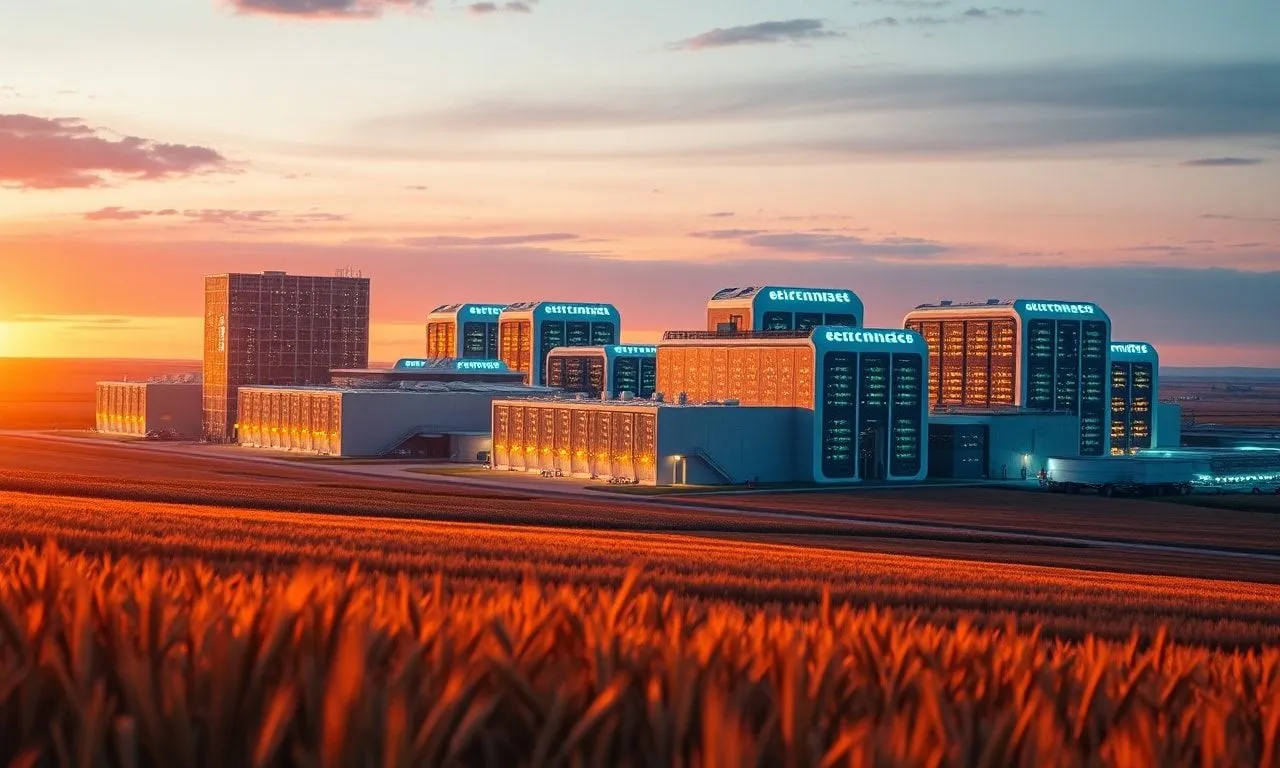
The “Silicon Prairie” is no longer a tongue-in-cheek nickname; it is becoming a cold, hard, concrete reality. In a move that has sent shockwaves from the Missouri River to the High Plains, Kansas has effectively checkmated its neighbors in the high-stakes game of digital infrastructure. With the ink barely dry on revolutionary new legislation, the state has transitioned from an underdog to a titan, luring a staggering $12 billion in planned investments that will redefine the Kansas skyline and its economy for generations.
This isn’t just about big buildings; it is a calculated strike in the long-standing “Border War” between Kansas and Missouri. For decades, the two states have traded tax incentives like playing cards, but the rise of Artificial Intelligence (AI) has changed the rules of engagement. By moving faster and more aggressively to court the world’s tech giants, Kansas has positioned itself as the premier destination for the massive server farms that power our modern lives. The momentum is undeniable, and the scale is unprecedented.
The Legislative Masterstroke: How Senate Bill 98 Rewrote the Rules
At the heart of this gold rush lies Kansas Senate Bill 98, a piece of legislation so potent it has effectively turned the state into a tax-free sanctuary for data center developers. Enacted as Chapter 124 of the 2025 Session Laws, this bill provides a total sales tax exemption for construction, remodeling, and the astronomical costs of equipment and labor. For a project to qualify, a developer must commit to a minimum investment of $250 million—a high bar that ensures only the biggest players gain entry.
However, the bill isn’t just a giveaway. In a sharp pivot toward consumer protection, the law strictly prohibits public utilities from offering discounted electric rates to these digital behemoths. This ensures that while the companies save on taxes, they cannot pass the burden of their massive energy appetites onto the average Kansas homeowner. It is a delicate balancing act designed to foster growth without sparking a populist revolt over utility bills.
Furthermore, the legislation introduces a layer of “Tech-Patriotism” by mandating that the Kansas Intelligence Fusion Center review and approve all projects before they receive public financial assistance. This unique security vetting process ensures that the infrastructure being built in the Sunflower State is secure, reliable, and aligned with national interests. It is a sophisticated approach to economic development that Missouri is currently struggling to match.
A $12.6 Billion Giant: The Wyandotte County Powerhouse
The first major domino to fall under this new regime is a mind-boggling $12.6 billion project slated for Wyandotte County. Situated on rural property just west of the iconic Kansas Speedway, this development represents a fundamental shift in land use. In May 2025, the planning commission advanced this behemoth, which is set to dwarf almost any other industrial project in the state’s history. The scale of the investment is so large it feels almost surreal, but the numbers are verified and the machinery is ready to roll.
Powering such a facility is no small feat. The developers have committed to funding their own utility upgrades, including the construction of two massive new substations. These stations will provide a staggering 600 MW of capacity from the Board of Public Utilities—a figure that actually exceeds the utility’s prior total limit of 500 MW. In essence, this single project is forcing the local grid to evolve and expand at a rate never seen before.
To put this energy consumption into perspective, consider the following comparison of power requirements across different industrial sectors in the region:
| Sector / Project | Estimated Energy Demand (MW) | Investment Scale |
|---|---|---|
| Standard Industrial Park | 15 – 30 MW | $50M – $100M |
| Large Manufacturing Plant | 50 – 100 MW | $200M – $500M |
| Wyandotte Data Center | 600 MW | $12.6 Billion |
| Google KC Phase 2 | 150 – 300 MW (Est) | $2 Billion+ |
The De Soto Transformation: Mount Sunflower’s Digital Fields
Not to be outdone, the City of De Soto has approved its own multi-phase data center campus project in partnership with Mount Sunflower, LLC. Located near W 103rd Street and Edgerton Road, this development is a masterclass in urban planning and economic foresight. Each phase of the project includes at least one 285,000-square-foot facility, creating a sprawling campus that will provide hundreds of high-tech jobs and millions in local revenue.
The agreement is supported by Industrial Revenue Bonds (IRBs) and a detailed development plan that integrates the facility into the surrounding landscape. De Soto, once a quiet community, is now finding itself at the epicenter of the global AI revolution. The influx of capital is expected to revitalize local infrastructure, from roads to public services, proving that the “data boom” has benefits that extend far beyond the server racks.
This project specifically targets the “edge” of the Kansas City metro area, utilizing the flat topography and accessible fiber-optic corridors that make this region so attractive. While residents have voiced concerns about the changing nature of their skyline, the promise of a modernized tax base is a persuasive argument that has carried the day in city hall.
Google’s Expansion: The Search Giant’s Second Kansas Act
Google has officially confirmed that construction is underway for its second massive data center campus in the Kansas City area. Under a 2025 agreement with Evergy, Google is operating under a “Capacity Commitment Framework.” This ensures the tech giant covers the full costs of the energy it consumes, including the infrastructure needed to deliver it. It is a major win for transparency and fairness, addressing the “shock factor” that often accompanies these energy-intensive projects.
By building its second campus, Google is signaling that the Kansas tech environment is not just a flash in the pan but a sustainable ecosystem. The search giant’s presence acts as a magnet, drawing in third-party vendors, cybersecurity firms, and maintenance contractors. The ripple effect of Google’s $2 billion-plus expansion will be felt in every coffee shop and real estate office from Overland Park to Topeka.
The following ASCII chart illustrates the projected growth of data center capacity in the Kansas City region over the next few years:
Regional Power Capacity Growth (MW)1000 |                      [600 MW Wyandotte Project]
800 |                ______|
600 |          ______|
400 |    | [Google Phase 2]
200 || [Existing Centers]
+--------------------------------------------
2024    2025    2026    2027 (Projected)
The Border War Victory: Missouri’s Defensive Stance
While Kansas has been rolling out the red carpet, Missouri has found itself in a defensive crouch. In January 2026, the Kansas City, Missouri, City Council unanimously approved much stricter zoning laws for data centers. Reclassifying them as industrial facilities, the city now limits them to specific manufacturing districts, imposes noise setbacks, and requires “will-serve” letters from utilities to prove the grid can actually handle the load. This regulatory friction is exactly what is driving developers across the state line into Kansas.
Advocates in Missouri argue these rules are necessary to prevent an “AI-driven boom” from overwhelming local resources and driving up water and electricity rates. However, in the world of fast-moving tech capital, “caution” is often read as “closed for business.” While Missouri seeks to be at the forefront of data center regulation, Kansas is seizing the opportunity to be at the forefront of data center construction. The contrast couldn’t be sharper.
This regional split has created a fascinating economic laboratory. On one side of the river, you have a regulated, cautious approach; on the other, an aggressive, incentive-laden land grab. For now, the investors’ wallets are speaking loudly, and they are choosing the Kansas side of the fence.
The Environmental Cost: Water, Energy, and Sustainability
We cannot discuss a $12 billion boom without addressing the elephant in the room: the environmental footprint. Data centers are notoriously thirsty, requiring millions of gallons of water to keep servers cool. They are also energy gluttons. The Natural Resources Defense Council (NRDC) has highlighted that while Kansas is winning the investment race, it must now lead the way in “demand-response” programs. These programs allow the grid to defer certain generation needs, lowering bills and preventing blackouts.
Kansas is currently exploring innovative ways to mitigate this strain. Some proposed facilities are looking into closed-loop cooling systems that recycle water, while others are committing to purchasing 100% renewable energy from the state’s vast wind farms. If Kansas can successfully marry its data center boom with its wind energy leadership, it will create a sustainable “Green Tech” model that could be the envy of the world. But if they fail, the “Border War” victory could eventually taste like ash for local residents facing rising temperatures and falling water tables.
The Future of the Sunflower State
The transformation of Kansas into a global tech hub is no longer a prospect—it is happening. The combination of Senate Bill 98, strategic zoning, and a aggressive “can-do” attitude has unlocked a floodgate of capital that Missouri simply wasn’t prepared for. From the massive 600 MW projects in Wyandotte to Google’s expanding footprint, the state is building the literal engine of the 21st-century economy.
However, the real test lies ahead. As these facilities come online, the state must manage the social and environmental impacts with the same precision it used to craft its tax laws. The rewards are immense—higher tax revenues, thousands of jobs, and a diversified economy—but the risks to the energy grid and water supply are real. Kansas has won the first battle of the Tech Border War, but the long-term victory will depend on how it manages its newfound digital riches. One thing is certain: the eyes of the tech world are now firmly fixed on Kansas.
What do you think about the data center boom? Are the tax incentives worth the potential strain on our energy grid? Join the conversation in the comments below!
As the “Silicon Prairie” undergoes this historic $12 billion transformation, the demand for high-tier infrastructure is no longer confined to the sprawling campuses of Wyandotte County. For local businesses, tech entrepreneurs, and scaling enterprises, the race to modernize requires hardware that matches the state’s new industrial-strength standards. Transitioning your operations to meet this digital surge starts with the foundational physical architecture that keeps servers cool, secure, and organized.
Whether you are optimizing a localized server room or building out a private cloud to keep pace with the Google-led expansion, the quality of your housing equipment is paramount. Professional-grade hardware ensures that as the Kansas grid evolves, your specific tech stack remains resilient and high-performing. We have curated a selection of industry-leading solutions designed to bridge the gap between regional growth and your specific operational needs.
Explore our top recommendations for high-performance equipment to ensure your business is ready for the next phase of the Midwest tech revolution. We invite you to join the conversation in the comments below and subscribe to the NewsBurrow newsletter for exclusive updates on the shifting economic landscape and the tools driving it forward. Click below to discover the essential infrastructure that will define your digital future.
Shop Products On Amazon
Shop Products on Ebay
Trending Similar Stories in the News
Hyperscale data center proposed in Tonganoxie, county commissioners discuss project with developer KSHB 41 Kansas City...
Liberty lands $1.4B data center campus, backing it with $229.2M in incentives The Business Journals...
Trending Videos of Kansas Data Center Incentives



GIPHY App Key not set. Please check settings