

 Emily Carter
Table of Contents
Pakistan Israel diplomatic ties
Top 7 Insights on Pakistan Israel Diplomatic Ties Amid Trump’s Push
Pakistan Israel diplomatic ties are now at the center of a geopolitical showdown sparked by Trump’s latest push.
Why the World Can’t Look Away From Pakistan‑Israel Talks
When President Donald Trump called on Pakistan to recognize Israel during a televised interview with IndiaWest on May 26, 2026, the room fell silent and the internet erupted.
That single remark lit a firestorm across continents, pulling diplomats, analysts, and ordinary citizens into a frantic debate about the future of South‑Asian geopolitics.
From the halls of Islamabad to the streets of New York, the question echoed: Is a historic shift finally on the horizon?
Readers can’t afford to miss the seismic undercurrents that could reshape alliances worldwide.
Decades of Defiance: Pakistan’s Stance on Israel
Since its inception in 1947, Pakistan has pledged unwavering support for the Palestinian cause, embedding anti‑Israel sentiment into its constitution and foreign policy.
Legal frameworks, such as the 1979 amendment banning travel to Israel, cemented an ideological barrier that survived multiple regimes.
Yet occasional back‑channel overtures hinted at fatigue—most notably the 2005 secret dialogue with Israeli officials that never materialized into policy.
Below is a concise chronology that maps the key moments from 1948 to 2025.
| Year | Event |
|---|---|
| 1948 | Pakistan refuses to recognize the newly declared State of Israel. |
| 1979 | Parliament passes amendment prohibiting travel to Israel. |
| 2005 | Underground diplomatic channel explored, later aborted. |
| 2015 | Pakistani UN vote supports Palestinian statehood resolution. |
| 2020 | Public debate spikes after Abraham Accords announcements. |
| 2023 | Ministry releases white paper on regional security, omitting Israel. |
| 2025 | Gallup poll shows 12% Pakistani support for Israel normalization. |
Abraham Accords 2024‑2025: The Quiet Engine Behind the Push
The original Abraham Accords of 2020 opened diplomatic doors between Israel and the United Arab Emirates, Bahrain, Sudan, and Morocco.
In the subsequent two years, a cascade of additional signatories—Saudi Arabia (2024) and Jordan (2025)—turned the accords into a growing coalition of Middle‑East partners.
This expanding bloc has been quietly leveraged by Washington to press other regional actors, using economic incentives as the grease for diplomatic wheels.
The bar chart below visualizes the yearly surge of new participants from 2020 through 2025.
Trump’s 2026 Diplomatic Gambit: A Public Urge to Pakistan
During a live interview, Trump declared, “President Donald Trump urged Pakistan to recognize Israel and join the peace partnership,” casting the demand as a moral imperative.
The statement rippled through Pakistani media, sparking headlines that ranged from patriotic outrage to speculative optimism.
Analysts argue the move is less about ideology and more about cementing a legacy of reshaping the Middle East before the 2028 election cycle.
Behind the flash, senior aides hinted at tying future U.S. aid packages to Islamabad’s willingness to normalize ties.
Domestic Shockwaves: Politics, Faith, and the Public Pulse
Within Islamabad, the reaction was immediate and fractious. Opposition parties denounced the notion as “blasphemous,” while secular legislators called for a pragmatic debate.
Defence Minister Khawaja Asif bluntly labeled Trump’s pressure as “not acceptable,” reflecting entrenched security concerns.
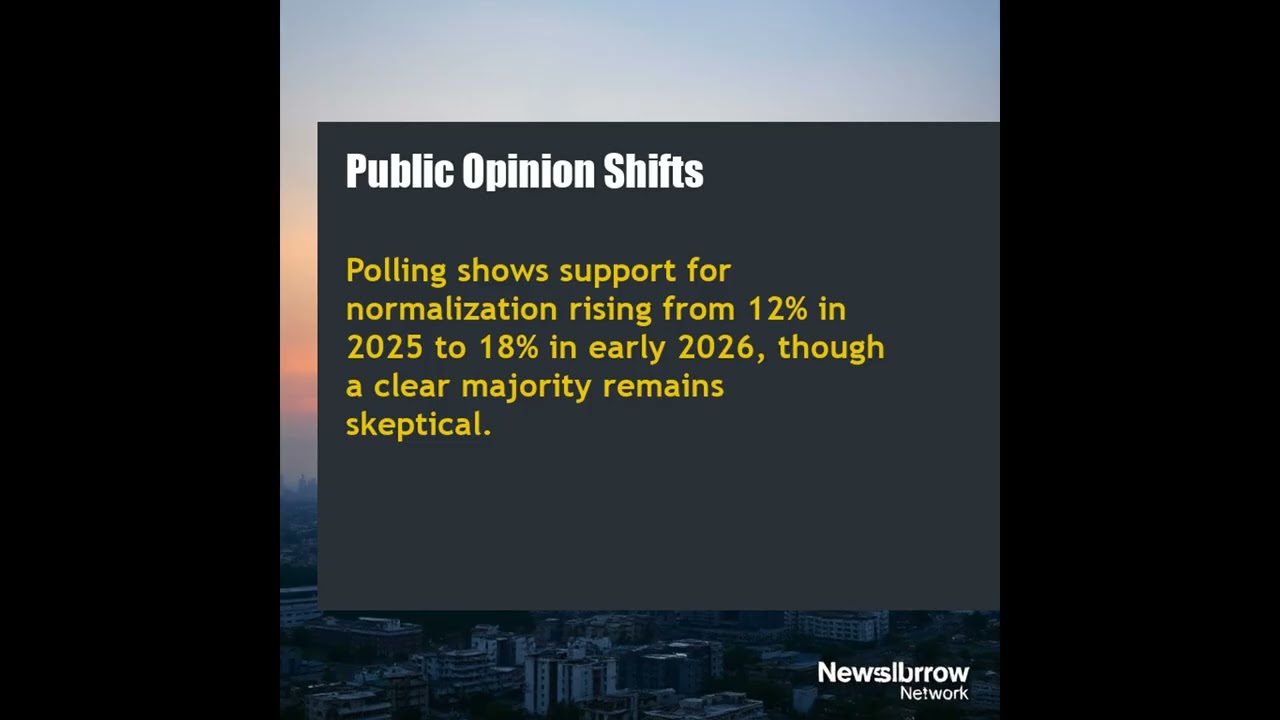
Polling data collected by Pew Research Center and Gallup Pakistan shows a modest rise in public support, climbing from 12% in 2025 to 18% in early 2026, yet the majority remains skeptical.
The table below captures these shifting sentiments.
| Year | Support for Normalization (%) |
|---|---|
| 2023 | 9 |
| 2024 | 10 |
| 2025 | 12 |
| 2026 (Q1) | 18 |
Gulf Tremors: Saudi, Qatar, and Neighbors React
Saudi Arabia’s crown prince issued a cautious endorsement, noting that a Pakistani alignment with Israel could “stabilize regional security” while quietly monitoring domestic backlash.
Qatar, already navigating a delicate balance between the U.S. and Iran, warned that premature moves might “inflame sectarian tensions.”
The Gulf’s collective stance underscores a strategic calculus: boosting the Abraham coalition versus preserving the status quo.
A simplified map illustrates the evolving diplomatic alignments from 2024 to 2026.
Money Talks: Trade, Aid, and Investment Stakes
The United States has dangled a suite of economic incentives: advanced technology transfers, a $3 billion aid package, and preferential access to Gulf investment pipelines.
Bloomberg reports that Saudi investors are eyeing a $5 billion infrastructure corridor linking Karachi to the Red Sea, contingent on diplomatic clearance.
Meanwhile, the China‑Pakistan Economic Corridor (CPEC) could be reshaped to accommodate new trade routes, potentially boosting Pakistan’s GDP growth by 1.2% annually.
The financial tableau below outlines the proposed packages.
| Package | Amount (USD Billions) | Source |
|---|---|---|
| U.S. Technology Transfer | 2.5 | U.S. International Development Finance Corp. |
| Conditional Aid | 3.0 | U.S. State Department |
| Gulf Investment Corridor | 5.0 | Saudi Public Investment Fund |
Security Chessboard: Gains, Risks, and the Nuclear Equation
Recognition of Israel could grant Pakistan access to cutting‑edge defense systems, enhancing its deterrence against Iranian proxies in Balochistan.
Conversely, Tehran may perceive the move as a direct threat, potentially escalating proxy conflicts along the Afghan border.
The IDSA’s risk‑benefit matrix, visualized below, pits diplomatic costs against strategic gains.
Behind the Curtain: U.S. Levers and Back‑Channel Moves
State Department officials, speaking on condition of anonymity, confirmed that aid disbursements are being conditioned on Islamabad’s diplomatic overtures.
Leaked diplomatic cables suggest a series of private meetings in Washington, where senior U.S. officials offered “pre‑emptive security guarantees” in exchange for normalization.
This strategic play mirrors earlier U.S. leverage tactics used with Morocco and Sudan, underscoring a pattern of economic baiting for political compliance.
Voices From the Frontline: Expert Takeaways
Former Pakistani diplomat Ayesha Malik warned, “A rushed recognition could destabilize domestic politics, eroding civilian‑military equilibrium.”
Middle‑East scholar Dr. Omar Haddad noted, “The Abraham Accords have created a new norm; Pakistan’s entry would be the final piece completing the puzzle.”
U.S. policy analyst Rebecca Lee argued, “Washington sees Pakistan as a linchpin to counter Iran; the diplomatic gamble is calculated, not impulsive.”
Three Roads Ahead: Scenarios for Pakistan‑Israel Relations
Scenario 1: Full recognition, unlocking the full suite of U.S. and Gulf economic incentives, but risking severe internal backlash.
Scenario 2: Limited cooperation—joint intelligence and trade in specific sectors—offering a middle path that appeases both hardliners and reformists.
Scenario 3: Status‑quo stalemate, preserving existing policies while the international community’s pressure wanes.
The matrix below maps the projected political, economic, and security outcomes for each path.
| Scenario | Political Outcome | Economic Outcome | Security Outcome |
|---|---|---|---|
| Full Recognition | Polarization, potential protests | +$10 B investment, technology boost | Enhanced deterrence, Iran retaliation risk |
| Limited Cooperation | Managed consensus | +$4 B targeted projects | Selective intel gains, limited fallout |
| Status‑Quo | Stability, missed opportunities | Baseline growth | Continued security ambiguity |
What This Means for 2026’s Diplomatic Realignments
The Trump‑driven push is more than a headline; it signals a broader U.S. strategy to reshape alliances in a multipolar world.
Whether Pakistan steps onto the diplomatic stage or remains on the sidelines will reverberate through trade corridors, security calculations, and regional power balances for years to come.
Observers should watch upcoming parliamentary debates, U.S. aid disbursement schedules, and Gulf investment announcements as the critical barometers of this unfolding saga.


GIPHY App Key not set. Please check settings