

 Chief Editor
Table of Contents
Nashville Groove Building Rebuild Order
Victory for East Nashville: Metro Orders Landmark Record Store Rebuild After Illegal Demolition
Nashville Groove building rebuild order marks a historic victory for preservationists fighting to save the soul of Music City from unauthorized development.
By Aiden Hughes (@AidenReports)
The Day Music City Lost a Piece of Its Soul to a Bulldozer
On a cold morning in February 2026, the residents of East Nashville woke up to a sound that has become all too common in the rapidly gentrifying corridors of Music City: the mechanical roar of a demolition crew. But this wasn’t just any old structure meeting its end. By the time the dust settled at 1103 Calvin Avenue, a century of neighborhood history had been reduced to a pile of splintered wood and broken bricks.
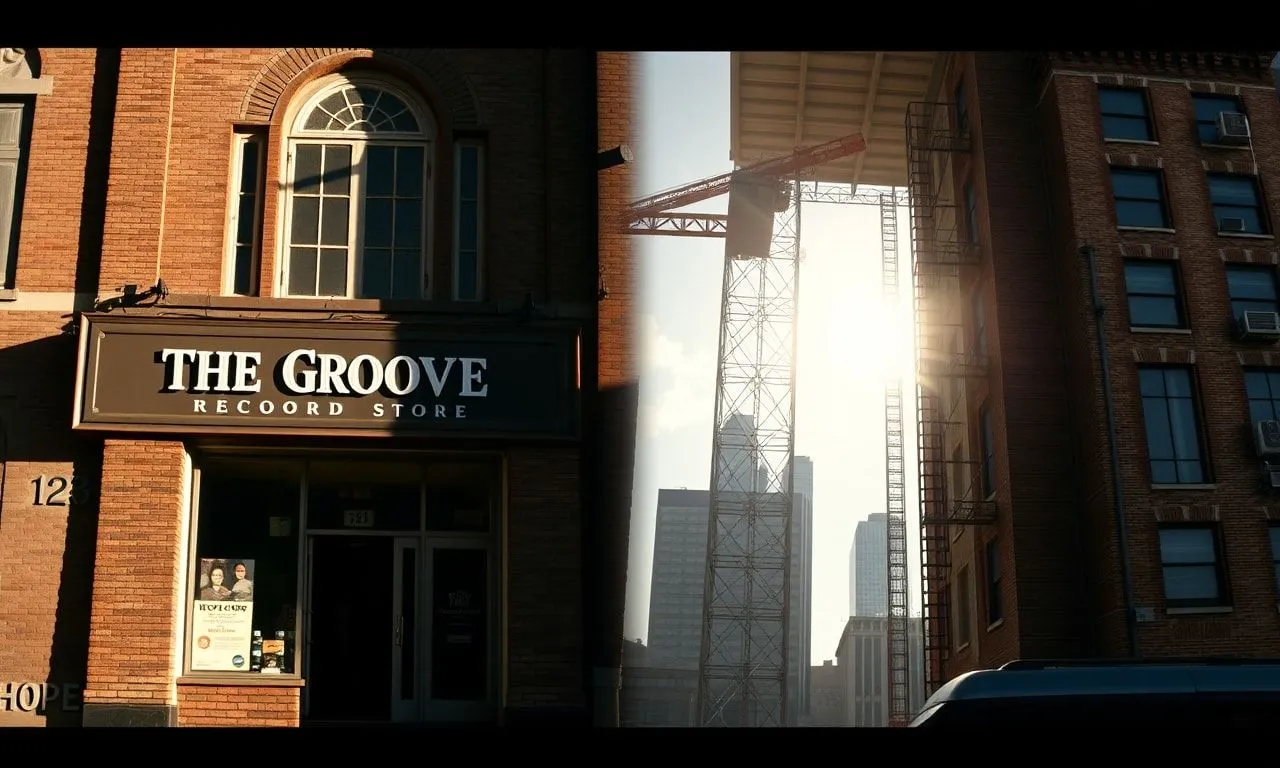
The building, a modest but iconic 1921 structure, was more than just a commercial property. For years, it had been the physical heart of the local music scene, housing “The Groove,” a record store that served as a sanctuary for vinyl enthusiasts and local artists alike. When the walls came down, it felt as if a vital organ had been ripped from the chest of the Lockeland Springs-East End community.
What followed was a wave of digital grief and physical fury. Neighbors gathered at the site, staring at the empty gap in the streetscape like mourners at a funeral. It wasn’t just about the loss of a store—which had already closed its doors in late 2025—it was about the blatant disregard for the rules that protect the character of one of Nashville’s most cherished historic districts.
A Unanimous Verdict: Metro Nashville Strikes Back
The fallout from the demolition reached a fever pitch this week as the Metro Historic Zoning Commission held a high-stakes public hearing on March 18, 2026. In a room thick with tension, the commission faced Ross Condit of Condit Properties, the man responsible for the unauthorized teardown. The air was heavy with the expectation of a landmark decision that would either embolden rogue developers or draw a line in the sand.
The commission’s response was swift and surgical. In a rare unanimous vote, they didn’t just slap the developer with a fine; they issued a Nashville Groove building rebuild order. The mandate is clear: Condit must reconstruct the building as close to its original 1921 form as humanly possible. This wasn’t just a legal ruling; it was a loud, clear message that the “beg for forgiveness rather than ask for permission” strategy will no longer fly in Davidson County.
The ruling sent shockwaves through the local real estate community. For years, developers have often factored “unauthorized demolition fines” into their budgets as a mere cost of doing business. By forcing a total reconstruction, Metro has introduced a new, much more expensive variable into that equation. It is a win for preservationists that feels like a turning point in the war for Nashville’s identity.
The Blueprint for Restoration: Resurrecting 1921
Rebuilding a 105-year-old ghost is no simple task. The Commission has ordered that the new structure must be a “contributing” style building that mirrors the architectural integrity of the Lockeland Springs-East End Neighborhood Conservation Overlay. This means the developer can’t just slap together a modern “tall-and-skinny” townhouse and call it a day; every window, every brick, and every line must pay homage to the original craftsman-era aesthetic.
Condit Properties has been given 180 days to submit comprehensive rebuilding plans. These plans will be subjected to intense public and professional scrutiny to ensure they are substantially similar to the original. If the developer fails to meet the architectural standards set by the Metro planning staff, they could find themselves in a perpetual loop of revisions and legal hurdles.
To visualize the magnitude of what was lost and what must be regained, consider the following structural comparison:
| Feature | Original 1921 Structure | The Rebuild Requirement |
|---|---|---|
| Materials | Original era-specific wood and masonry | Identical or high-quality period-accurate substitutes |
| Architectural Style | Early 20th-century commercial/residential hybrid | Full replication of the original facade and footprint |
| Permit Status | Grandfathered into Historic Overlay | Strict adherence to 2026 Conservation guidelines |
| Community Role | Cultural hub (The Groove) | Must maintain neighborhood character |
Confessions of a Rogue Developer: The Condit Controversy
During the hearing, Ross Condit took the stand, not as a defiant mogul, but as a man seeking a way out of a self-inflicted crisis. He described his decision to demolish the building as “impulsive” and “inexcusable.” He claimed that the building’s poor condition and a negative cash flow over the last three and a half years made it a “hardship.” However, the Commission was unmoved by the plea of financial struggle from an owner of multiple adjacent properties.
The “shock factor” for many in the room was Condit’s claim that he was unaware of the building’s protected status within the historic district. This admission drew audible scoffs from the audience. As a property owner in East Nashville, ignorance of zoning laws is rarely accepted as a valid defense, especially when those laws are precisely what maintain the high property values developers seek to capitalize on.
The Commission’s staff noted that Condit “created his own hardship” by bypassing the legal channels. By tearing down the structure without a permit, he destroyed the very evidence he would have needed to prove the building was beyond repair. It was a classic case of destroying the crime scene, but in this instance, the city decided to reconstruct the evidence brick by brick.
The Administrative Hammer: A Total Permitting Freeze
In a move that serves as the “teeth” of this enforcement action, Metro Nashville has effectively blacklisted Condit Properties. All properties owned by the firm have been flagged. This means that until the 1103 Calvin Avenue rebuild is underway and compliant, the developer cannot receive permits for any other projects in the city. It is a financial stranglehold designed to ensure that this rebuild isn’t just a promise, but a reality.
This “Permit Freeze” is a devastating blow to a professional developer. In the real estate world, time is money, and a delay on multiple sites can lead to millions in lost revenue and interest payments. Below is a representation of how community sentiment and developer activity have collided in this case:
Developer Aggression vs. Community Preservation (Feb - March 2026)
High |          * (Demolition)
|         /|        /|       /     * (Community Outrage)
|      /|     /|    /           * (Legal Order/Permit Freeze)
Low  |*______________________________
Feb 16       Mar 18
The ASCII graph illustrates the sharp spike in developer action (the demolition), followed by an equally sharp correction through community pushback and legal intervention. The current state is one of forced compliance, where the developer’s momentum has been halted entirely by the administrative hammer of the city.
The Legacy of The Groove: More Than Just Vinyl
To understand why this fight is so visceral, one must understand what The Groove represented. It wasn’t just a place to buy records; it was a community center. It was a place where local musicians held secret shows, where teenagers found their first punk rock albums, and where the “Old Nashville” met the “New Nashville” over a crate of used LPs. The shop had been operating on a month-to-month lease, a precarious existence that ended on New Year’s Eve 2025.
When the shop closed, the neighborhood feared the building would be replaced by a glass-and-steel monolith. Those fears were realized when the bulldozers arrived just weeks later. The loss of the building was the final exclamation point on the death of a cultural landmark. By ordering the rebuild, the city isn’t just replacing wood and nails; it’s attempting to restore a sense of place that was stolen in the middle of the night.
Critics of the ruling argue that you cannot “rebuild” soul. They claim that a replica of a 1921 building is just a theme-park version of history. But for the residents of Lockeland Springs, a replica is infinitely better than a modern eyesore that ignores the history of the land it stands on. It represents a physical apology to the neighborhood.
The National Implications: Will This Stop the ‘Scrape-and-Build’ Trend?
Nashville isn’t the only city facing an identity crisis. From Austin to Asheville, historic neighborhoods are being hollowed out by developers who find it easier to pay a fine than to preserve a facade. The Nashville Groove building rebuild order is being watched closely by urban planners across the country as a potential “Nuclear Option” for historic commissions.
If this order is successfully enforced, it sets a legal precedent that could change the face of urban development. It shifts the power dynamic from the developer to the community. It tells investors that if you destroy the history we value, you will be forced to recreate it at your own expense. It is the ultimate deterrent for those who view historic overlays as mere suggestions.
What do you think, Nashville? Is forcing a developer to rebuild a “fake” historic building the right punishment, or should the fines be so high that they fund the preservation of other buildings? Should we be doing more to protect our cultural hubs before they close their doors? Join the conversation on social media and let your voice be heard. The walls of 1103 Calvin Avenue may have fallen, but the voice of East Nashville has never been louder.
The clock is now ticking for Condit Properties. 180 days to plan, one year to build. We’ll be watching.
The forced resurrection of 1103 Calvin Avenue is more than a legal victory; it is a restoration of the aesthetic heartbeat that defined East Nashville for over a century. While the blueprints for the physical structure are being drafted, the cultural vacuum left by the loss of a dedicated vinyl haven reminds us that the spirit of a neighborhood is often found in the analog details. Preserving the “Music” in Music City requires more than just protecting the walls; it involves keeping the timeless traditions of sound and soul alive within our own homes.
As we wait for the historic facade to rise once more, there is no better time to honor the legacy of the landmarks we cherish by bringing that classic, warm resonance into your daily life. Whether you are a long-time collector or a newcomer to the vinyl revival, embracing the tactile experience of a high-quality turntable is a personal nod to the preservation of our shared history. We invite you to explore our curated selection of equipment designed to capture the authentic sound that once echoed through the aisles of The Groove.
We want to hear your thoughts on this landmark ruling—do you believe forced rebuilds are the future of urban preservation? Join the conversation in the comments below and subscribe to the NewsBurrow newsletter to stay updated on the rebuilding progress and other vital Nashville stories. Click below to discover how you can bring the timeless quality of a golden era into your modern living space today.


GIPHY App Key not set. Please check settings