

 David Goldberg
Table of Contents
Iran war market impact
Top 7 Insights on Iran War Market Impact: Winners, Risks & Outlook
Iran war market impact is reshaping global equities, revealing unexpected winners and hidden risks.
The Great Dissonance: Why Stocks Defy War‑Time Panic
Mid‑2026 markets are roaring at record valuations while missiles roar over the Persian Gulf. Traders seem to have swapped dread for a quiet confidence that feels almost reckless.
Major indices have vaulted past pre‑war highs, a move that stuns analysts who expected a sharp sell‑off. The paradox lies in a world where headlines scream chaos, yet balance sheets stay green.
Investors cite diversified portfolios and a belief that war’s economic shock will be short‑lived. Yet the data shows a ten‑year low in real‑time volatility, a quiet counterpoint to the battlefield.
Behind the scenes, algorithmic funds are capitalising on the disconnect, feeding liquidity while the public watches war footage.
Volatility Vanishes: What the VIX Says About War‑Wearied Investors
The CBOE VIX, once the market’s anxiety barometer, has sputtered like a dying engine. Peaks in February fizzed within days, a pattern unheard of in past conflicts.
Investors appear to shrug, treating each missile launch as a blip rather than a systemic threat. This complacency is reflected in the muted VIX line below.
The chart plots the VIX from January to May 2026, highlighting three short spikes that never breached the 25‑point barrier. Compared to the 2008 baseline, today’s volatility is a whisper.
Crisis Winners: Which Sectors Are Cashing In
Not all assets share the market’s calm; certain sectors have turned war into a windfall. Shipping, energy and defense have surged, riding the tide of geopolitical risk premiums.
Energy giants have logged double‑digit gains as the Strait of Hormuz blockage threatens supply. Meanwhile, defense firms see modest lifts, reflecting steady, not explosive, demand.
| Sector | YTD Return % | |
|---|---|---|
| Shipping ETF | 860 | 18 |
| Energy | 120 | 18 |
| Defense | 45 | 18 |
| Technology | -15 | 18 |
These numbers underline a stark reality: war amplifies winners and filters out the timid.
Oil Bottleneck: How Hormuz Blockade Sends Prices Soaring
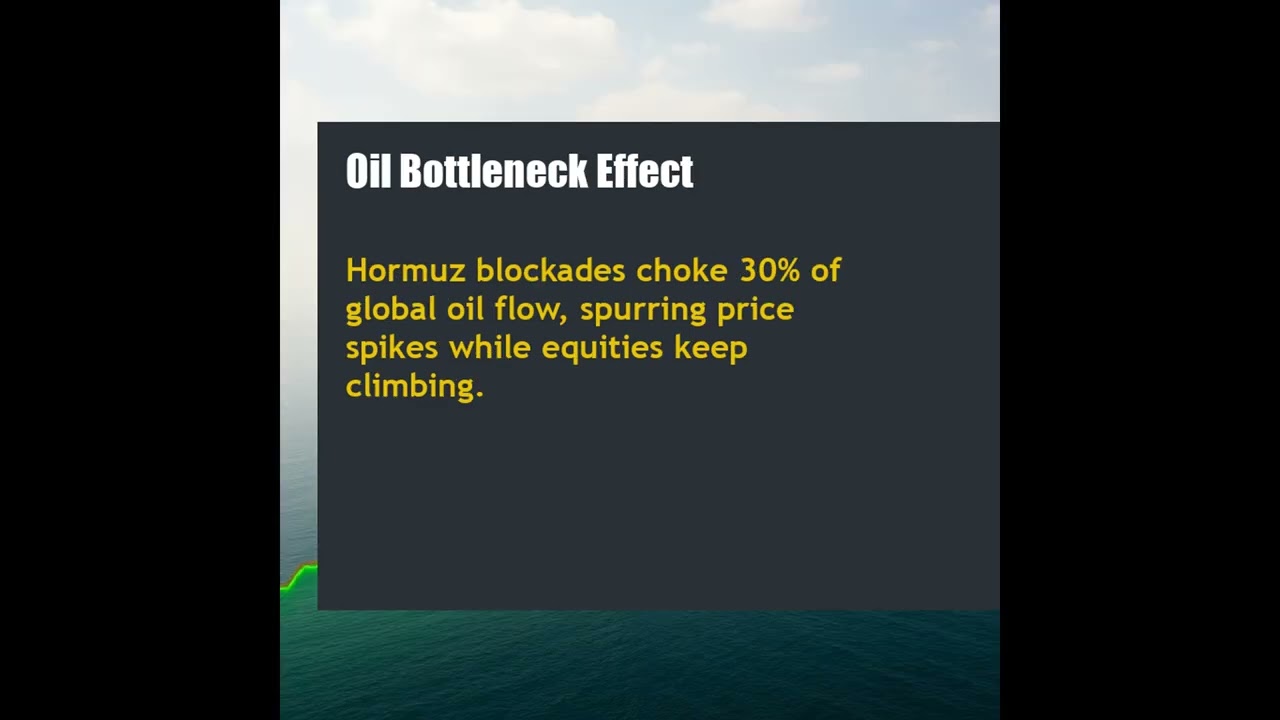
The Strait of Hormuz, a 21‑mile artery for 30 % of global oil, has become a choke point. Blockades have nudged Brent crude past $115 per barrel, a level not seen since 2022.
Central Banks in the Cross‑Fire: Policy Choices Under Fire
Central banks are walking a tightrope, balancing inflation spikes from oil with a desire to avoid stifling growth. The Fed’s latest minutes hint at a slower rate‑hike cadence, while the ECB watches the euro’s bounce.
Stagflation fears linger, prompting policymakers to adopt “wait‑and‑see” rhetoric. Yet the market’s bullish tone suggests they may be betting on a quick de‑escalation.
Bond yields have edged higher, but remain below the peaks of 2022, reflecting confidence that war‑induced inflation is transitory.
Institutional Edge: Wall Street’s $100bn War Play
Big banks and market‑making firms have turned the turmoil into a profit engine, raking in an estimated £100 billion in trading fees alone. Their algorithms thrive on rapid order flow and widened spreads.
Institutional desks are leveraging “liquidity mirage” tactics, supplying the market with depth that retail investors lack. This advantage compounds as volatility fades.
Regulators watch closely, fearing that such concentrated gains could sow systemic risk if the conflict escalates.
Portfolio Survival Kit: Investing Through Turbulent Times
For everyday investors, the mantra is simple: stay disciplined, avoid knee‑jerk reactions. Diversification across resilient sectors—like shipping and energy—offers a buffer.
Day‑traders chasing headlines often miss the longer‑term upside embedded in the market’s forward curve. A measured allocation to low‑beta equities can capture the upside while limiting downside.
Rebalancing quarterly, rather than weekly, helps lock in gains without over‑trading on every flare‑up.
Road Ahead: Scenario Planning for Late 2026
Looking forward, analysts outline three paths: a swift ceasefire, a prolonged stalemate, or a sudden supply‑chain collapse. Each carries distinct market fingerprints.
If peace holds, equities could surge toward historic highs, powered by renewed consumer confidence. A stalemate may keep volatility low but pressure oil prices, squeezing margins.
A supply shock would reignite volatility, potentially resetting central‑bank strategies and reviving defensive plays. Investors should model each scenario to stay prepared.



GIPHY App Key not set. Please check settings