

 Emily Carter
Table of Contents
UK social media ban
Ultimate Guide to the UK Social Media Ban: Impact & Timeline
UK social media ban aims to protect teenagers by cutting off access to mainstream platforms under age 16.
The Bold New UK Social Media Ban for Under‑16s
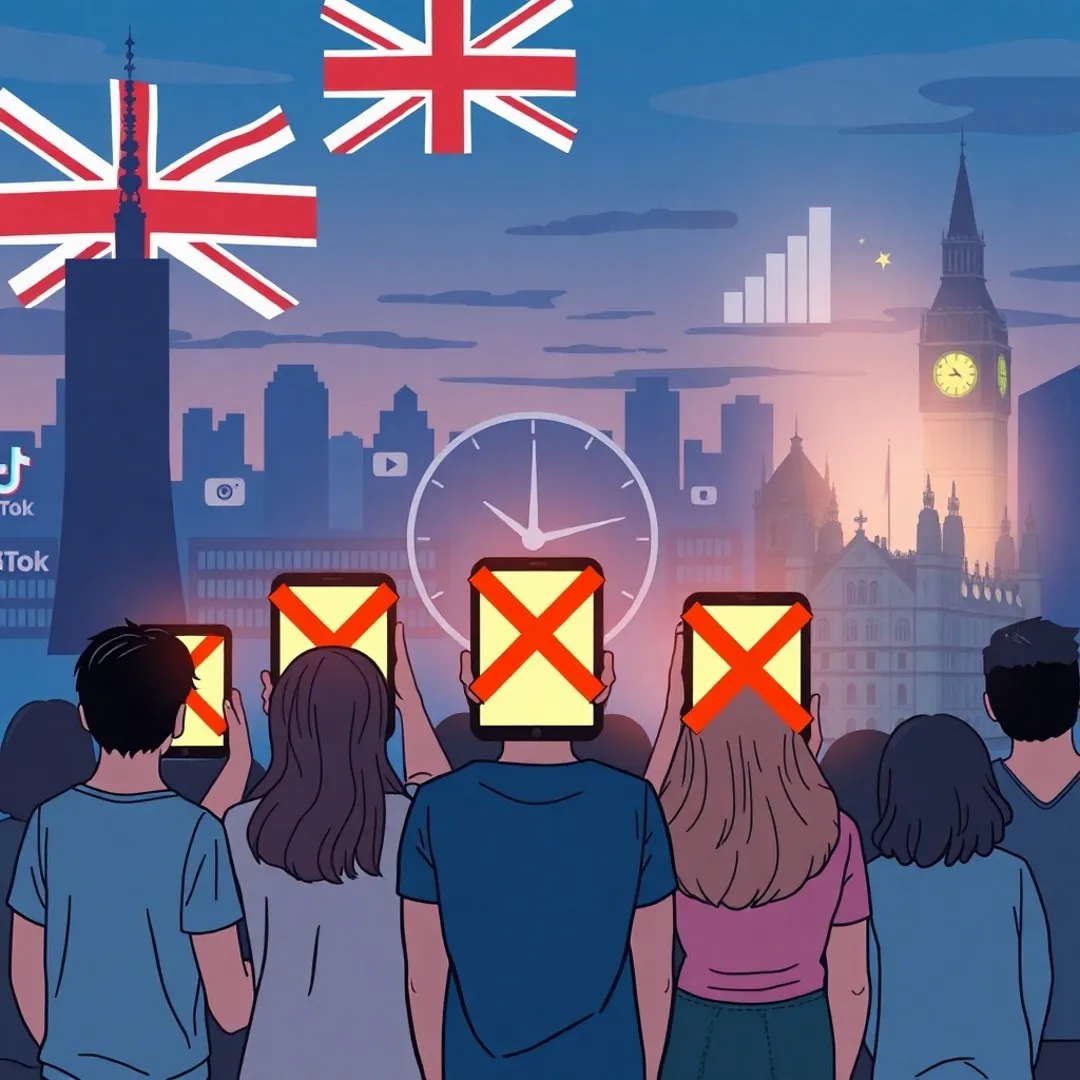
Prime Minister Keir Starmer stunned Parliament with a sweeping decree: no teenager under 16 may set foot on mainstream social platforms. Parents gasped; tech firms scrambled. The move pledges to shield fragile minds from relentless scrolling, yet it also threatens to upend a digital habit ingrained in a generation.
Critics whisper about overreach, but the stats are hard to ignore—over‑90 % of twelve‑to‑fifteen‑year‑olds are glued to endless feeds. The government frames the ban as a public‑health emergency, citing rising anxiety and sleep disorders.
For platforms, the message is clear: adapt or face heavy penalties. For youths, the digital playground may finally close its gates—at least until they turn sixteen.
All eyes now turn to the implementation schedule, and the first sign‑off date looms in the spring of 2027.
Policy Background: From Online Safety Act to the New Ban
The 2023 Online Safety Act laid the groundwork, mandating stricter content moderation and age‑based protections. Building on that, the new under‑16 ban pushes the envelope further, demanding concrete verification before any login.
Legislators argue the incremental steps are essential; each amendment tightens the net around vulnerable users. Yet, the rapid legislative churn raises eyebrows among civil‑liberties groups.
Below is a concise timeline mapping the evolution of UK digital policy from 2021 to 2026.
| Year | Legislation | Key Provision |
|---|---|---|
| 2021 | Digital Services Act (UK version) | Initial platform accountability |
| 2022 | Children‘s Online Protection Bill | Age‑verification pilots |
| 2023 | Online Safety Act | Duty of care for harmful content |
| 2024 | Data Privacy Amendments | Stronger consent rules |
| 2025 | Tech‑Compliance Framework | Mandatory reporting for age‑checks |
| 2026 | Under‑16 Social Media Ban | Full access restriction, pending 2027 enforcement |
This cascade shows a steady march toward tighter control, culminating in today’s headline‑making ban.
Key Provisions of the Under‑16 Ban – What Gets Blocked?
From TikTok to X, the law names the biggest platforms in a blanket restriction. Any login attempt by a user flagged under‑16 triggers an automatic block unless a verified age check passes.
Beyond simple login blocks, the ban curtails live‑streaming features and AI‑driven chatbots, deeming them unsuitable for minors. Platforms must also enforce a nightly curfew, shutting down feeds after 10 p.m.
Implementation deadlines are tight: full compliance is required by spring 2027, with staggered milestones throughout 2026.
Table 1 lists the platforms in the crosshairs and the specific features they must disable.
| Platform | Restricted Features | Compliance Deadline |
|---|---|---|
| TikTok | Full app access, livestreams, AI chat | Spring 2027 |
| Stories, reels, direct messaging | Spring 2027 | |
| YouTube | Comments, Shorts, live chat | Spring 2027 |
| Snapchat | Snaps, Discover, AI lenses | Spring 2027 |
| X (formerly Twitter) | Tweeting, Spaces, AI replies | Spring 2027 |
Non‑compliant platforms face fines up to £10 million per breach.
Implementation Timeline – When Will the Ban Take Effect?
The rollout unfurls in three phases: pilot trials, mandatory tech upgrades, and full enforcement. Pilot programs began in early 2026 across select schools in England and Scotland.
Phase 2 demands that each platform integrate a government‑approved age‑verification API by late 2026. This is where the tech heavy‑lifting occurs.
Phase 3, slated for spring 2027, activates the legal block nationwide.
The visual above sketches the milestones, underscoring the tight calendar that tech firms must obey.
Impact on Tech Companies – Age‑Check Solutions and Costs
Age verification is no longer a nice‑to‑have feature; it becomes a legal prerequisite. Companies are racing to adopt biometric checks, document scans, and AI‑driven risk scoring.
Industry analysts project that each platform will pour between £30 million and £50 million into compliant systems, covering development, testing, and ongoing verification maintenance.
The table below breaks down the estimated outlays for the major players.
| Platform | Estimated Cost (£million) | Key Technology |
|---|---|---|
| TikTok | 45 | Biometric ID API |
| 38 | Document verification | |
| YouTube | 42 | AI risk scoring |
| Snapchat | 30 | Facial recognition |
| X | 35 | OAuth age token |
Beyond the upfront spend, ongoing compliance audits will add a recurring cost stream, reshaping the digital advertising economics.
Expert Opinions – Mental‑Health Benefits and Enforcement Concerns
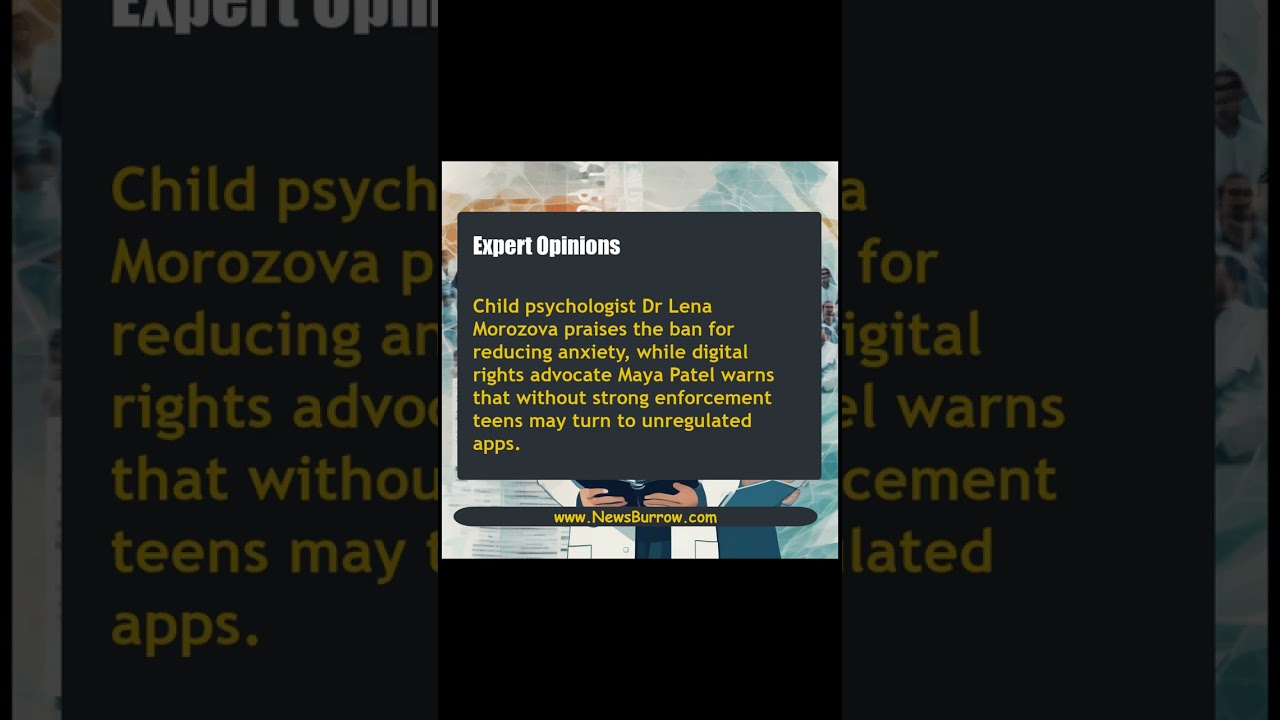
Child‑psychologist Dr Lena Morozova warns, “Daily scrolling overload is a silent epidemic; limiting exposure can dramatically lower anxiety levels.” The sentiment echoes across pediatric circles.
Conversely, digital‑rights advocate Maya Patel cautions, “Without robust enforcement, savvy teens will simply migrate to unregulated apps or VPNs, rendering the ban a symbolic gesture.”
BBC Technology editor Zoe Kleinman adds, “The government’s ambition is laudable but the technical enforcement framework remains untested at scale.”
These divergent voices highlight a tension between public‑health goals and practical enforceability.
Data Spotlight – UK Youth Social‑Media Usage Stats
The numbers are stark: in 2023, 90 % of twelve‑to‑fifteen‑year‑olds logged onto at least one social platform daily, tallying an average 3.5 hours of screen time.
Breaking it down further, usage peaks at 14‑year‑olds, with 4 hours per day on video‑centric apps.
Table 2 offers a granular view of usage by age group.
| Age Group | Daily Users (%) | Average Screen Time (hrs) |
|---|---|---|
| 12‑13 | 78 | 2.8 |
| 14‑15 | 92 | 4.0 |
| 16‑17 | 88 | 3.2 |
Illustrating platform popularity, the SVG bar chart below maps average daily minutes on TikTok, Instagram, YouTube, Snapchat, and X.
The visual starkly shows TikTok and YouTube dominate teens’ minutes, underscoring why they are primary targets of the ban.
Comparative Lens – How the UK Ban Stacks Up Globally
Australia introduced a voluntary age‑check model last year, but it lacks the enforceable curfew and chatbot restrictions that the UK now mandates.
Canada‘s approach focuses on parental‑controlled settings rather than outright bans, offering a less aggressive route.
In the United States, legislation remains fragmented, with only a handful of states experimenting with age gates.
The map‑style graphic marks nations with comparable under‑age restrictions, highlighting the UK’s uniquely stringent stance.
Parental Guidance – Practical Steps for Families
Parents can activate built‑in device controls to block app installations for under‑16 accounts. Coupled with router‑level filters, this creates a layered defense.
Encouraging offline hobbies—sports, music, reading—acts as a natural counterbalance to screen cravings.
Staying informed about each platform’s compliance status empowers families to make data‑driven decisions.
Finally, open conversations about digital wellbeing foster resilience, turning policy into personal practice.
Future Outlook – Possible Extensions and Legislative Reviews
The government has scheduled a five‑year review to assess mental‑health outcomes. Early indicators may trigger an expansion of the ban to include under‑18s.
Tech lobbyists warn that broader restrictions could throttle innovation, while health advocates argue the benefits outweigh the costs.
Whichever direction the pendulum swings, the UK is carving a new global benchmark for youth‑centric digital policy.
Only time will reveal whether the ban reshapes a generation’s relationship with technology—or simply pushes it into hidden corners.


GIPHY App Key not set. Please check settings