

 David Goldberg
Table of Contents
Trois-rivières Apartment Ice Castle
Inside the Trois-Rivières ‘Ice Castle’: Why Turning Off Your Heat is a $50,000 Mistake
Trois-Rivières apartment ice castle story serves as a chilling reminder of the catastrophic property damage that occurs when heating systems are disabled during a Canadian winter.
Inside the Trois-Rivières ‘Ice Castle’: Why Turning Off Your Heat is a $50,000 Mistake
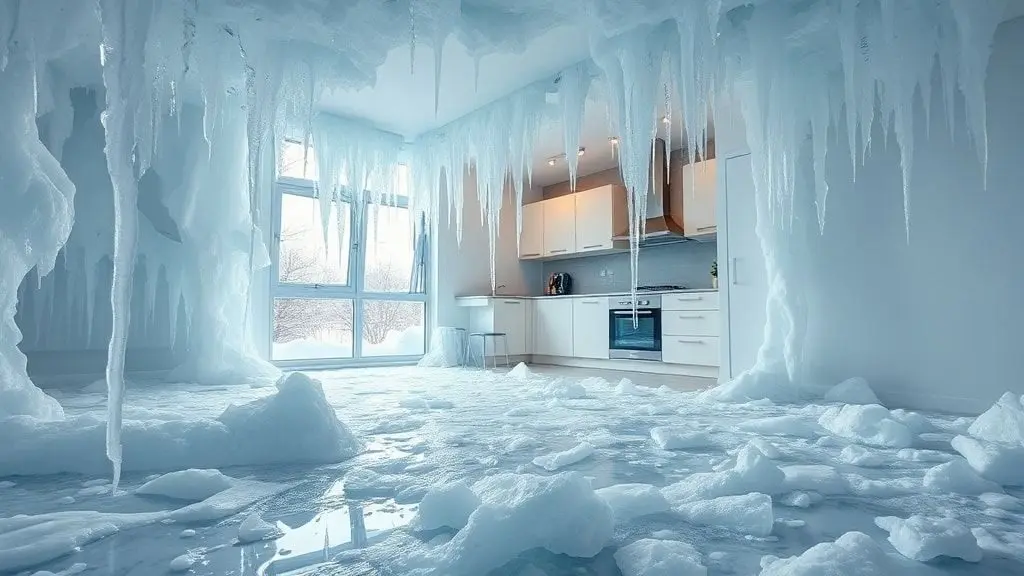
The mercury didn’t just drop in Trois-Rivières this month; it shattered the reality of one local renter. In a story that has sent a literal chill through the Mauricie region, a standard triplex apartment was transformed into a glittering, frozen tomb. What started as a misguided attempt to save a few dollars on a hydro bill ended with a foot-deep glacier on the living room floor and icicles hanging like crystal daggers from the kitchen cabinetry.
The NewsBurrow Press Team arrived on the scene to find Jacques Nault, the weary owner of Logispro Mauricie, standing amidst a surreal landscape of “ice sculptures” that used to be furniture. “Everything is expensive right now. The cost of living is climbing, and people are desperate to save,” Nault told our reporters. “But turning off the heat in a Quebec winter? That isn’t saving. That’s a catastrophe in slow motion.”
The Surreal Discovery: A Foot of Ice in the Living Room
It began on a frigid morning in early January. While inspecting an adjacent unit, Nault noticed an eerie silence and a biting cold emanating from the neighboring apartment. Upon entering, he was met not with a home, but with a real-life “ice castle.” The tenant had vacated the unit months prior, stopped paying rent, and—in a final, devastating act of thriftiness—switched the heating system completely off before leaving for an extended period.
The visual evidence is haunting. Water, under the relentless pressure of the city’s main lines, had erupted from burst pipes hidden within the walls. Deprived of heat, that water didn’t just flow; it flash-frozen. The result is a home encased in layers of solid ice. In some areas, the ice is over twelve inches thick, swallowing sofas and sealing doors shut. The NewsBurrow Press Team observed icicles stretching from the ceiling to the floor, creating a cavernous, crystalline interior that looks more like a glacial cave than a residence.
This isn’t just a property damage story; it’s a testament to the brutal efficiency of a Canadian winter. While the other two units in the triplex remained unaffected thanks to their active heating, this single darkened unit became the epicenter of a $50,000 disaster. The sheer weight of the ice alone threatens the structural integrity of the flooring, while the moisture trapped behind the ice promises a secondary battle with aggressive mold growth once the spring thaw begins.
Estimated Restoration Costs for ‘Ice Castle’ Damage
| Damage Category | Estimated Cost (CAD) | Description of Work |
|---|---|---|
| Ice Removal & Deicing | $8,500 | Professional steaming and controlled melting. |
| Structural Remediation | $18,000 | Stripping walls to studs, replacing subfloors. |
| Plumbing & Electrical | $12,000 | Complete pipe replacement and wiring safety checks. |
| Mold Mitigation | $7,500 | Industrial dehumidification and antimicrobial treatment. |
| Total Minimum | $46,000 | Excludes lost rental income and legal fees. |
The Science of Destruction: Why Pipes Explode
Most people assume pipes burst because the ice simply gets too big for the pipe. While that’s part of the story, the physics are actually more violent. When water freezes inside a pipe, it expands by approximately 9% in volume. This expansion creates an ice blockage. However, the burst usually occurs between that ice plug and a closed faucet or a bend in the pipe. The trapped water is compressed to incredible pressures—thousands of pounds per square inch—until the copper or PEX tubing simply gives up.
In the Trois-Rivières case, the “ice castle” effect was exacerbated by the duration of the freeze. With the heat off and the apartment reaching temperatures identical to the outdoors (-20°C or lower), the pipes didn’t just leak; they ruptured in multiple locations. The water then sprayed continuously into the sub-freezing air of the room, freezing layer upon layer in a process known as “accumulation.”
According to experts consulted by NewsBurrow.com, the damage is often worse in modern apartments with open-concept designs. Without walls to contain the initial spray, water can travel further, soaking carpets and drywall across the entire footprint of the unit before it has a chance to solidify. Once it turns to ice, it acts as a thermal mass, keeping the apartment at freezing temperatures even if the furnace is eventually turned back on, making the de-icing process a logistical nightmare.
The Thrifty Tenant’s $50,000 Oversight
The motivation behind this disaster is perhaps the most tragic part of the story. The tenant, facing the squeeze of rising inflation and utility costs, reportedly thought they were being clever. By shutting off the breaker for the heating system while away, they hoped to return to a lower bill. Instead, they have likely opened themselves up to a massive legal liability. In Quebec, the Tribunal administratif du logement (TAL) is clear: tenants have a duty to maintain the unit with “reasonable care.”
Nault warns that this is a growing trend. “People see the thermostat as a luxury they can cut,” he said. “But in our climate, heat is a life-support system for the building itself.” The NewsBurrow Press Team found that many insurance policies have specific “vacancy clauses” that require a property to be checked every 24 to 48 hours during the winter. If a tenant shuts off the heat and leaves, they may find themselves personally responsible for the damages when the insurance company denies the claim due to negligence.
Legal experts suggest that the landlord could potentially sue for the full cost of the renovations, which are estimated to exceed $50,000. For a tenant looking to save $100 on an electricity bill, the math simply doesn’t add up. This incident serves as a stark warning: the cost of a “frozen” hydro bill is nothing compared to the cost of a frozen home.
Landlord’s Essential Guide to Winterizing Vacant Units
To prevent your property from becoming the next local “Ice Castle,” the NewsBurrow Press Team has compiled the ultimate winterization checklist for landlords and property managers. Preventing a disaster starts long before the first snowflake falls.
- Maintain a Minimum Temperature: Never allow a unit to drop below 15°C (60°F). Even if the unit is vacant, the heat must stay on to protect the core infrastructure.
- Install Smart Thermostats: Devices like Nest or Ecobee allow you to monitor the temperature remotely and receive alerts if the heat fails or is turned off.
- Drain the Lines: If a unit will be empty for months, shut off the main water valve and drain all faucets, toilets, and appliances.
- Insulate Vulnerable Pipes: Use foam sleeves or heat tape on pipes located near exterior walls or in unheated crawlspaces.
- Open Cabinet Doors: Allow warm air to reach the plumbing under sinks by keeping vanity and kitchen cabinet doors ajar during extreme cold snaps.
Beyond these steps, regular inspections are non-negotiable. Nault noted that if the inspection had occurred just 48 hours earlier, the damage might have been limited to a single soggy floor rather than a frozen interior. Landlords should also include a specific “Winter Clause” in their leases, explicitly forbidding tenants from turning off the heat during the winter months under penalty of eviction or liability for damages.
The “Shock Factor”: Could Your Neighbors Sink Your Home?
The most terrifying aspect of the Trois-Rivières ice castle is how it affected the neighbors. While the other units in the triplex remained dry, they were essentially living next to a giant block of ice. The extreme cold from the frozen unit forced the neighboring furnaces to work overtime, driving up their heating costs significantly. More importantly, the weight of the ice in the central unit could have caused a structural collapse, potentially taking the entire building down.
This raises a critical question for urban dwellers: How well do you know your neighbor’s heating habits? In multi-unit dwellings, your safety is often tied to the person on the other side of the wall. NewsBurrow.com encourages readers to stay vigilant. If you notice a neighbor’s window is perpetually frosted over or you hear the strange sound of running water in an empty unit, notify the landlord or building manager immediately. A few minutes of investigation could save an entire block from a watery—or icy—grave.
Risk of Pipe Failure vs. Indoor Temperature
Risk Level
^
High|          * (0°C - Heat Off)
|         *
|        *
Med |       *
|      *
Low |     * (15°C - Recommended Minimum)
|__________________________>
-20   -10    0    10   20
Outdoor Temp (°C)
*Graph illustrates the exponential increase in burst risk as indoor temperatures drop toward the freezing point during a Quebec cold snap.
A Final Warning: The Thaw is Coming
As Nault and his team prepare to strip the Trois-Rivières apartment down to the studs, the story is far from over. The real “nightmare” begins when the ice melts. Professional restoration crews must use industrial-grade dehumidifiers and heaters to manage the moisture, or the entire building could be condemned due to toxic black mold. It is a slow, expensive, and entirely avoidable process.
The “Ice Castle” of Trois-Rivières will go down in local history as a cautionary tale of the highest order. It reminds us that in the battle between human thriftiness and the Canadian winter, the winter always wins. We want to hear from you: Have you ever had a run-in with frozen pipes? Do you think the tenant should be held 100% liable for these damages? Join the conversation on our social media pages and share your winter survival tips!
Stay warm, stay vigilant, and for the sake of your bank account—keep the heat on.
The catastrophic scene in Trois-Rivières serves as a stark reminder that winter is a relentless adversary for any property owner. While the “ice castle” is an extreme example, thousands of homeowners face smaller, yet equally expensive, plumbing disasters every year simply because a single outdoor spigot was left exposed to the elements. Protecting your investment requires more than just turning up the thermostat; it demands proactive, localized protection for the most vulnerable points of your home’s infrastructure.
Modern prevention technology has made it easier and more affordable than ever to secure your plumbing against deep freezes. From high-density foam insulators to advanced thermal sensors, the right tools can act as a critical line of defense between your pipes and a multi-thousand-dollar renovation. Investing in quality protection today is the only way to ensure that a sudden drop in temperature doesn’t lead to a devastating rise in repair costs tomorrow.
We have curated a selection of the most effective winterization tools and protective covers to help you safeguard your property before the next cold snap hits. Explore our top recommendations below to find the perfect fit for your home’s specific needs. To stay ahead of the weather and receive more expert property maintenance tips directly in your inbox, we invite you to subscribe to the NewsBurrow newsletter and share your own winter survival strategies in the comments section below.
Shop Products On Amazon
Shop Products on Ebay
Trending Similar Stories in the News
Trending Videos of Trois-rivières Apartment Ice Castle


GIPHY App Key not set. Please check settings