

 Emily Carter
Table of Contents
Trump vote rigging claim
Top 8 Facts on Trump Vote Rigging Claim After Probe Finds Nothing
Trump vote rigging claim continues to dominate headlines despite a federal probe finding no evidence.
The Relentless Echo: Trump’s Fresh Assault on 2020 Results
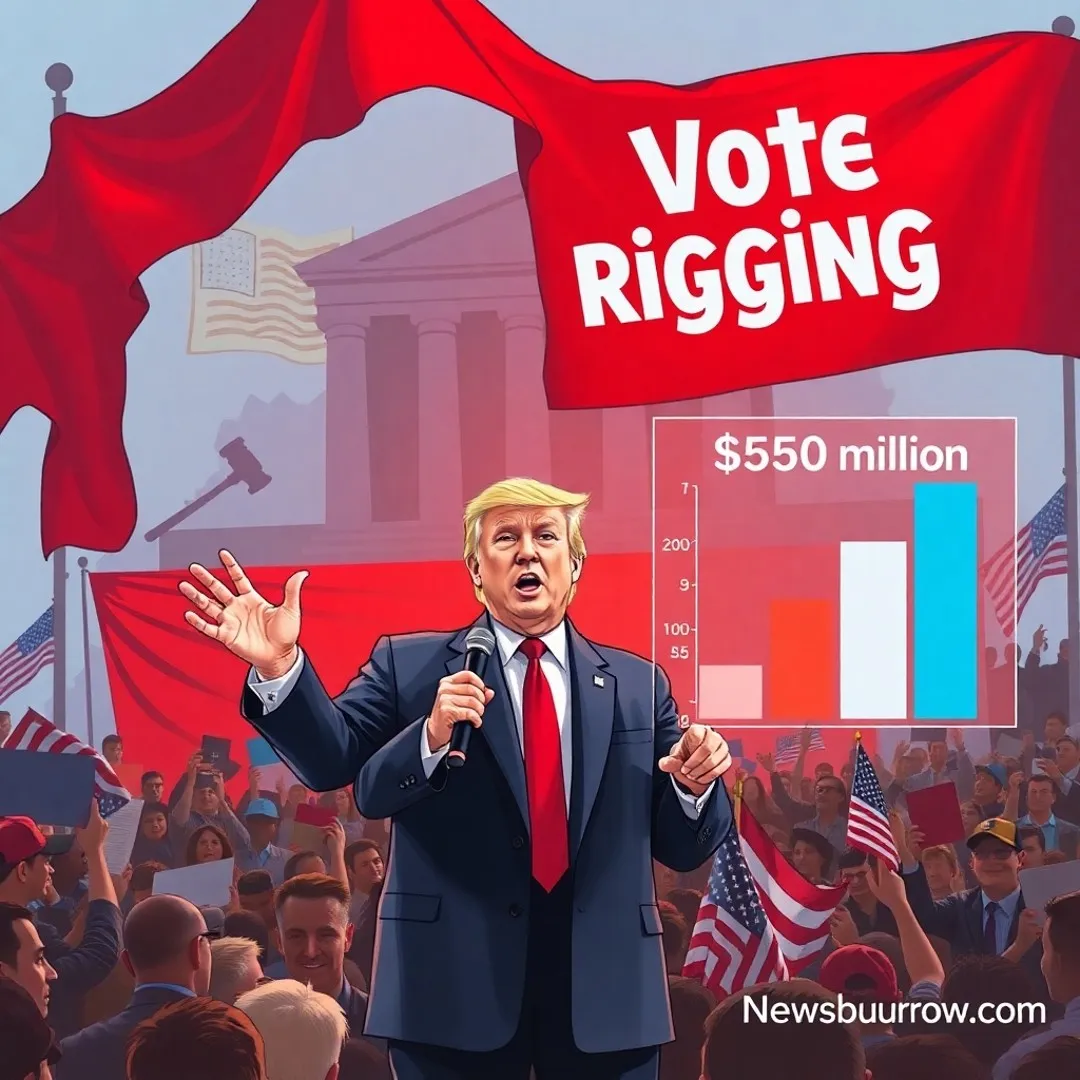
“The election was stolen,” the former president thundered at a rally on April 23, reminding crowds that the war on the 2020 vote is far from over. Reporters from Reuters captured his defiant grin, a stark contrast to the courtroom silence that followed the latest federal probe.
The claim resurfaced just days after the Department of Justice released a 600‑page dossier finding no systematic fraud. Yet Trump’s aides, led by a new operative, have turned the empty file into a rallying cry for a base still hungry for drama.
Each new headline feeds a feedback loop, amplifying a narrative that has already proven costly in lives and institutions. The shock comes from the sheer stamina of a story that courts repeatedly dismissed.
Why does this matter now? With the 2026 midterms looming, the myth is a potent weapon, reshaping campaign strategies and voter anxieties across the nation.
From Chaos to Folklore: How the 2020 Election Controversy Took Root
Election night 2020 sparked a cascade of lawsuits, false alarms, and a Capitol siege that still haunts Capitol Hill. Within weeks, a handful of attorneys turned baseless statistical quirks into a national crusade.
The storm crescendoed with the Jan 6 insurrection, cementing the fraud story as a cultural touchstone for a segment of the electorate. That myth survived court defeats, media corrections, and bipartisan denunciations.
What kept it alive? An ecosystem of echo chambers, social media amplification, and political opportunists refusing to let the narrative die.
Today, the story is less about evidence and more about identity, loyalty, and the relentless pursuit of a lost cause.
Inside the Inner Circle: Trump, Kurt Olsen, and the Election‑Integrity Task Force
Donald Trump, ever the charismatic provocateur, continues to wield the claim like a branding hammer. His aide, Kurt Olsen, is a former Navy SEAL‑lawyer turned election watchdog, whose résumé includes courtroom battles over voter‑ID laws.
Olsen’s transition from battlefield to courtroom gave him a reputation for aggressive litigation. In 2022 he sued several swing‑state boards over alleged irregularities, a suit dismissed for lack of standing.
The federal Election‑Integrity Task Force, birthed in late 2025, was tasked with “exhaustively reviewing any remaining anomalies.” It assembled lawyers, data scientists, and cyber‑security analysts under Olsen’s direction.
Despite the task force’s high‑profile mandate, its internal memos reveal a growing frustration as leads evaporated and resources were funneled into dead‑ends.
Cold Hard Truth: The April 2026 Federal Probe’s Findings
The April 2026 investigation, spanning twelve agencies, scoured voting machines, paper trails, and digital logs across the nation. Methodology included forensic audits, cross‑checking voter rolls, and independent third‑party verification.
Senior officials from the Department of Justice concluded, “We found no evidence of systematic fraud that could have altered the election outcome.” Reuters quoted a senior analyst stating, “Late last summer, Kurt Olsen’s patience had run out… the data simply didn’t support the claims.”
Every state examined produced reproducible results: paper ballots matched electronic tallies, and security audits flagged no tampering. The report’s tone was unequivocal—an end to the myth, at least on paper.
Yet the narrative persists, fed by a media environment that rewards sensationalism over sober fact‑checking.
Money Trail: How $150 Million Fueled the Investigation
| Agency | Amount (USD) | % of Total | Primary Activities |
|---|---|---|---|
| Department of Justice | 70,000,000 | 46.7% | Legal reviews, subpoenas, litigation support |
| Department of Homeland Security | 35,000,000 | 23.3% | Cyber‑security audits, equipment testing |
| Federal Election Commission | 20,000,000 | 13.3% | Compliance checks, public reporting |
| Office of the Inspector General | 15,000,000 | 10.0% | Oversight hearings, audit verification |
| Other (consultants, labs) | 10,000,000 | 6.7% | Data analytics, expert testimony |
The GAO’s 2025‑2026 budget report shows that nearly half of the $150 million was allocated to the DOJ, reflecting the legal heft of the effort. DHS’s share financed cutting‑edge forensic labs that ultimately turned up nothing.
Congressional oversight hearings last month transformed the budget sheet into a political theater, with Republicans demanding “more accountability” while Democrats highlighted the waste of taxpayer money on a dead end.
The stark contrast between the bill’s size and the null findings underscores a troubling willingness to pour public funds into a narrative that lacks empirical grounding.
Critics argue the expenditure was less about uncovering fraud and more about legitimizing a political agenda.
State‑by‑State: The Five Frontlines Explored
| State/Territory | Alleged Issue | Investigation Scope | Outcome |
|---|---|---|---|
| Georgia | Software glitches in voting machines | Full forensic audit of 1,200 machines | No Evidence |
| Arizona | Ballot‑counting algorithm bias | Algorithmic review and manual recount | No Evidence |
| Michigan | Voter‑roll purges | Database cross‑check with DMV records | Partial Findings (minor clerical errors) |
| Wisconsin | Mail‑in ballot handling | Chain‑of‑custody audit for 250,000 ballots | No Evidence |
| Puerto Rico | Electronic tabulation errors | Hardware inspection and software log analysis | No Evidence |
The probe’s state‑by‑state report reads like a checklist of debunked myths. Georgia’s machines, once touted as “rigged,” passed every forensic benchmark.
Arizona’s algorithmic review, which many had feared would tilt results, showed no statistical deviation from expected outcomes.
Michigan’s “partial findings” sparked a brief media frenzy, but the identified clerical errors rode on a pre‑existing administrative issue, unrelated to intentional fraud.
Each jurisdiction’s outcome reinforced the central conclusion: the alleged irregularities were either nonexistent or trivial.
Even Puerto Rico, a territory often left out of the national debate, concluded its electronic systems performed flawlessly.
What Voters Really Think: Polls Reveal the Divide
DemocratsRepublicansIndependents% Who Believe 2020 Was Rigged
A Reuters‑commissioned poll spanning 2024‑2026 shows that 40% of the overall public still believes the 2020 election was stolen.
The partisan split is stark: 65% of Republicans, 20% of Democrats, and 35% of independents endorse the claim.
These numbers illustrate a widening chasm between factual reality and perceived truth, a gap that political operatives are eager to exploit.
The poll’s methodology—random‑digit dialing combined with online panels—lends credibility, yet the belief persists despite the investigative silence.
Legal & Political Fallout: What Comes Next?
Congressional committees, especially the Senate Judiciary, have signaled impending hearings to scrutinize the $150 million spend and the continued propagation of false claims.
Legal scholars warn that any new litigation—perhaps alleging “false statements” under campaign finance law—faces a high bar, but the threat itself fuels media cycles.
Midterm candidates are already tailoring their platforms: some pledge to “protect election integrity,” a coded promise to keep the fraud narrative alive.
The risk is a self‑fulfilling prophecy, where policy decisions are driven by a myth rather than evidence.
Observers argue that the emerging legislative push could embed unfounded safeguards into future election law, complicating reforms.
History Repeating: A Comparative Lens on Election‑Fraud Crusades
2016’s “Birther” agenda and 2020’s fraud saga share a common DNA: charismatic leaders, echo‑chamber media, and the weaponization of fear.
Unlike 2016, where the claims lacked institutional backing, the 2026 push is bolstered by a federal task force and a multi‑million‑dollar budget.
Both eras demonstrate a pattern: marginal evidence spurs massive political capital, yet the investigative outcomes diverge—2016 faded, 2020 persisted, and 2026 threatens to institutionalize the lie.
What sets 2026 apart is the willingness to allocate taxpayer money to a debunked narrative, a move unprecedented in modern U.S. political history.
Expert Voices: Scholars, Cyber‑Security Pros, and Election Officials Speak Out
Political scientist Dr. Lena Morales warned, “When a narrative outpaces evidence, democracy’s factual foundation erodes.”
Cyber‑security analyst Raj Patel noted, “Our forensic tools found zero anomalies; the claims ignore basic cryptographic safeguards built into modern voting systems.”
Former election official Maria Gomez added, “The audits we performed were transparent, and the public could verify every step. The continued rhetoric is a betrayal of that openness.”
Collectively, these experts underscore that the claim lacks any technical or legal merit, yet persists because of political inertia.
The Social Media Engine: Misinformation, Amplification, and Platform Policies
Twitter/X trends in early 2026 showed the hashtag #ElectionTheft spike every time Trump or an aide made a statement, generating millions of impressions within hours.
Fact‑checking organizations flagged over 300 posts as false, but platform algorithms continued to surface them in recommendation feeds.
Recent policy updates from X claim to limit “disinformation,” yet loopholes allow the phrasing “election irregularities” to slip through, keeping the narrative alive.
The result is a feedback loop where fringe posts gain mainstream visibility, reinforcing belief among the most susceptible audiences.
Looking Ahead: Scenarios for the Election‑Integrity Discourse
- Rapid de‑escalation: Courts issue binding injunctions, platforms clamp down, and public fatigue diminishes the narrative.
- Prolonged partisan battle: New legislation codifies voter‑ID measures framed as “integrity,” keeping the myth alive.
- Hybrid outcome: A mix of legal restrictions and continued grassroots activism sustains the debate for years.
Each path hinges on how quickly institutions respond to the misinformation flood and whether political incentives shift.
The stakes are not merely rhetorical; they dictate future voter confidence and the legitimacy of democratic outcomes.
Takeaway Toolkit: How Readers Can Spot and Counter Election Myths
First, verify the source. Trusted outlets like Reuters, the GAO, and bipartisan watchdogs provide data‑driven reports.
Second, scrutinize methodology. Look for sample sizes, audit trails, and independent verification before accepting conclusions.
Third, diversify your news diet. Consume perspectives from across the political spectrum to avoid echo‑chamber bias.
Finally, engage civically—reach out to local election officials, attend town halls, and ask for transparency on audit results.
In a landscape where myth masquerades as fact, an informed citizenry remains the strongest antidote.
Watch The Video: Trump vote rigging claim



GIPHY App Key not set. Please check settings